TL;DR — Key Facts
- Dormer loft conversion: £40,000 – £60,000 (outer London borough)
- Mansard conversion: £60,000 – £95,000
- Velux conversion: £25,000 – £40,000
- Planning permission: Generally available for rear dormers
- Conservation areas: 29 in Harrow
What does a Harrow loft conversion cost, and will it be approved?
Harrow’s Datahub set records 2,455 rear dormer applications at 72% approved and just 77 loft conversions. The borough approved 77.8% of householder applications and delegated only 87.3% of decisions to officers, the lowest rate in London — so more Harrow schemes go before councillors.
| Measure | Harrow | Outcome |
|---|---|---|
| Rear dormer applications in the Datahub | 2,455 | 72% approved |
| Loft conversion applications in the Datahub | 77 | 65% approved |
| Householder decisions | 2,856 | 77.8% approved |
| Decisions made under delegated powers | 87.3% | lowest of the 33 boroughs |
| Lawful development certificates issued | 1,147 | — |
| Householder appeals decided | 698 | 39.7% allowed, median 61 days |
Where the numbers come from: the first two rows are phrase-matched Planning London Datahub descriptions read on 15 August 2026, and are comparable only within Harrow. Rows three to five come from MHCLG's PS1 and PS2 returns covering April 2023 to March 2026. Row six draws on appeal decisions issued by the Planning Inspectorate over 2016 to 2026. The build-cost ranges are our own 2026 London pricing, not a published statistic.
What does a Pinner or Harrow loft cost?
Ready to move from budgeting to drawings?
Harrow refuses householder applications more readily than London does — 634 of 2,856 decisions over the three years to March 2026, so 22.2%, against 17.0% across the 33 boroughs — and those refusals are contested hard. The Planning Inspectorate decided 1,441 Harrow appeals in the decade to 2026 and allowed 502, a shade under 35%. Read that carefully: everyone in the appeal figure had already been turned down and elected to fight on, so it tells you a Harrow refusal is worth a second reading. It does not say a third of Harrow schemes win consent. Cost, meanwhile, follows roof form, and the borough sits at the cheaper end of the London range.
Loft conversion build costs in Harrow
Read those ranges as construction spend alone. Our fee sits outside them, as do the structural engineer, any Party Wall surveyor you end up appointing, and the council's own charges. Four things move the final number: loft size, the span the steels have to carry, the fit-out specification, and whether a lorry can get near the house at all.
A dormer buys roughly 20 to 30 square metres. A mansard buys 30 to 50 square metres, with standing height across the whole plan rather than a strip of it. Set that against a borough median sale price of £550,000 across 1,665 registered Harrow sales in 2025, on the Land Registry price-paid returns, and the floor area gained is normally worth more than the work costs.
Which loft type suits Harrow properties?
Hip-to-gable with a rear dormer on the semi-detached stock across most of the borough. The Edwardian villas at Pinner and Harrow on the Hill have deeper roofs and often take a rear dormer alone, though on the Hill the heritage assessment is the binding constraint rather than the structure. Post-war flats around Harrow Central offer no convertible roof space.
Hip-to-gable and dormer combinations
No London borough is more interwar than this one. Of Harrow's 96,860 dwellings, 41.6% went up between 1930 and 1939 — the highest share of the thirty-three, with Bexley next at 37.0% (VOA council tax stock by build period at 31 March 2025, retrieved 1 September 2026). That single fact explains why almost every loft quote in the borough starts the same way. A 1930s semi has a hipped end, and a hipped end wastes the corner of the roof where the useful floor would otherwise be. Squaring it off to a full gable and hanging a rear dormer off the back typically returns 25 to 35 square metres, enough for a bedroom and a shower room rather than a study. The catch on a semi is the shared flank: the new gable rises off the party wall, so the work is notifiable under the Party Wall etc. Act 1996 whether or not it needs planning permission.
Velux (rooflight) conversions
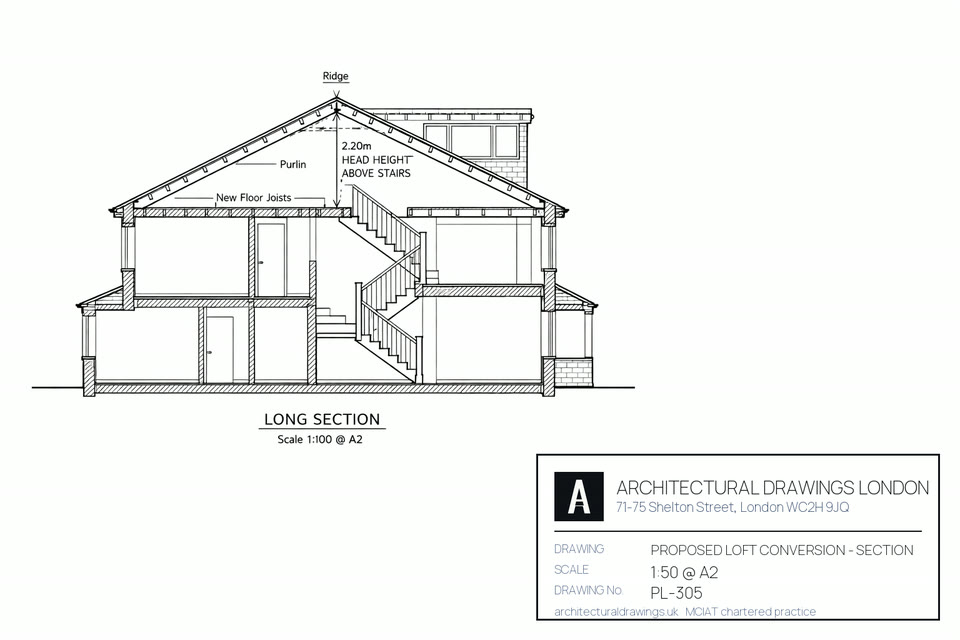
Rooflights leave the roof shape exactly as found, which makes them the cheapest route and the only one that is genuinely uncontroversial on Harrow on the Hill. They are also, on most 1930s Harrow semis, the option the roof itself decides. Interwar builders used shallower pitches and lower ridges than the Victorians did, so the clear distance from the ceiling joists to the underside of the ridge is frequently under the 2.2 metres a habitable conversion wants before any structure goes in. Where it is, a rooflight scheme gives you a lit and boarded room over part of the plan and nothing over the rest. Where it is not, you are back to the hip-to-gable. This is the one question a half-hour survey settles for good, and it is worth settling before anybody quotes.
Does a Harrow loft need planning permission?
Harrow is mostly 1930s semi-detached with hipped roofs, so the conversion normally starts with a hip-to-gable. The planning position is light — 29 conservation areas, no borough-wide Article 4 Direction — with one significant exception: Harrow on the Hill applies heritage controls stricter than anything else in the borough. And Harrow delegates only 87.3% of decisions to officers (MHCLG planning statistics, retrieved 1 September 2026), the lowest share in London, so a contested scheme here can end up before members.
Permitted Development for lofts
A rear dormer or a Velux roof scheme normally counts as permitted development, so no application is made and no refusal is possible. Qualifying means staying inside every one of these limits:
- The dormer must not exceed the highest part of the existing roof
- The dormer must be set back at least 200mm from the eaves
- Materials must be similar in appearance to the existing house
- No verandas, balconies, or raised platforms
- Side-facing windows must be obscure-glazed and non-opening below 1.7m
- Volume limit: 40 cubic metres for terraced houses, 50 cubic metres for others
Conservation areas
Harrow's designations are concentrated, not spread. Harrow on the Hill, Pinner Village, Stanmore and Harrow Weald carry the strictest of them, and outside those pockets the borough is comparatively permissive about roofs: 869 of the 1,194 larger-householder prior approvals Harrow determined in the twelve quarters to March 2026 came back as prior approval not required, with 263 refused (MHCLG planning statistics, retrieved 1 September 2026). Inside a conservation area that arithmetic stops applying, because article 2(3) removes the roof enlargement allowance and any dormer becomes a full application judged against that area's own appraisal. Two practical consequences follow. A front or side dormer visible from the road is not worth drawing. And where the scheme is contested, remember that Harrow delegates only 87.3% of its decisions to officers, the lowest share in London — so an objected-to application here is likelier than anywhere else to be decided by councillors, on a committee cycle no statutory target accounts for.
Mansard planning permission
Mansards always need an application. In Harrow they are seldom the right form - the borough is interwar semis where a hip-to-gable produces more space for less - and there is a procedural reason to be cautious with anything unusual here. Harrow delegates only 87.3% of decisions to officers (MHCLG planning statistics, retrieved 1 September 2026), the lowest share in London, so a contested scheme can be decided by councillors in public.
Harrow publishes its own pre-application charges. Given how much of its caseload reaches committee, an early officer view is more valuable in this borough than in most: it tells you whether the application is likely to be delegated or referred, and a committee cycle can add weeks that no statutory target accounts for. On Harrow on the Hill, treat it as essential.
Our drawing fees for loft conversions in Harrow
Drawings are produced in-house by MCIAT chartered architectural technologists, who take the scheme through planning submission where one is needed and on through building regulations approval.
Drawing fees for loft conversions
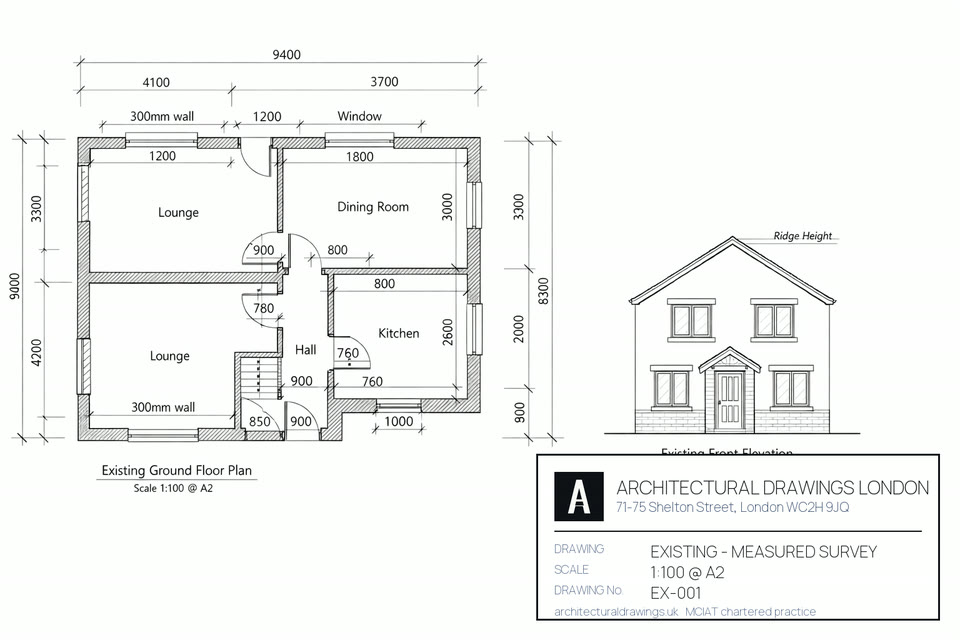
Every package begins by measuring what is actually there. The measured survey feeds existing and proposed floor plans, elevations, cross-sections, the roof layout and a scaled site plan. Mansards carry two extras: a design and access statement, and a streetscene elevation showing your roof against its neighbours. The fee runs about 30% under what London architects charge for the same drawing set.
All six Harrow districts are covered: HA1, HA2, HA3, HA5, HA7, HA8 — Harrow on the Hill, North Harrow, Wealdstone, Pinner, Stanmore and Edgware.
Frequently asked questions
How much does a loft conversion cost in Harrow?
In Harrow a rear dormer is generally a £40,000 to £60,000 job. Push the roof out to a full mansard and the range moves to £60,000–£95,000. A Velux scheme — rooflights, floor, staircase, roof shape untouched — lands between £25,000 and £40,000. Build only; professional and council charges sit outside those figures.
Do I need planning permission for a loft conversion in Harrow?
Across most of Harrow, yes. No borough-wide Article 4 Direction applies, and a rear dormer within the volume allowance set away from the highway is the normal permitted form on a semi. Harrow issued 1,147 lawful development certificates in three years (MHCLG planning statistics, retrieved 1 September 2026). Harrow on the Hill and the other designated areas are where it stops, and a mansard needs an application anywhere.
What is the minimum head height for a loft conversion in Harrow?
Harrow's interwar semis, which are most of the borough, reach the necessary 2.2 metres at the ridge and lose it quickly towards the hipped end — the reason hip-to-gable is the standard first move here. The Edwardian villas at Pinner and on the Hill are more generous.
Do I need a Party Wall Agreement for a loft conversion in Harrow?
Yes on the semi-detached stock, which is most of the borough — one adjoining owner, one notice, two months. Raising the party wall to form the new gable is notifiable alongside the beam bearings and should be described in the same notice. Detached houses in Stanmore and Harrow Weald may avoid the Act for the roof work entirely, subject to the excavation provisions.
Can I get a mansard loft conversion approved in Harrow?
Mansards get decided one street at a time. Harrow's officers weigh the streetscene, whether a conservation area covers the terrace, how well the detailing has been resolved, and whether comparable roof extensions already stand nearby. If the decision goes against you, the borough's appeal record above is the reason to think again rather than start again.