Key differences at a glance
- Qualification: Architects are ARB registered + RIBA chartered. Technologists are CIAT/CIAT Affiliate. Drawing services vary.
- Cost: Drawing services £500–1,500. Architects 8–15% of build cost (£8k–30k typical).
- Scope: Drawing services = drawings only. Architects = full design + contract admin. Technologists = technical drawings + building regs.
- Best for: Simple projects = drawing service. Complex/listed buildings = architect. Standard extensions + lofts = technologist.
- You do NOT need an architect for planning permission -- anyone can submit a planning application in England.
- Our CIAT-affiliated technologists
If you are planning a home improvement project in London -- an extension, loft conversion, or any work that needs planning permission or building regulations -- you will quickly discover that there are several different types of professional who can help you. The three most common options are an architectural drawing service, a registered architect, and an architectural technologist.
These three professionals overlap in what they deliver, but they differ significantly in qualifications, scope, cost, and the type of project they are best suited to. Choosing the wrong one can mean overpaying for services you do not need, or underpaying for expertise you do. This guide explains the differences clearly so you can make the right decision for your London project.
Does a London application need an architect?
No. The Architects Act 1997 protects the title, not the act of designing a house extension — anyone may lawfully prepare and submit a householder application. What the council assesses is the drawings, and 97.0% of London decisions are made by a case officer.
| Architect | Architectural technologist | Drawing service | |
|---|---|---|---|
| Protected title | Yes, Architects Act 1997 | Yes, CIAT Affiliate | No |
| Regulator or body | ARB | CIAT | none |
| Can submit a planning application | Yes | Yes | Yes |
| Building regulations package | Yes | Yes | varies |
| Typical fee basis | % of build cost | fixed fee | fixed fee |
| Required by law for a house extension | No | No | No |
| London decisions made by a case officer | 97.0% | 97.0% | 97.0% |
Sources: the Architects Act 1997, which protects the title ‘architect’ but not architectural services; the CIAT Royal Charter; MHCLG District Planning Application Statistics (PS1 and PS2) for the delegation figure, twelve quarters to March 2026. Read at 1 September 2026. What differs between the three is chartered status, professional indemnity cover and whether the fee is fixed — not the legal right to apply.
What is an architectural drawing service?
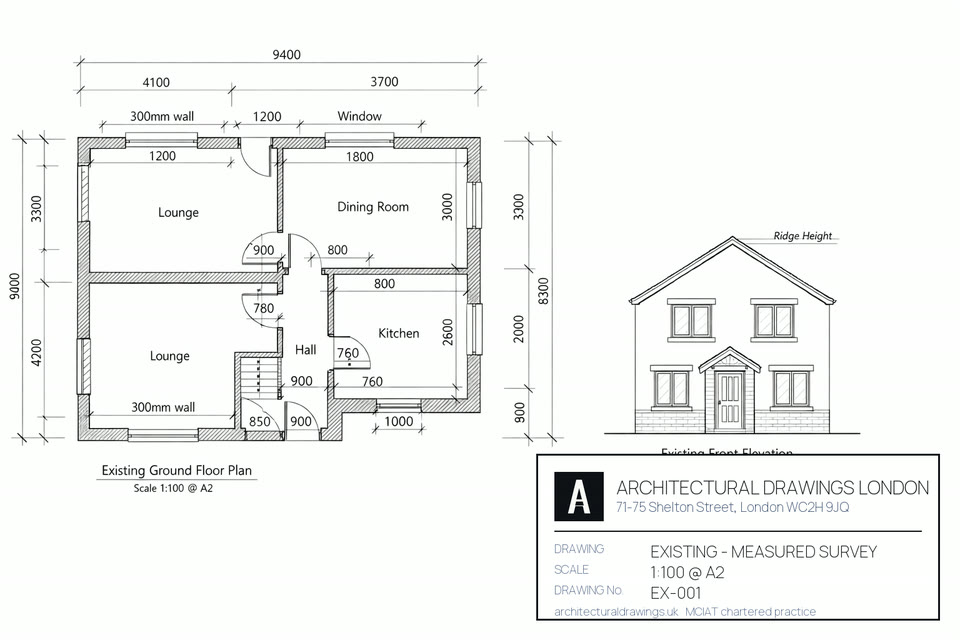
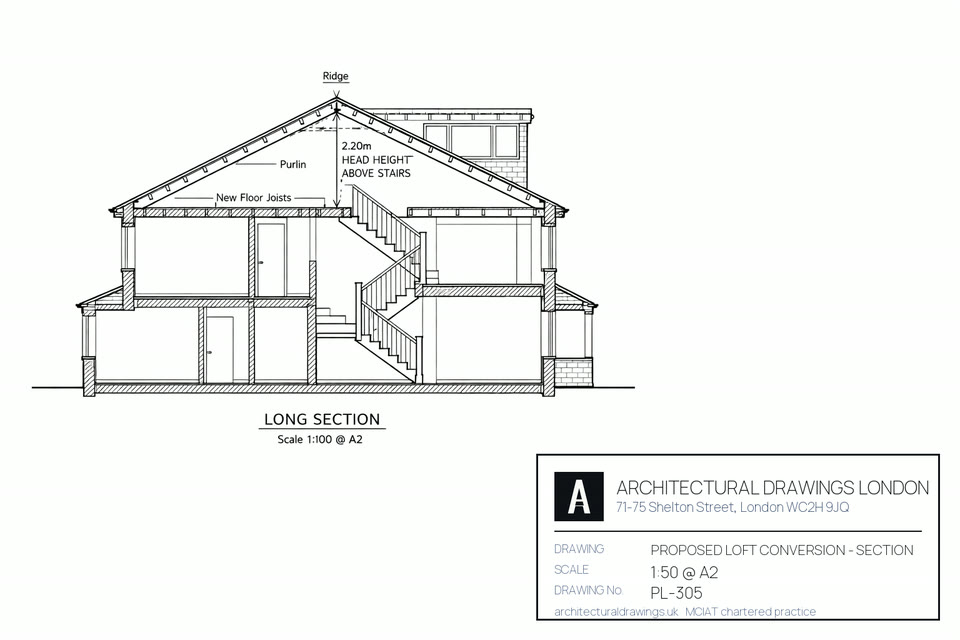
An architectural drawing service is a company or sole trader that produces scaled architectural drawings -- typically floor plans, elevations, sections, and site plans -- for homeowners who need them for planning applications or building regulations submissions. The emphasis is on drawing production rather than design consultancy.
Most drawing services operate online or with a streamlined local model. You provide your property details, they send a surveyor to carry out a measured survey, and they produce the drawings you need. The process is typically fast -- two to three weeks from instruction to final drawings -- and the fees are fixed and transparent, often published on the website.
What a drawing service typically includes
- Measured survey of the existing property
- Existing floor plans and elevations drawn to scale
- Proposed floor plans and elevations showing the planned changes
- Site plan and block plan for the planning application
- Planning application submission via the Planning Portal
What a drawing service typically does NOT include
- Design development or concept design
- Pre-application consultations with the council
- Building regulations calculations or structural design
- Contract administration or site inspections during construction
- Design and Access Statements or heritage assessments
Drawing services work best for straightforward projects where you already know what you want to build and simply need the drawings to get approval. They are the most affordable option, with fees typically ranging from £500 to £1,500 depending on the complexity of the project and the number of drawings required.
The risk with a basic drawing service is quality variation. Some are run by experienced professionals with architectural backgrounds; others rely on CAD technicians with limited understanding of planning policy or building regulations. When the drawings lack technical rigour or fail to address the council's specific requirements, the application is more likely to be refused or returned for amendments -- which costs time and often additional fees.
What is an architect?
In the UK, the title "architect" is legally protected by the Architects Act 1997. Only professionals registered with the Architects Registration Board (ARB) can call themselves architects. Most registered architects are also chartered members of the Royal Institute of British Architects (RIBA), though RIBA membership is voluntary -- it is ARB registration that is the legal requirement.
Becoming an architect requires a minimum of seven years of education and professional training: a Part 1 degree (three years), a Part 2 postgraduate degree (two years), and at least two years of professional practice experience before sitting the Part 3 professional practice examination. This is the longest training pathway of any construction professional in the UK.
What an architect typically provides
- Concept and schematic design -- exploring multiple design options, spatial layouts, and aesthetic approaches
- Planning drawings and submission -- the same deliverables as a drawing service, but typically as part of a larger design package
- Design and Access Statements -- written justifications of design decisions
- Building regulations drawings -- technical specifications, construction details, and compliance
- Tender documentation -- bills of quantities, specifications, and contractor procurement
- Contract administration -- managing the build, issuing instructions, certifying payments, inspecting work on site
- Interior design -- material selection, finishes, fixtures, and fittings
How architects charge in London
Architects in London typically charge using one of three models:
- Percentage of build cost: 8–15% of the total construction cost. For a £150, 000 rear extension in London, 000 to £22, 500.
- Hourly rate: £80–200+ per hour, depending on seniority and the practice's reputation. A typical residential project might accumulate 80–200 hours of work.
For a typical London house extension or loft conversion, 000 and £30, 000. For larger or more complex projects -- multi-storey extensions, basement excavations, new-build houses -- fees can exceed £50,000.
These fees reflect the breadth of service: an architect is providing design thinking, regulatory navigation, and project oversight from initial concept through to completion. If you want someone to design the look and feel of your space, manage the contractor, and handle the entire build process, an architect is the appropriate professional.
However, many London homeowners do not need this full scope of service. If you already know you want a standard rear extension, a dormer loft conversion, or a straightforward layout change, paying an architect £15,000 for design exploration you have already done yourself is not cost-effective.
What is an architectural technologist?
An architectural technologist is a construction professional who specialises in the technical design, detailing, and regulatory compliance of buildings. The professional body is the Chartered Institute of Architectural Technologists (CIAT), and the chartered grade -- the equivalent of a chartered architect's RIBA membership -- is CIAT Affiliate (Member of CIAT).
Where architects are trained primarily as designers, technologists are trained primarily as technical specialists. Their education focuses on building science, construction technology, materials, structural principles, thermal performance, fire safety, and the building regulations framework. They understand how buildings are actually constructed, not just how they look.
This distinction matters because the UK planning and building regulations system has two separate approval stages, and they require different skills. Planning permission is about design, appearance, and impact on the area. Building regulations approval is about structural integrity, fire safety, energy efficiency, ventilation, and accessibility. An architectural technologist is specifically trained for the second -- and is more than capable of the first for standard residential projects.
What an architectural technologist typically provides
- Measured surveys -- precise measurement of existing buildings using laser and digital tools
- Planning drawings -- existing and proposed plans, elevations, sections, and site plans to the standard required by planning authorities
- Building regulations drawings -- detailed construction drawings, specification schedules, and technical details that satisfy Part A (structure), Part B (fire), Part L (energy), Part F (ventilation), and all other applicable Approved Documents
- Structural coordination -- working with structural engineers to integrate steelwork, foundations, and structural elements into the drawings
- Planning submission -- preparing and submitting applications via the Planning Portal
- Building control liaison -- coordinating with the building control body (local authority or Approved Inspector) through the approval process
How architectural technologists charge
Most architectural technologists, including our team at Architectural Drawings London You know exactly what you will pay before you instruct. There are no hourly clock surprises and no percentage calculations that incentivise a higher build cost.
At Architectural Drawings London, 750 for our Complete package, which includes planning drawings, building regulations drawings, Design and Access Statement, and 3D visuals. These fees are fixed and agreed before any work starts.
The reason technologists can offer lower fees is not lower quality -- it is tighter scope. An architect's fee includes design exploration, concept development, interior design, and contract administration. If you do not need these services, you are paying for work that adds no value to your project. A technologist focuses on exactly the work that gets your project approved and built correctly.
Side-by-side comparison
The following table summarises the key differences between the three types of professional you can instruct for a London residential project.
| Feature | Drawing Service | Architect | Architectural Technologist |
|---|---|---|---|
| Qualification | Varies -- no mandatory qualification | ARB registered, typically RIBA chartered (Parts 1, 2, 3 -- 7 years min.) | CIAT member, CIAT Affiliate (degree + professional assessment) |
| Regulatory body | None mandatory | ARB (statutory), RIBA (voluntary) | CIAT (voluntary, but CIAT Affiliate is the chartered standard) |
| Typical fees (London) | £500–1,500 fixed | 8–15% of build cost (£8k–30k typical) | |
| Scope of work | Drawings only (plans, elevations, site plan) | Full service: concept design, planning, building regs, tender, contract admin, site inspection | Technical drawings, planning submission, building regs, structural coordination |
| Design input | Minimal -- draws what you specify | Extensive -- design is the core skill | Moderate -- practical design within technical constraints |
| Building regulations | Usually not included | Included in full-service packages | Core specialism -- detailed technical drawings and specifications |
| Turnaround | 1–3 weeks | 4–12 weeks (design exploration adds time) | 2–4 weeks |
| Best for | Simple projects, tight budgets, known designs | Complex designs, listed buildings, new builds, high-end refurbishments | Standard extensions, loft conversions, building regs compliance, fixed-budget projects |
Cost comparison: real London examples
Abstract fee ranges are hard to evaluate without context. Here is what each type of professional typically charges for three common London residential projects.
Example 1: Single-storey rear extension (4m × 6m)
Rear extension -- professional fees
Example 2: Dormer loft conversion
Loft conversion -- professional fees
Example 3: Two-storey side and rear extension
Two-storey extension -- professional fees
The difference is stark. For the same project, an architect can cost 5 to 15 times more than a technologist. That premium buys you design exploration, aesthetic consultancy, tender management, and site oversight. If you need those services, the premium is justified. If you do not, it is money you could put toward the build itself.
At Architectural Drawings London, our CIAT-affiliated technologists have worked across all 33 London boroughs. Get a free quote for your project.
When to use each professional
The right choice depends on your project, your budget, and how much design input you need. Here is a practical decision framework.
Use a drawing service when...
- Your project is simple and well-defined -- you know exactly what you want and just need someone to draw it
- You only need planning drawings, not building regulations
- Budget is the primary concern and you are comfortable managing the rest of the process yourself
- The work is Permitted Development and you just need a Lawful Development Certificate
Typical projects: straightforward single-storey rear extension within PD limits, internal layout changes, garden outbuilding, replacement windows and doors.
Use an architect when...
- Your project involves a listed building or is in a conservation area with stringent design requirements
- You want significant design input -- exploring spatial layouts, material palettes, and aesthetic directions you have not yet decided on
- The project is a new build, a large multi-storey extension, or a complex basement excavation
- You want the architect to manage the entire build, including contractor procurement, contract administration, and site inspections
- The project is high-end and the design quality is worth the investment (bespoke kitchens, statement staircases, architectural glazing)
Typical projects: listed building refurbishments, new-build houses, high-end whole-house renovations, complex basement conversions, commercial-to-residential conversions in sensitive locations.
Use an architectural technologist when...
- You need both planning permission and building regulations drawings at a fixed, predictable cost
- The project is a standard residential extension, loft conversion, or mansard roof
- You want a professional who specialises in the technical and regulatory side -- making sure the drawings comply with all relevant Approved Documents
- You need drawings that are accurate enough for builders to price and construct from
- You are working across multiple London boroughs and need someone who understands the specific policies of each
Typical projects: rear extensions, side extensions, dormer loft conversions, mansard loft conversions, hip-to-gable conversions, garage conversions, internal reconfiguration with structural alterations. For more detail on our approach, see our planning drawings service page.
Quality and approval rates
One concern homeowners raise when considering a technologist over an architect is quality. Will the drawings be good enough? Will the application be approved? The answer depends entirely on the individual professional, not the professional category.
A poorly qualified drawing service with no understanding of local planning policy will produce drawings that get refused. An expensive architect who does not keep up with the latest borough-specific policies can also produce drawings that get refused. And an architectural technologist with deep local knowledge and meticulous attention to detail will produce drawings that get approved first time.
At Architectural Drawings London, our policy-led planning review across all 33 London boroughs is central to the service. That rate is achieved because our CIAT-affiliated technologists check every project against the relevant Local Plan policies, the London Plan, and the National Planning Policy Framework before submission. We know which boroughs are strict on roof pitches, which conservation officers require heritage statements, and which planning teams want additional daylight and sunlight assessments.
What CIAT Affiliate status means for quality
The CIAT Affiliate (Member of the Chartered Institute of Architectural Technologists) designation is the chartered standard for architectural technology. To achieve CIAT Affiliate status, a professional must hold a CIAT-accredited degree in architectural technology, complete a period of supervised professional practice, and pass a rigorous professional assessment that evaluates technical competence, regulatory knowledge, and professional conduct.
CIAT Affiliate members are bound by a code of conduct that requires them to maintain professional competence, carry professional indemnity insurance, and engage in continuing professional development. This is the same level of professional accountability that RIBA chartered architects are held to -- different specialism, same standard of conduct.
For standard residential projects in London, CIAT Affiliate status is the most relevant professional qualification because it certifies the exact skills the project demands: technical drawing accuracy, building regulations compliance, and construction technology knowledge. You can learn more about our team's credentials on our About page.
The hybrid approach
Here is a strategy that increasing numbers of London homeowners are adopting, and it is one we actively recommend for projects that fall between the simple and the complex: use an architectural technologist for the drawings and regulatory work, and bring in an architect only if the design complexity genuinely demands it.
This approach works because the planning and building regulations process is fundamentally a technical drawing and compliance exercise. The council does not care whether your drawings were prepared by an architect, a technologist, or the homeowner -- they assess the drawings on their merits. If the drawings are accurate, compliant, and clearly presented, they get approved.
How the hybrid model works in practice
- Start with a technologist. Commission a measured survey and initial drawings. For most projects, the technologist can propose a sensible layout based on the site constraints, your brief, and the planning policy. This is practical design, not conceptual -- it works within the rules to maximise your usable space.
- Get planning permission and building regulations approval. The technologist prepares and submits both applications.
- If you want design input, commission it separately. If you decide you want a professional to help with interior layout, kitchen design, material selection, or lighting design, you can commission an architect or interior designer for that specific scope. Because they are not producing the planning drawings, their fee is much lower -- typically £2,000–£5,000 for a focused design brief.
- Build. Your builder works from the technologist's building regulations drawings, which contain the construction details, structural specifications, and compliance information they need.
This hybrid approach gives you the best of both worlds: professional, plus the option of design input where and when you want it. The total cost is typically 40–60% less than commissioning an architect for the full scope from the start.
Many of our clients come to us after receiving an architect's quote. They realise they do not need -- or want -- the full architectural service, and that an architectural technologist delivers the planning and building regulations work they actually need. Get a free quote and see for yourself.
When the hybrid approach is NOT appropriate
There are situations where you genuinely need an architect from the start, and we will tell you so:
- Listed buildings where every design decision must be justified to the conservation officer and a Heritage Impact Assessment is required
- New-build projects where the entire building needs designing from scratch
- Complex commercial or mixed-use projects where design, planning, and lease considerations are intertwined
- Competition or award-quality projects where the design itself is the primary objective
For a deeper comparison between architects and technologists specifically, see our companion guide: Architect vs Architectural Technologist: Which Do You Need?
Frequently asked questions
Is an architectural technologist cheaper than an architect?
Yes, in most cases significantly so. Architects typically charge 8–15% of the total build cost or hourly rates of £80–200+, which can result in fees of £8,000 to £30,000 for a typical London extension or loft conversion. At Architectural Drawings London. See our full pricing.
Can an architectural technologist submit planning applications?
Yes. Anyone can submit a planning application in England -- there is no legal requirement for the applicant or the person who prepares the drawings to hold any specific professional qualification. Architectural technologists regularly prepare and submit planning applications, and CIAT-affiliated architectural technologists are specifically trained in the technical and regulatory aspects of building design that planning authorities assess. At Architectural Drawings London, our architectural technologists review every submission against the relevant London borough policies. Learn more about our planning drawings service.
Do I need a RIBA architect for planning permission?
No. You do not need a RIBA architect or any architect to obtain planning permission. The planning system assesses the merits of the proposed development -- the quality and compliance of the drawings and design -- not the qualifications of the person who prepared them. Architectural technologists, building designers, and even homeowners can prepare and submit planning applications. For standard residential projects such as extensions, loft conversions, and internal alterations, a CIAT-affiliated architectural technologist will often deliver better value because they specialise in exactly the technical drawing and regulatory work that planning applications require.
What's the difference between RIBA and CIAT?
RIBA (Royal Institute of British Architects) and CIAT (Chartered Institute of Architectural Technologists) are both professional bodies in the UK construction industry, but they represent different disciplines. RIBA members are architects who hold Part 1, Part 2, and Part 3 qualifications (typically 7 years of education) and focus on design, aesthetics, and the full scope of architectural practice including concept design, contract administration, and site inspection. CIAT members are architectural technologists who specialise in the technical design, building regulations compliance, and the science of building construction. CIAT Affiliate (Member of CIAT) is the chartered grade, requiring a relevant degree plus professional practice assessment. Both professions can prepare planning applications and building regulations drawings. The key difference is focus: architects emphasise design and concept, while technologists emphasise technical detail and regulatory compliance. Read our full comparison.
How much do architects charge in London?
Architects in London typically charge either a percentage of the total build cost (8–15%) or hourly rates (£80–200+ per hour). For a typical London house extension costing £100, 000 to £200, 000 to build, 000 to £30, 000. For a loft conversion, expect £5,000 to £15,000 in architect fees. These fees usually cover concept design, planning drawings, building regulations drawings, and some level of contract administration. By comparison, 000 for planning and building regulations drawings for the same projects, without the design consultancy and contract administration components.