Loft conversion types
Rear dormer
The most common loft conversion in London. A flat-roof box dormer is added to the rear, creating full head height across most of the floor area. Typically falls under Permitted Development (not in conservation areas). See our Lewisham rear dormer case study.
Mansard
Creates a full additional storey by raising the entire roof to a distinctive sloped mansard profile. Always requires planning permission. More expensive but adds significantly more value and space.
Dormer vs Velux (rooflight only)
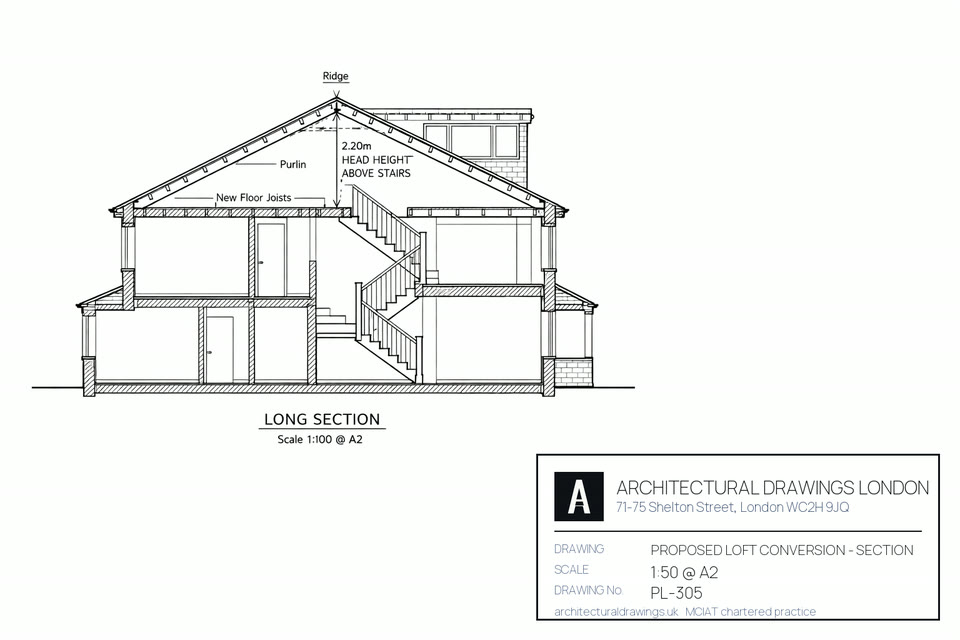
A Velux/rooflight conversion uses only roof windows with no external structural changes. Cheapest option but only works if existing roof has sufficient head height (minimum 2.2m at centre). A dormer provides far more usable floor area and is the standard choice for London terraces.
Hip-to-gable
For semi-detached and detached houses with hipped roofs. The sloping hip end is extended vertically to create a gable wall, often combined with a rear dormer. May require planning depending on property and borough.
L-shaped dormer
Combines a rear dormer with a side dormer over the rear addition (outrigger) of a Victorian terrace. Creates a larger loft with space for a bedroom and an en-suite or two rooms. Falls under PD if within volume limits.
Costs in London (2026)
- Rear dormer: £45,000–75,000 construction
- L-shaped dormer: £55,000–85,000
- Hip-to-gable + rear dormer: £55,000–80,000
- Mansard: £65,000–120,000
- Velux/rooflight only: £30,000–45,000
Planning & Permitted Development
Most rear dormer loft conversions fall under Permitted Development. Key limits for terraced houses: 50 cubic metre volume increase, dormer must not extend beyond the plane of the existing front roof slope, materials must match. Mansard conversions always need planning.
We strongly recommend a Lawful Development Certificate (£274 council fee) even when PD applies. Read our planning permission guide.
Building regulations
All loft conversions require building regulations approval regardless of planning status. Key areas: structural (new floor, ridge beam), fire escape (protected staircase, FD30 doors), Part L insulation (roof, walls, floor), Part E sound insulation, and staircase design. Our loft conversion package includes full building regulations drawings.
Party Wall for lofts
Most terraced and semi-detached loft conversions involve work on or near the party wall. You must serve a Party Wall Notice at least two months before work begins. Both neighbours need to be served for mid-terrace properties.
Browse loft conversion services by borough: