Key facts at a glance
- Hip to gable extends the sloping hip end of a roof to a vertical gable wall
- Only available for semi-detached and detached houses (not terraced)
- Usually Permitted Development (no planning permission needed)
- Cost: £45,000–£65,000 including all finishes
- Often combined with a rear dormer for maximum space
- Structural design required — new gable wall carries roof loads
How much roof volume does a hip-to-gable use?
Most of the allowance. Class B permits 50 cubic metres of added roof volume on a semi-detached or detached house and 40 on a terrace, and filling in a hip typically consumes the larger part of it — which is why a hip-to-gable and rear dormer are normally designed as one scheme.
| Class B rule | Terrace | Semi or detached |
|---|---|---|
| Added roof volume allowed | 40 m³ | 50 m³ |
| Beyond the front roof plane | not permitted | not permitted |
| Higher than the existing ridge | not permitted | not permitted |
| Set back from the eaves | at least 200mm | at least 200mm |
| Side windows | obscure-glazed, fixed below 1.7m | obscure-glazed, fixed below 1.7m |
| Inside a conservation area | not permitted development | not permitted development |
Source: Town and Country Planning (General Permitted Development) (England) Order 2015, Schedule 2, Part 1, Class B, as amended, read at 1 September 2026. The allowance is cumulative against the roof as originally built, so an earlier dormer counts. A hip-to-gable is only possible where the roof has a hip at all, which in London means inter-war and post-war semis rather than Victorian terraces.
What is a hip to gable loft conversion?
A hip to gable conversion is a type of loft conversion that extends the sloping hip end of a roof outwards to create a vertical gable wall. The "hip" is the sloping triangular section at the side of the roof (where the roof slopes inward to meet the ridge). By replacing this slope with a vertical wall (the "gable"), you create a much larger, more usable loft space with full head height extending right to the side wall of the house.
This type of conversion is most commonly done on semi-detached houses, where one end of the roof is hipped (the side not adjoining the neighbour). It can also be done on detached houses, which may have hipped ends on both sides. It is not possible on terraced houses, which do not have hipped ends.
In London, hip to gable conversions are extremely popular on 1930s semi-detached houses in outer boroughs like Barnet, Ealing, Hounslow, Bromley, Croydon, and Merton, where this house type dominates.
Permitted Development rules
Hip to gable loft conversions typically fall under Permitted Development (Class B of Part 1 of the GPDO), meaning no planning application is needed. The key conditions are:
- The additional roof space created must not exceed 50 cubic metres for a semi-detached house or 50 cubic metres for a detached house (this is a generous allowance that most hip to gable conversions fall within)
- The new gable wall must not extend beyond the plane of the existing front elevation
- The new gable wall must not be higher than the highest part of the existing roof
- Materials used on the exterior must be similar in appearance to the existing house
- No verandas, balconies, or raised platforms
- Side-facing windows must be obscure-glazed and non-opening below 1.7m from the floor
- The property must not be in a conservation area with an Article 4 Direction that removes roof extension PD rights
We always recommend a Lawful Development Certificate (£274 council fee) for hip to gable conversions. This provides legal proof that the conversion is PD, which is invaluable when you come to sell the property. We can prepare and submit the LDC application as part of our service.
Hip to gable costs in London
| Cost element | Typical range |
|---|---|
| Build cost (hip to gable only) | £35,000–£50,000 |
| Build cost (hip to gable + rear dormer) | £45,000–£65,000 |
| Architectural drawings (our fees) | |
| Building regulations + structural | |
| Bathroom fit-out (en-suite) | £4,000–£8,000 |
| Staircase | £2,000–£4,000 |
| Electrics and plumbing | £3,000–£5,000 |
| Plastering and decoration | £2,000–£4,000 |
| Total project cost | £55,000–£80,000 |
Hip to gable vs dormer: what is the difference?
A hip to gable and a rear dormer are complementary, not competing, options. Most hip to gable conversions in London also include a rear dormer to maximise the loft space. Here is how they compare:
- Hip to gable: extends the side of the roof from a slope to a vertical wall. Gains width and headroom at the sides of the loft. Most effective on semi-detached houses with hipped roofs.
- Rear dormer: a box-shaped extension from the rear roof slope. Gains depth, headroom, and floor area across the back of the loft. Can be done on any house type (terraced, semi, or detached).
- Combined hip to gable + rear dormer: the most common configuration for semi-detached houses in London. The hip to gable provides width; the dormer provides depth. Together, they create a loft with a usable floor area similar to the first floor below.
For our detailed comparison of dormer types, see our dormer vs Velux loft conversion guide.
Structural considerations
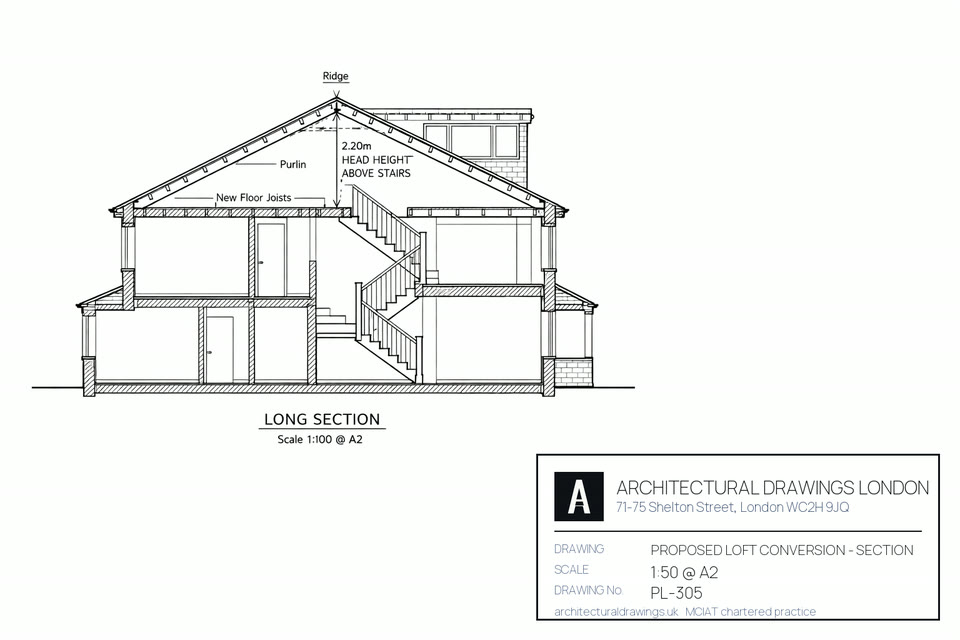
A hip to gable conversion is a significant structural alteration. The new gable wall replaces the hipped roof rafters and must carry the roof loads that were previously distributed across the hip. A structural engineer designs:
- The new gable wall: typically blockwork or timber frame with a brick or render external finish to match the existing house
- A steel beam or ridge beam: to support the ridge where it previously met the hip
- New floor joists: the existing ceiling joists in a hipped roof area are rarely adequate to support a habitable floor; the engineer specifies new joists or steel beams
- Lateral bracing: to ensure the new gable wall is stable against wind loads
- Foundation check: the existing external wall below the new gable must be capable of supporting the additional load; the engineer verifies this
Our design process for hip to gable
We have designed hip to gable conversions across all 33 London boroughs. Our process:
- Measured survey of the existing property (included in all packages)
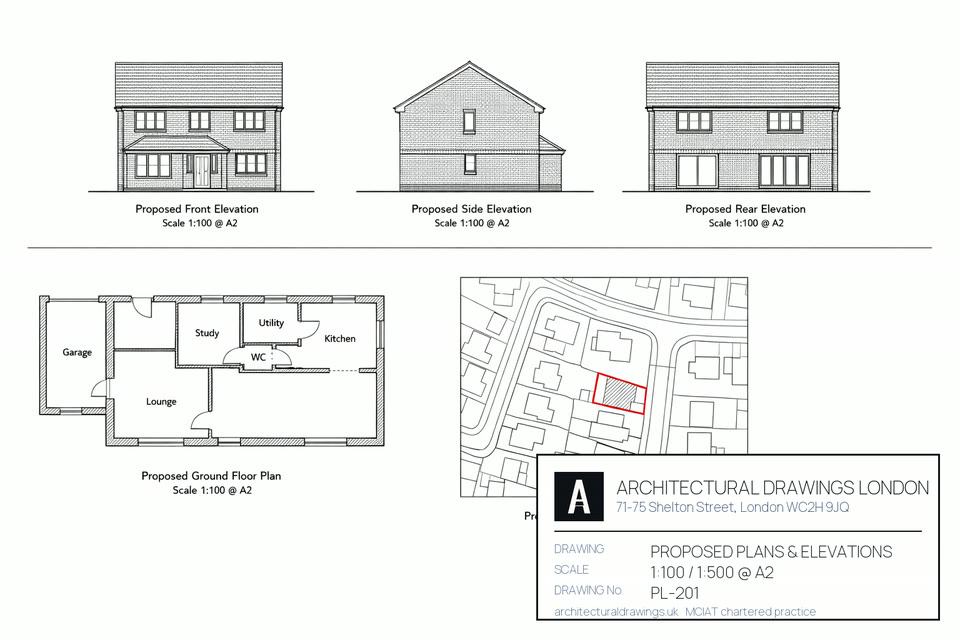
- Design development -- we produce floor plans, elevations, and sections showing the proposed conversion, dormer (if included), staircase position, and room layout
- PD assessment -- we confirm the conversion is Permitted Development and prepare a Lawful Development Certificate application if needed
- Building regulations drawings -- detailed construction drawings and structural calculations for building control approval
- Submission and liaison -- we submit all applications and manage the approval process
Loft conversion drawing fees
Get a free quote for your loft →
Frequently asked questions
What is a hip to gable loft conversion?
A hip to gable conversion extends the sloping hip end of a roof outwards to create a vertical gable wall, dramatically increasing usable loft space. It is most common on semi-detached houses with hipped roofs and is often combined with a rear dormer for maximum space.
Do I need planning permission for a hip to gable in London?
Most hip to gable conversions are Permitted Development and do not need planning permission, provided they stay within the 50 cubic metre volume allowance and meet the other PD conditions. Properties in conservation areas with Article 4 Directions may need planning. We recommend a Lawful Development Certificate for legal proof.
How much does a hip to gable loft conversion cost?
A hip to gable conversion in London typically costs £35,000–£50,000 for the build. Combined with a rear dormer, the total build cost is £45,000–£65,000. Including all finishes, bathroom, staircase, and professional fees, the total project cost is £55,000–£80,000.
Can I do a hip to gable on a terraced house?
No. Terraced houses have party walls on both sides and do not have hipped roof ends. Hip to gable conversions are only possible on semi-detached houses (one hip end) and detached houses (potentially both hip ends). Terraced houses typically use rear dormers or mansard conversions instead.
Is a hip to gable better than a dormer?
They serve different purposes and are often combined. A hip to gable gives width and headroom at the side; a dormer gives depth and headroom at the rear. The most popular configuration for London semi-detached houses is hip to gable plus rear dormer, which maximises the usable loft floor area.