Where in Kensington and Chelsea does a loft conversion actually get determined?
Every Kensington and Chelsea postcode district we work in, the roof type you tend to meet there, and which authority validates a loft application at that address. Fees in that table are the 2026 statutory application charges set by central government, which are separate from what we charge to draw the scheme.
| Postcode | Area | Dominant stock | What it means for a loft conversion |
|---|
| SW10 | West Brompton / World's End | Georgian and Victorian terraces, listed buildings | SW10 is divided. A World’s End or West Brompton loft may be determined by the Royal Borough or by Hammersmith and Fulham depending on which side of the line the house stands, and the SW10 policies map settles it address by address. |
| W8 | Kensington | Stucco terraces, listed buildings | W8 covers Kensington only; RBKC Planning handles the loft conversion. |
| W10 | North Kensington / Ladbroke Grove | Victorian terraces, post-war estates | W10 is also wholly Royal Borough ground. North Kensington and Ladbroke Grove roofs are read against the W10 designation map, and the mews and artisan cottages north of the Westway are judged on a different basis from the Ladbroke estate villas. |
| W11 | Notting Hill / Holland Park | Victorian stucco terraces | W11 sits entirely within the Royal Borough. Notting Hill and Holland Park officers work to the W11 designation boundaries, which take in most of the stucco terraces and set the expectation for what any addition at roof level is allowed to look like. |
| SW1X | Knightsbridge / Belgravia | Regency stucco terraces, listed buildings | SW1X is shared with Westminster. Belgravia and Knightsbridge houses fall either side of that boundary, so a roof scheme is checked against the SW1X policies map before we name the authority that will validate it. |
| W14 | West Kensington / Barons Court | Victorian and Edwardian villas | The W14 district is cut by the borough boundary. Barons Court and West Kensington lofts are therefore validated by Hammersmith and Fulham in some streets and by the Royal Borough in others, and we resolve which before drawing, because the two policy maps do not read roof alterations the same way. |
| SW3 | Chelsea / Brompton | Georgian and Victorian terraces, listed buildings | SW3 lies wholly inside the Royal Borough, so every Chelsea and Brompton loft goes to the same validating team — but almost all of SW3 is designated, and the appraisal written for the relevant sub-area usually matters more to the outcome than the postcode does. |
| SW5 | Earl's Court | Stucco terraces, Edwardian mansion blocks | A loft conversion at an SW5 address in Earl's Court is determined by RBKC Planning under its own Local Plan policies for Earl's Court. |
Which Kensington and Chelsea neighbourhoods suit a loft conversion best?
Ridge height, roof pitch and party wall build-up change from one Kensington and Chelsea terrace to the next, and each of those changes what a loft can gain at a particular address.
- Earl's Court (SW5) — Victorian stucco terraces, mansion blocks defines Earl's Court, where stucco terraces, edwardian mansion blocks set what a loft conversion can do. Edwardian roofs run deeper front-to-back across SW5. Any Earl's Court loft conversion is validated by RBKC Planning, with Earl's Court station the usual Earl's Court reference point on the site plan.
- South Kensington (SW7) — loft conversion work in South Kensington means stucco terraces, mansion blocks, listed buildings. South Kensington is Victorian and Edwardian stucco terraces. Mansion-block roof space is normally in common ownership throughout SW7. RBKC Planning decides the South Kensington application, and V&A anchors the South Kensington location plan.
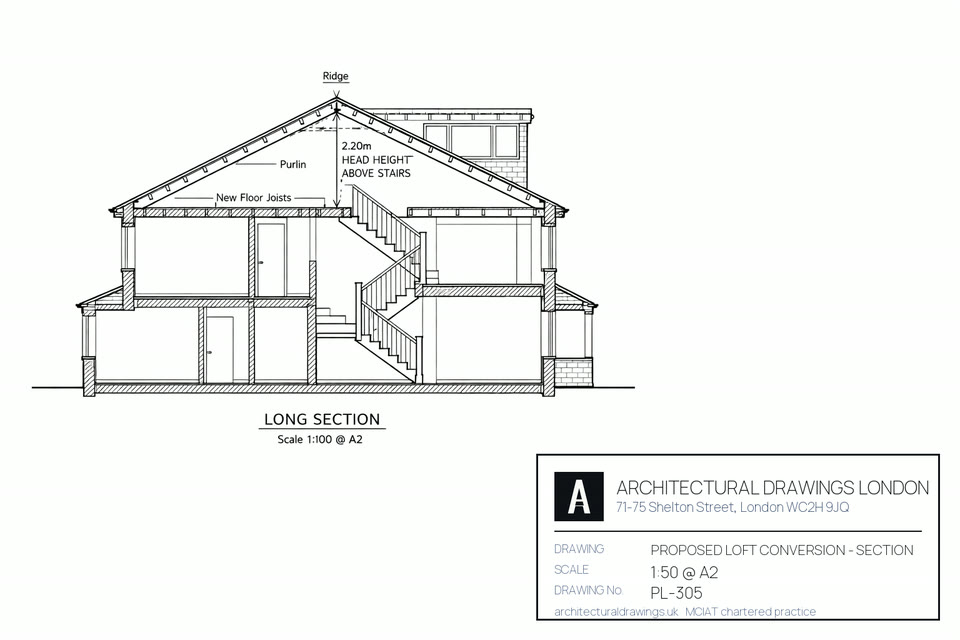
- Knightsbridge (SW1X, SW7) — Regency and Victorian terraces, luxury defines Knightsbridge, where regency and victorian terraces, mansion blocks set what a loft conversion can do. The Victorian butterfly and double-pitched roofs on these streets normally clear the 2.2 m head height a dormer conversion needs once the ceiling joists are raised across SW1X. Any Knightsbridge loft conversion is validated by RBKC Planning, with Harrods the usual Knightsbridge reference point on the site plan.
- North Kensington (W10) — loft conversion work in North Kensington means victorian terraces, post-war estates. North Kensington is Victorian terraces, post-war estates. The Victorian butterfly and double-pitched roofs on these streets normally clear the 2.2 m head height a dormer conversion needs once the ceiling joists are raised throughout W10. RBKC Planning decides the North Kensington application, and Golborne Road anchors the North Kensington location plan.
- Brompton (SW3) — a loft conversion in Brompton starts from stucco terraces, edwardian mansion blocks, and Brompton reads as Victorian stucco terraces, mansion blocks. Edwardian roofs run deeper front-to-back in SW3. RBKC Planning assesses Brompton loft conversions against its own Brompton character guidance, and the location plan we draw for Brompton references Brompton Cross.
- Kensington (W8) — loft conversion work in Kensington means stucco terraces, listed buildings. Kensington is Georgian and Victorian stucco terraces. The Victorian butterfly and double-pitched roofs on these streets normally clear the 2.2 m head height a dormer conversion needs once the ceiling joists are raised throughout W8. RBKC Planning decides the Kensington application, and Kensington Palace anchors the Kensington location plan.
- Chelsea (SW3, SW10) — loft conversion work in Chelsea means georgian and victorian terraces, listed buildings. Chelsea is Georgian and Victorian terraces, riverside. Georgian roofs here are shallow and often behind a parapet throughout SW3. RBKC Planning decides the Chelsea application, and King's Road anchors the Chelsea location plan.
What local planning policy applies to a loft conversion in Kensington and Chelsea?
How designation changes a Kensington and Chelsea loft conversion: RBKC Planning maintains 38 conservation areas, including Holland Park, Earls Court, Kensington. Inside any of them a Kensington and Chelsea loft conversion cannot rely on permitted development, and the route becomes a £548 householder application determined in 8 weeks rather than a £249 prior approval in 6 weeks. Chelsea sets the tone for Kensington and Chelsea casework.
Kensington and Chelsea and Article 4: Article 4 Directions covering HMOs, office-to-residential, and basement developments — RBKC has some of the strictest basement policies in London. A loft conversion planned at a SW3 address is checked against that direction first; RBKC Planning publishes the Kensington and Chelsea extent, and the SW3 line rarely follows the Kensington and Chelsea boundary you would expect.
Digging under a Chelsea or Kensington house: one storey below ground is the ceiling the 2015 policy sets, the excavated footprint may not take in over half the garden, and a second level beneath that is refused on residential streets as a matter of routine. Where roof work is paired with excavation the Party Wall etc. Act 1996 runs alongside the planning route — two months notice to any neighbour within 3 m of the dig — and officers expect the ground and groundwater position for that address to be set out in the submission rather than assumed from next door.
The building fabric around Kensington and Chelsea: Grand white stucco Regency and Victorian terraces; red-brick Queen Anne mansions in Kensington; Edwardian mansion blocks; almost no post-war housing stock. Internationally wealthy residents; extensive listed building coverage; heritage and streetscape prioritised in every decision. A loft conversion in Kensington and Chelsea is scoped against that stock first, because it decides whether the scheme runs as permitted development, a £274 Lawful Development Certificate, or a full £548 application to RBKC Planning.
What happens if a Kensington and Chelsea property sits on a boundary?
- Westminster — cross the Kensington and Chelsea boundary and Westminster City Council takes the loft conversion instead, applying 56 conservation areas of its own around SW1. We re-price loft conversions at the Kensington and Chelsea edge because Westminster policy and Kensington and Chelsea policy rarely align on loft conversion depth.
- Hammersmith and Fulham — adjoining Kensington and Chelsea, with 45 conservation areas centred on W6. A loft conversion on the far side of the Kensington and Chelsea line is determined by Hammersmith & Fulham Council, so the Kensington and Chelsea quote for loft conversions is checked against Hammersmith and Fulham guidance before it is issued.
- Brent — the Brent boundary runs against Kensington and Chelsea, so a loft conversion a street from Kensington and Chelsea is decided by Brent Council instead. Brent runs 22 conservation areas across NW2 and its neighbours, which is why loft conversions priced for Kensington and Chelsea are re-checked against Brent policy whenever the Kensington and Chelsea address sits on that edge.
Sources for this Kensington and Chelsea loft conversion page: borough policies maps and
conservation-area registers (2025–26), Royal Mail postcode district boundaries,
the Town and Country Planning (Fees for Applications) (England) Regulations, the Town
and Country Planning (General Permitted Development) (England) Order 2015 as amended,
and the Party Wall etc. Act 1996.