Where in City of London does a building regulations package actually get determined?
The EC districts we draw in, the buildings that characterise each, and who signs off a building regulations package at that address. The fees quoted are 2026 statutory England planning charges, listed for reference — building control fees are separate and are set by the body you submit to.
| Postcode | Area | Dominant stock | What it means for a building regulations package |
|---|
| EC1A | Smithfield | Mostly commercial, residential lofts | Smithfield sits wholly inside EC1A, so City of London Corporation validates every building regulations package submitted from an EC1A address. |
| EC2Y | Barbican | Listed Brutalist apartments (Barbican Estate) | Barbican sits wholly inside EC2Y, so City of London Corporation validates every building regulations package submitted from an EC2Y address. |
| EC3N | Tower Hill / Aldgate | Very limited residential — Barbican Estate (listed post-war) | Tower Hill / Aldgate sits wholly inside EC3N, so City of London Corporation validates every building regulations package submitted from an EC3N address. |
| EC4M | St Paul's | Mostly commercial, listed residential | A building regulations package at an EC4M address in St Paul's is determined by City of London Corporation under its own Local Plan policies for St Paul's. |
| EC4V | Blackfriars | Very limited residential — Barbican Estate (listed post-war) | EC4V covers Blackfriars only; City of London Corporation handles the building regulations package. |
| EC4Y | Temple | Very limited residential — Barbican Estate (listed post-war) | A building regulations package at an EC4Y address in Temple is determined by City of London Corporation under its own Local Plan policies for Temple. |
| EC2A | Shoreditch | Warehouse conversions, modern infill | Shoreditch is split. EC2A runs across the Hackney boundary, so an address there may be the Corporation's to determine or Hackney's, and the policies map is what resolves it. The two authorities keep separate building control teams as well. |
Which City of London neighbourhoods suit a building regulations package best?
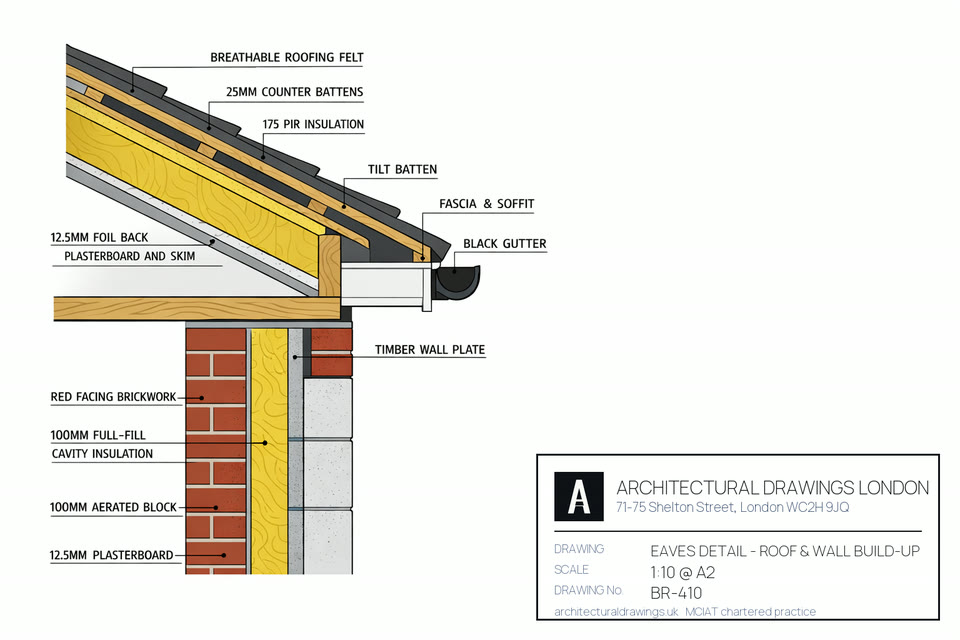
Two buildings a hundred metres apart in the Square Mile can be a 19th-century warehouse conversion and a 1970s concrete frame. Wall build-up, floor structure and whatever sits above and below change with them, and so does the list of things a building control submission is obliged to demonstrate.
- Barbican (EC2Y) — Brutalist listed estate defines Barbican, where listed brutalist apartments (barbican estate) set what a building regulations package can do. Post-war concrete frames here need a Part B fire strategy that addresses the existing compartmentation across EC2Y. Any Barbican building regulations package is validated by City of London Corporation, with Barbican Centre the usual Barbican reference point on the site plan.
- Smithfield (EC1A) — a building regulations package in Smithfield starts from mostly commercial, residential lofts, and Smithfield reads as Georgian and Victorian commercial. Victorian solid brickwork here drives the Part L strategy and the Part C damp detailing in EC1A. City of London Corporation assesses Smithfield building regulations drawings against its own Smithfield character guidance, and the location plan we draw for Smithfield references Smithfield Market.
- Fleet Street (EC4) — Georgian and Victorian commercial defines Fleet Street, where mostly commercial, residential conversions set what a building regulations package can do. Victorian solid brickwork here drives the Part L strategy and the Part C damp detailing across EC4. Any Fleet Street building regulations package is validated by City of London Corporation, with Royal Courts of Justice the usual Fleet Street reference point on the site plan.
- St Paul's (EC4M) — a building regulations package in St Paul's starts from mostly commercial, listed residential, and St Paul's reads as Listed heritage commercial core. Victorian solid brickwork here drives the Part L strategy and the Part C damp detailing in EC4M. City of London Corporation assesses St Paul's building regulations drawings against its own St Paul's character guidance, and the location plan we draw for St Paul's references St Paul's Cathedral.
How do conservation areas and Article 4 affect a building regulations package in City of London?
Conservation areas covering City of London: City of London Corporation runs 27, and Barbican, Smithfield, Fleet Street are the ones City of London owners meet most. A building regulations package inside a City of London conservation area loses permitted development, so the City of London submission is a householder application at £548 decided in 8 weeks — not a £249 prior approval decided in 6 weeks. In Smithfield a building regulations package is judged on the street elevation first.
City of London and Article 4: Multiple Article 4 Directions around office-to-residential, demolition, and shopfront changes. A building regulations package planned at a EC1A address is checked against that direction first; City of London Corporation publishes the City of London extent, and the EC1A line rarely follows the City of London boundary you would expect.
What City of London is built from: Very limited residential — Barbican Estate (listed post-war), Golden Lane Estate, modern luxury flats; overwhelmingly commercial. Overwhelmingly commercial; residential planning extremely constrained; one of the two highest listed-building densities in London. That mix decides the building regulations package route in City of London more than the postcode does, and it is what a City of London Corporation case officer reads first. A householder application costs £548 paid to City of London Corporation direct, with 8 weeks to a decision once validated.
Who decides a building regulations package on the edge of City of London?
- Tower Hamlets — cross the City of London boundary and Tower Hamlets Council takes the building regulations package instead, applying 58 conservation areas of its own around E1. We re-price building regulations drawings at the City of London edge because Tower Hamlets policy and City of London policy rarely align on building regulations package depth.
- Southwark — the Southwark boundary runs against City of London, so a building regulations package a street from City of London is decided by Southwark Council instead. Southwark runs 43 conservation areas across SE1 and its neighbours, which is why building regulations drawings priced for City of London are re-checked against Southwark policy whenever the City of London address sits on that edge.
- Westminster — the Westminster boundary runs against City of London, so a building regulations package a street from City of London is decided by Westminster City Council instead. Westminster runs 56 conservation areas across SW1 and its neighbours, which is why building regulations drawings priced for City of London are re-checked against Westminster policy whenever the City of London address sits on that edge.
- Camden — cross the City of London boundary and Camden Council takes the building regulations package instead, applying 40 conservation areas of its own around NW1. We re-price building regulations drawings at the City of London edge because Camden policy and City of London policy rarely align on building regulations package depth.
Sources for this City of London building regulations package page: borough policies maps and
conservation-area registers (2025–26), Royal Mail postcode district boundaries,
the Town and Country Planning (Fees for Applications) (England) Regulations, the Town
and Country Planning (General Permitted Development) (England) Order 2015 as amended,
and the Party Wall etc. Act 1996.