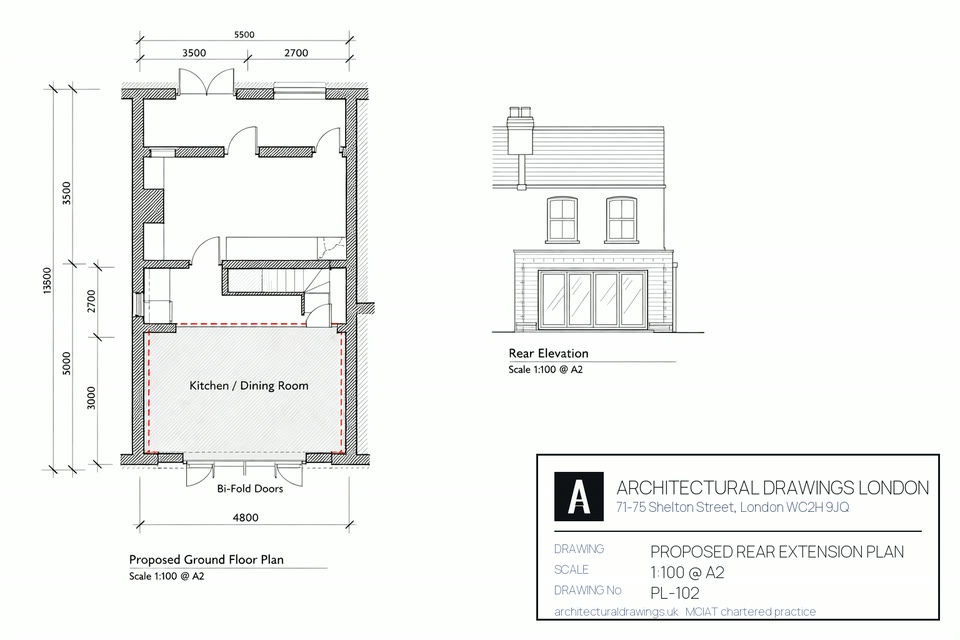
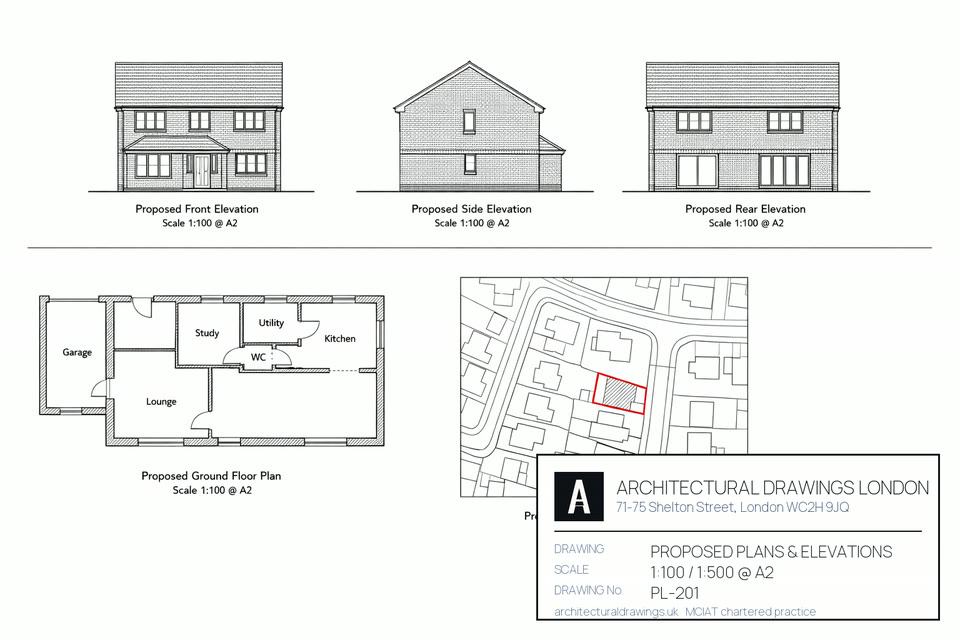
Key facts at a glance
- Wraparound = rear extension + side return combined into an L-shape
- Usually needs planning permission (exceeds PD footprint limits)
- Typically requires 2 steel beams (RSJs) for rear and side openings
- Party Wall notices likely needed on 2 boundaries
- Build costs £2,200–£3,200/sqm in London
- Our architectural drawings from £1,925
What is a wraparound extension?
A wraparound extension -- sometimes called an L-shaped extension or a rear-and-side extension -- combines a rear extension with a side return extension into a single, continuous structure. The result is an L-shaped footprint that wraps around the back corner of the house, creating a significantly larger ground-floor living space than either a rear or side extension could achieve alone.
In London, wraparound extensions are particularly popular on Victorian and Edwardian terraced and semi-detached houses. These properties typically have a narrow side return (the alley running alongside the original rear addition) and a modest rear garden. By building across the side return and extending to the rear simultaneously, you can add 15-30 sqm of new floor space and create the open-plan kitchen-dining-living room that is the most requested layout in London residential design.
The typical configuration is a flat-roofed single-storey extension with large bi-fold or sliding glass doors to the garden and a rooflight over the side return to bring daylight deep into the plan. The internal layout usually places the kitchen along the side wall, with the dining and living areas opening directly onto the garden through the rear glazing.
Planning permission vs. Permitted Development
The key question with any wraparound extension is whether it needs planning permission. In theory, both a rear extension and a side extension can fall under Permitted Development. In practice, combining them into a wraparound usually exceeds PD limits for one or more of the following reasons:
- Side extension width: Under PD, a side extension cannot exceed half the width of the original house. On narrow London terraces, the side return itself is often close to this limit.
- Combined footprint: The PD conditions for rear extensions and side extensions are assessed independently. When you combine them, the junction point -- where the rear extension meets the side extension -- may not satisfy the conditions of either PD class on its own.
- Conservation areas: In conservation areas, side extensions are not Permitted Development at all. Since the wraparound includes a side element, the entire project needs planning permission.
- Article 4 Directions: Some boroughs remove PD rights for side extensions in specific areas.
In our experience across all 33 London boroughs, approximately 80% of wraparound extensions require a planning application. We always assess the PD position first -- if your project can be done under PD, we will tell you and apply for a Lawful Development Certificate instead. If planning is needed, the householder application fee is £548 with an 8-week statutory determination period.
Structural considerations: steels and foundations
A wraparound extension is more structurally complex than a simple rear extension because you are opening up two walls instead of one. The existing rear wall and the side return wall both need to be partially or fully removed to create the open-plan space, which means the loads from the floors and roof above must be transferred through new structural elements.
Steel beams (RSJs)
A typical wraparound requires two steel beams:
- Rear beam: Spans the width of the existing rear wall opening, supporting the first-floor joists above. Typical size: 203x133 UB or larger, depending on the span and load.
- Side beam: Spans the length of the side return wall, supporting any load from above if the original outrigger wall is being removed. The size depends on the span and whether there is load-bearing structure above.
The beams bear onto padstones (concrete or steel bearing pads) at their ends, which distribute the load down through the existing walls or new posts to the foundations. The junction where the two beams meet at the corner is the most critical detail -- your structural engineer will specify either a steel post or a connection detail to transfer the loads cleanly.
Foundations
New foundations are required for all external walls of the extension. In London's clay soil (London Clay Formation), foundations must typically be at least 1 metre deep to account for seasonal shrinkage and swelling. Near trees, depths of 1.5-2.5 metres may be required, and trench-fill or piled foundations may be necessary. Your structural engineer will specify the foundation design based on a desktop study of the soil conditions and tree proximity.
Party Wall implications
A wraparound extension in London almost always triggers the Party Wall etc. Act 1996 because the work affects two boundaries:
- Side boundary: The new side return wall is built on or adjacent to the party boundary with your adjoining neighbour. If the new wall is built astride the boundary, you need their consent. If it is built entirely on your land but within certain distances, you still need to serve notice.
- Rear boundary (if applicable): If your rear extension extends close to the boundary with your rear neighbour, and if you are excavating foundations within 3 metres of their structure (or 6 metres if the excavation goes deeper than their foundations), you must serve notice under Section 6 of the Act.
You must serve party wall notice at least 2 months before starting work on the party wall itself, or 1 month before excavation near an adjoining owner's foundations. If the neighbour does not consent in writing within 14 days, a party wall surveyor must be appointed. Budget £700-£1,500 per adjoining owner for party wall surveyor fees. In London, with two affected neighbours, this typically adds £1,400-£3,000 to the project cost.
Design considerations: making the most of the space
The kitchen-diner layout
The classic wraparound layout places the kitchen along the new side wall (where the side return used to be), with the dining table in the centre and a living/sofa area adjacent to the bi-fold doors. This creates a zoned but visually connected space that feels dramatically larger than the original separate kitchen and dining room.
Rooflights and glazing
The side return portion of a wraparound can feel dark because it sits between two walls. A continuous rooflight running along the side return solves this problem and creates a dramatic light-filled corridor effect. Full-height glazing on the rear wall maximises the connection to the garden and brings daylight deep into the plan. Many clients choose a frameless rooflight for a cleaner aesthetic.
Drainage and services
Building over the side return often means building over existing drainage runs. You will need to reroute drains or install a build-over agreement with Thames Water. We identify drain runs during the measured survey and incorporate rerouting into the design from the outset, avoiding costly surprises during construction.
Wraparound extension costs in London
Typical cost breakdown: 20-25 sqm wraparound
Total project cost for a typical 20-25 sqm wraparound extension in London, including all professional fees, council fees, Party Wall, and building works: £55,000-£90,000. Premium specifications with high-end kitchens, underfloor heating, and bespoke joinery can push this to £100,000+.
Our wraparound extension drawing package from £1,925 includes the measured survey, existing and proposed plans and elevations, section drawings, structural specification, and the planning application submission. We also prepare the building regulations drawings for a single combined fee. Get a free quote.
Frequently asked questions
Do I need planning permission for a wraparound extension in London?
In most cases, yes. The combined rear-and-side footprint usually exceeds PD limits. In conservation areas, the side element always needs planning permission. We assess PD compliance first -- if your project qualifies, we apply for an LDC instead. If planning is needed, the householder application fee is £548 with an 8-week determination period. See our planning service.
How much does a wraparound extension cost in London?
Total project costs for a 20-25 sqm wraparound range from £55,000 to £90,000 including all professional fees, council fees, Party Wall, and build works at £2,200-£3,200/sqm. Our drawings start from £1,925. Get a free quote for your project.
What structural work does a wraparound extension need?
Typically two steel beams: one across the rear wall opening and one across the side return. Foundations in London clay need to be at least 1m deep, potentially deeper near trees. A structural engineer designs the steels and foundations as part of the project -- we coordinate this and include the structural specification in our drawing package.
Do I need a Party Wall Agreement for a wraparound extension?
Almost certainly. A wraparound affects two boundaries -- the side and the rear. You must serve Party Wall notice 2 months before work on the wall itself, or 1 month before excavation near a neighbour's structure. Budget £700-£1,500 per neighbour for surveyor fees. We advise on Party Wall requirements and can recommend experienced local surveyors. See our extension service.
How long does a wraparound extension take to build?
Construction takes 10-14 weeks from site strip to practical completion. Add 12-16 weeks for planning and 4-6 weeks for building regs and structural detailing. Party Wall can add 2-4 months if neighbours do not consent promptly. Total timeline from instruction to completion: 6-9 months. We manage the programme to keep things on track.