Key facts at a glance
- Side return build cost: £40,000–£75,000 (London, 2026)
- Typical size: 4–12 sqm of additional floor space
- Usually Permitted Development (no planning permission needed)
- Party Wall notice required in most cases
- Construction time: 10–12 weeks on site
Does a side return extension need planning permission?
A side return extension is usually permitted development. Class A allows a single-storey side extension up to half the width of the original house, no more than 4m high, with eaves no higher than 3m within 2m of a boundary. Conservation areas, flats and Article 4 streets need full planning.
| Class A condition, side extension | Limit |
|---|---|
| Width | half the width of the original house |
| Storeys | single-storey only |
| Overall height | 4m |
| Eaves height within 2m of a boundary | 3m |
| Total coverage by extensions and outbuildings | 50% of the land around the original house |
| Materials | similar appearance to the existing house |
| Side extension in a conservation area | no PD right — full planning |
| Wraparound combining side and rear | full planning in most cases |
Class A, Schedule 2 Part 1, GPDO 2015 as amended. “Original house” means as it stood on 1 July 1948, or as first built if later — a previous owner’s rear addition already eats into the allowance. Where the side return is combined with a rear extension, the wraparound is normally assessed as one operation and falls outside Class A.
What is a side return extension?
A side return is the narrow alleyway that runs alongside many London terraced and semi-detached houses, between the side wall of the rear addition (the back portion of the house, sometimes called the "closet wing" or "back addition") and the garden boundary wall shared with the neighbour.
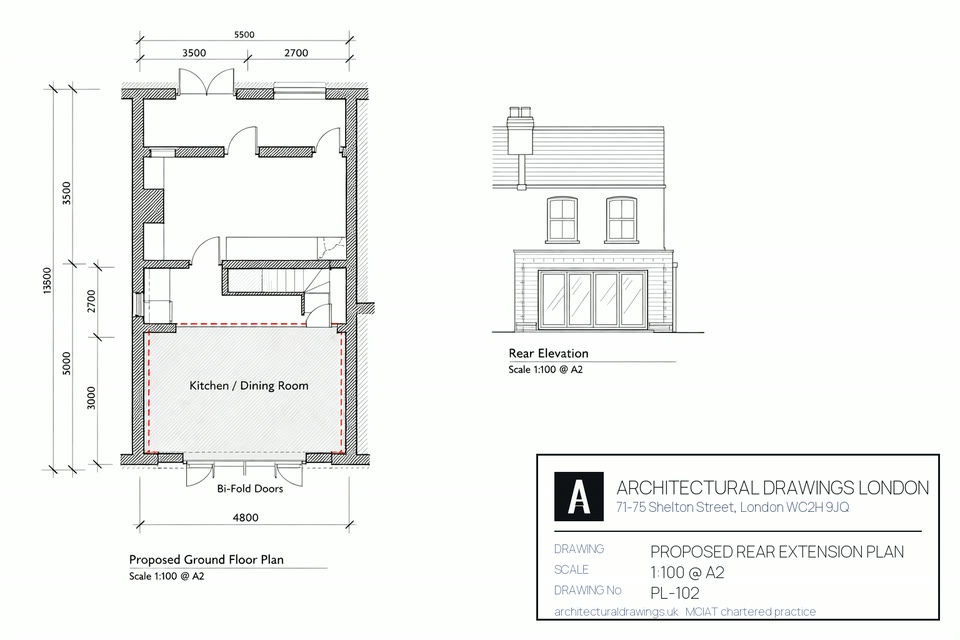
In a typical London Victorian or Edwardian terraced house, the original layout has a front reception room running the full width of the house, then a narrower rear addition offset to one side, containing the kitchen and a small back room. The side return is the wasted strip of space between this rear addition and the boundary -- usually 0.9 to 1.8 metres wide and 4 to 6 metres deep.
A side return extension infills this alley, extending the ground floor of the rear addition to the full width of the plot. The result is transformative: a cramped, narrow kitchen becomes a wide, light-filled room, typically large enough for a proper kitchen-diner with space for a dining table, island unit, or living area.
Side return extensions are one of the most popular and cost-effective home improvements in London because they use otherwise wasted space, they are relatively compact (keeping build costs manageable), and they often fall within Permitted Development limits so no planning permission is needed.
Why do London terraces have a side return at all?
To understand why side return extensions work so well, you need to understand the floor plan of a standard London terraced house. The vast majority of Victorian and Edwardian terraces in inner London follow this pattern:
- Front reception room -- runs the full width of the house (typically 4–5 metres), with a bay window to the street.
- Rear reception room -- directly behind the front room, often separated by folding doors or a partition wall. Same width as the front room.
- Rear addition (back addition) -- a narrower structure projecting from the rear of the house, offset to one side. This typically contains the kitchen at ground level and a bathroom above. Width: 2.5–3.5 metres. Depth: 3–5 metres.
- Side return -- the gap between the rear addition and the boundary wall. Width: 0.9–1.8 metres. Depth: same as the rear addition.
This layout means the kitchen is in the narrowest, darkest part of the house. The side return is wasted space -- too narrow for anything useful, often just used for bins and the gas meter. Infilling this strip and opening up the wall between the rear addition and the side return creates a kitchen that is 4–5 metres wide instead of 2.5–3.5 metres -- a dramatic improvement.
What does a side return extension cost in London?
Side return extensions in London are more affordable than full rear extensions because they are smaller, structurally simpler, and often do not require planning permission. Here is a detailed cost breakdown for 2026.
Side return extension cost breakdown
The wide range reflects the difference between a basic side return infill with a flat roof and budget kitchen at the lower end, and a high-spec project with a structural glass roof, bespoke kitchen, engineered stone worktops, and underfloor heating at the upper end. For a full breakdown of kitchen extension costs, see our kitchen extension cost guide.
Which route applies — permitted development or a full application?
Most side return extensions in London fall under Permitted Development (PD) and do not require a planning application. However, there are important conditions and exceptions.
When PD applies to a side return extension
A side return extension is treated as a rear or side extension under Class A of Part 1 of the GPDO. It qualifies for PD if:
- It is single-storey
- It does not extend beyond the rear wall of the original house by more than the PD limit (6m for terraced/semi-detached, 8m for detached via Prior Approval). Most side return infills are flush with or within the existing rear wall line, so this condition is usually met.
- The height does not exceed 4 metres (eaves 3 metres)
- The extension does not cover more than 50% of the garden area
- If the side wall of the extension is within 2 metres of the boundary, the eaves height does not exceed 3 metres
- The property is not a flat
- There is no Article 4 Direction removing the relevant PD class
When you WILL need planning permission
- Conservation area: side extensions are NOT permitted under PD in conservation areas. This is a critical point. Many of the London boroughs where side return extensions are most popular -- Islington, Hackney, Camden, Lambeth, Southwark -- have extensive conservation area coverage. If your terraced house is in a conservation area, you need a planning application.
- Article 4 Direction: some boroughs have Article 4 Directions that remove the relevant PD rights, even outside conservation areas.
- Exceeds PD limits: if the side return infill extends beyond the existing rear wall by more than the PD depth limit.
- Combined with a rear extension: if you are doing a wrap-around (side return + rear extension), the combined scheme may exceed PD limits.
We check PD status as part of every project. If your property is in a conservation area, which are typically required for conservation area planning applications. Get a free quote.
What structural work does removing the side wall need?
The key structural element in a side return extension is the steel beam (RSJ or universal beam) that replaces the load-bearing side wall between the existing kitchen and the new side return infill.
How it works
The existing side wall of the rear addition is load-bearing -- it supports the first floor and roof above. To open up the kitchen into the side return, this wall is removed and replaced with a steel beam that carries the load to new padstones (concrete bearing pads) at each end. The beam transfers the weight of the floors and roof above to the remaining structure.
What is involved
- Structural engineer's calculations. A structural engineer designs the beam, specifying the size, grade, and bearing requirements based on the loads involved. We commission structural calculations as part of our building regulations package.
- Temporary support. Before the wall is removed, the builder installs temporary Acrow props to support the first floor and roof.
- Wall removal. The side wall is carefully removed, leaving pockets at each end for the beam bearings.
- Beam installation. The steel beam is lifted into position (this is usually a manual operation in a terraced house, as there is no crane access). The beam sits on padstones at each end.
- Making good. The beam is cased in plasterboard for fire protection (a Building Regulations requirement), the temporary props are removed, and the ceiling is made good.
The steelwork itself costs £500–£1,500 for the beam. Installation, including temporary support, engineering, and making good, brings the total structural cost to £2,500–£5,000.
When do you have to serve a party wall notice?
The Party Wall etc. Act 1996 is likely to apply to your side return extension. The Act requires you to formally notify your neighbours before carrying out certain types of work near shared boundaries.
When the Act applies
- Building on the boundary line -- if your new external wall is built on or astride the boundary with your neighbour (common with side return extensions where the new wall replaces the boundary fence)
- Excavating within 3 metres of your neighbour's building -- if your new foundations are within 3 metres of your neighbour's foundation and below their foundation level
- Excavating within 6 metres -- if the excavation line drawn at 45 degrees from the bottom of your neighbour's foundation intersects with your proposed excavation
The process
- Serve a Party Wall Notice on your neighbour at least 2 months before work begins (for new walls) or 1 month (for excavation). The notice must describe the proposed work and include drawings.
- Neighbour responds. If they consent in writing within 14 days, no surveyor is needed and you can proceed. If they dissent or do not respond, the Act requires both parties to appoint surveyors.
- Party Wall Award. The surveyors inspect the neighbouring property, record its condition (a "schedule of condition"), and prepare a Party Wall Award that sets out the work, access arrangements, working hours, and any protective measures.
Costs
If your neighbour consents, the only cost is serving the notice (which we can prepare as part of our service). If surveyors are needed, the building owner (you) typically pays for both your surveyor and your neighbour's surveyor. Typical costs in London:
- Agreed neighbour (no surveyor): £0–£200
- One party wall, one surveyor each side: £1,000–£2,000
- Multiple party walls or complex situations: £2,000–£3,500
Start the Party Wall process early. The notice periods (1–2 months) and the time to prepare an Award (2–4 weeks after appointment) can delay your project if left until the last minute. We advise serving notices as soon as your building regulations drawings are approved.
Rooflights, a glazed roof or bi-folds — which brings in the most light?
The roof treatment is one of the most important design decisions in a side return extension. The side return is typically narrow and sandwiched between two tall walls, so getting natural light into the space is essential.
Option 1: Glazed roof (structural glass)
A fully or partially glazed roof over the side return floods the space with overhead light. This is the most dramatic option and creates a striking transition between the original house and the new extension. Structural glass panels span between the existing wall and the new outer wall, supported by slim glazing bars.
- Cost: £3,000–£8,000 depending on the area and glass specification
- Pros: Maximum light, architectural impact, sense of being outdoors
- Cons: Can overheat in summer without solar-control glass, higher cost, condensation risk if not properly ventilated
Option 2: Flat roof with rooflights
A flat insulated roof with one or more rooflights (skylights) positioned to maximise light penetration. This is more affordable than a fully glazed roof and allows precise control over where the light falls.
- Cost: £2,000–£5,000 (roof + rooflights)
- Pros: More affordable, better thermal performance, less overheating risk
- Cons: Less dramatic than a glazed roof, flat roofs require ongoing maintenance (typically every 15–20 years)
Option 3: Lean-to / mono-pitch with rooflight slot
A sloping roof that rises from the boundary wall to the existing rear addition wall, with a continuous rooflight slot where the new roof meets the existing wall. This creates a wedge of light along the junction and gives the side return a sense of height.
- Cost: £2,500–£6,000
- Pros: Good light penetration, architectural interest, sheds rainwater effectively
- Cons: The sloping ceiling reduces usable wall height on the boundary side
For bi-fold or sliding doors at the rear of the extended kitchen (opening to the garden), see our kitchen extension cost guide for detailed pricing.
How should the kitchen be laid out once the wall is gone?
A side return extension changes the kitchen from a narrow galley to a wide, open-plan space. Here are design principles that work particularly well:
The L-shaped kitchen
The most natural layout for a side return kitchen is an L-shape, with units running along the original rear wall and turning into the new side return space. This keeps the working triangle (sink, hob, fridge) compact while freeing up space for a dining table or island in the wider area.
The kitchen island
If the extended kitchen is wide enough (typically 4 metres or more), a central island provides additional worktop space, storage, and a casual seating area. Islands work best when there is at least 900mm of clear space on all sides for comfortable circulation. Our drawings include kitchen layouts with precise dimensions so you and your kitchen designer can plan the island position.
Sight lines and flow
One of the biggest advantages of opening up the side return is creating a visual connection from the front of the house through to the garden. Position the dining table or seating area in the side return space so you can see through to the garden doors. Avoid tall units that block sight lines.
Lighting design
Plan your lighting early -- the electrical layout is part of our building regulations drawings. Consider:
- Task lighting under wall units and over the island/worktops
- Ambient lighting -- recessed downlights on a dimmer circuit
- Feature lighting -- pendant lights over the dining table or island
- Natural light -- maximise it through roof glazing and avoid placing tall cabinets where they block rooflight
What changes borough by borough?
Side return extensions are especially common in certain London boroughs where Victorian and Edwardian terraced housing dominates. Here are borough-specific notes for the areas where we handle the most side return projects:
- Islington: Extensive conservation area coverage. Most terraces in Islington are in a conservation area, meaning planning permission is required for side extensions. Pre-app strongly recommended. Article 4 Directions apply across many areas.
- Hackney: Mix of conservation and non-conservation areas. Properties in De Beauvoir, London Fields, and Clapton conservation areas need planning permission. Those outside conservation areas often have PD rights.
- Lewisham: Large stock of Victorian terraces with side returns. Generally more permissive planning policies. Many projects proceed under PD.
- Lambeth: Brixton, Clapham, and Herne Hill have numerous terraced houses suitable for side return extensions. Conservation area coverage varies -- check your specific street.
- Southwark: Peckham, East Dulwich, and Camberwell have extensive Victorian terraced housing. Several conservation areas, but many streets fall outside them.
- Camden: High conservation area coverage and active Article 4 Directions. Planning permission almost always required. Design scrutiny is among the highest in London.
- Wandsworth: Battersea, Tooting, and Balham have large numbers of Victorian terraces. Mix of conservation and non-conservation areas. Generally pragmatic planning department.
- Haringey: Crouch End, Muswell Hill, and Hornsey have classic Edwardian terraces. Conservation areas in Crouch End and Muswell Hill. PD rights available outside these areas.
We have submitted side return extension projects to all of these boroughs (and all 33 London boroughs). Our council-ready drawing review reflects our understanding of each borough's specific policies and preferences. Get a free quote and we will assess your property's planning status for free.
How long does a side return extension take, start to finish?
Typical project timeline
Many stages overlap. You can start the Party Wall process while waiting for planning or building regulations approval, and you can tender for builders before approvals are in place (most builders will quote on detailed drawings even before formal approval, as long as they know the scheme is unlikely to change substantially).
Our drawing service for side return extensions
At Architectural Drawings London, side return extensions are one of our most frequently delivered project types. We understand the structural, planning, and design challenges specific to London terraced houses.
What we provide
- Measured survey of the existing ground floor and side return
- Site location plan at 1:1250 and block plan at 1:200
- Existing and proposed floor plans at 1:50
- Existing and proposed elevations at 1:50
- Section drawing showing the new roof junction
- Kitchen layout with appliance positions
- Design and Access Statement (for conservation area applications)
- Heritage Statement (if in a conservation area)
- 3D visualisations showing the proposed extension
- Pre-application liaison with the council
- Structural details (beam sizes, padstone specifications, foundation design)
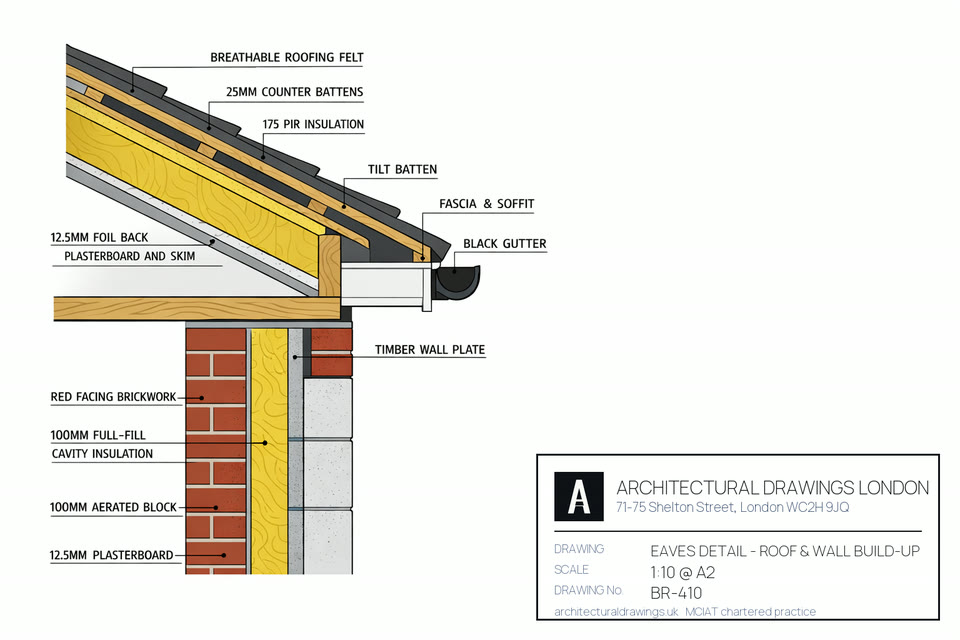
- Insulation and U-value calculations
- Drainage layout and connections
- Ventilation strategy
- Electrical and plumbing layout
All fees are 30% below typical London architect rates. We are MCIAT chartered architectural technologists specialising in technical drawings and regulatory compliance.
Get a free quote for your side return →
Frequently asked questions
How much does a side return extension cost in London?
A side return extension in London typically costs £40,000–£75,000 for the build alone. Including a mid-range kitchen, architectural drawings, building regulations drawings, and council fees, the total project cost ranges from £55,000 to £115,000. Side returns are one of the most cost-effective extensions because they use a narrow strip of wasted space to transform the ground floor layout. See our full kitchen extension cost guide.
Do I need planning permission for a side return extension in London?
Most side return extensions fall under Permitted Development and do not need planning permission, provided the extension is single-storey and within PD limits. However, if your property is in a conservation area, side extensions are NOT permitted under PD -- you will need a planning application. Properties subject to Article 4 Directions may also lose PD rights. We always recommend a Lawful Development Certificate (£274) for legal proof. Read our PD guide.
Do I need a Party Wall agreement for a side return extension?
Yes, in most cases. If your side return extension involves building on or near the boundary, or if foundations are within 3 metres of your neighbour's building, the Party Wall Act applies. You must serve a Party Wall Notice at least 2 months before starting work. If your neighbour consents, no surveyor is needed. If they dissent, both parties appoint surveyors to prepare a Party Wall Award. Typical surveyor costs in London: £1,000–£2,500.
How long does a side return extension take to build?
A side return extension in London typically takes 10–12 weeks on site once construction begins. The total timeline from initial instruction to completion is 5–7 months, including design, approvals, Party Wall procedures, and construction. Many stages overlap to reduce the overall timeline.
What is the best roof option for a side return extension?
The three most popular options are: (1) a glazed roof (£3,000–£8,000) for maximum light and drama; (2) a flat roof with rooflights (£2,000–£5,000) for affordability and thermal performance; (3) a lean-to with a rooflight slot (£2,500–£6,000) for architectural interest. The best choice depends on orientation, planning constraints, and budget. We discuss roof options as part of every side return project. Get a free quote.