TL;DR — Key Facts
- Dormer loft conversion: £40,000 – £60,000 (outer London borough)
- Mansard conversion: £60,000 – £95,000
- Velux conversion: £25,000 – £40,000
- Planning permission: Generally available for rear dormers
- Conservation areas: 9 in Barking and Dagenham
Is a Barking and Dagenham loft conversion likely to be approved?
It depends almost entirely on whether you need to ask. Barking and Dagenham granted 863 of 1,239 householder applications decided between April 2023 and March 2026 — 69.7%, the lowest rate of the 32 boroughs the return can measure, against 83.0% across London. Over the same period it determined 885 larger rear extensions under the prior approval procedure and told 743 of them that prior approval was not required, a rate of 84.0% beaten only by Bromley. Refusals under that route ran at 12.7% against 24.9% pooled. The council is hard on applications and easy on notifications, which for a loft means the difference between a scheme inside the Class B volume limits and one that steps outside them is larger here than almost anywhere.
| Measure | Barking and Dagenham | Outcome |
|---|---|---|
| Householder decisions (MHCLG) | 1,239 | 69.7% granted, against 83.0% for London |
| Larger rear extensions notified for prior approval | 885 | 84.0% prior approval not required, 12.7% refused |
| Householder appeals decided by an inspector | 280 | 81 allowed — 28.9%, against 35.6% for England |
| Lawful development certificates recorded | 1,051 | — |
| Rear dormer applications in the Datahub | 886 | 33% approved |
| Loft conversion applications in the Datahub | 146 | 47% approved |
| Dwellings built 1919–1929 | 35.0% of 81,790 | 6.2% across London |
Sources: rows one and two from the Planning London Datahub, retrieved 15 August 2026 — phrase-matched descriptions, comparable within this borough only; the low percentages partly reflect how sparsely the borough populates its outcome field, so read them alongside the statutory return rather than instead of it. Rows three to five from MHCLG PS1 and PS2, twelve quarters to March 2026. Row six from Planning Inspectorate casework decided 2016–2026.
What does a loft conversion cost in Barking and Dagenham?
Once the budget works, the next step is the drawing set: loft conversions in Barking and Dagenham.
Build cost here tracks the roof, not the postcode. Barking and Dagenham is the cheapest borough in London to buy into — the median sale in 2025 was £385,000 across 1,343 registered transactions, against £544,000 in Lambeth and £709,200 in Hammersmith and Fulham — and builders' rates follow that to some extent. But the reason a Becontree conversion lands where it does in the ranges below is structural. Thirty-five per cent of the borough’s 81,790 dwellings went up between 1919 and 1929, against 6.2% across London, and those are Becontree cottage designs with shallow hipped roofs. On a great many of them the hip has to come off before there is a ridge worth converting, and that is a different job from cutting a dormer into an existing gable.
Loft conversion build costs in Barking and Dagenham
Those are build costs. They exclude the drawings, the structural engineer, a Party Wall surveyor where a neighbour's wall is involved, and the council's own charges. The council charges are small and fixed by national regulation rather than by the borough: £249 to notify a larger rear extension, £274 for a certificate confirming the work was lawful, £548 for a householder application.
Where the money goes wrong on this stock is the structure, not the fit-out. Trussed rafter roofs — standard on everything the borough built after 1973, which is 28.2% of its dwellings — have no usable void at all until the trusses are replaced with a cut roof, and that decision belongs in the first survey rather than the third quotation. Get the roof type confirmed on site before you commit to a bracket.
Which loft type suits Barking and Dagenham properties?
On a Becontree or Harold Hill house the realistic choice is hip-to-gable plus a rear dormer, because the hip has to go before there is a ridge worth converting. A Velux-only conversion rarely gives standing room on this stock. Where the property is one of the borough's newer riverside builds, check the roof structure first — trussed rafter roofs need the structure replacing, which changes the cost bracket entirely.
Velux (rooflight) conversions
A Velux or rooflight conversion is the simplest and most affordable option, suitable where there is already sufficient head height in the existing loft space. Rooflights are installed into the existing roof slope without changing its shape. This type of conversion almost always falls under Permitted Development and is particularly suitable for properties in Barking and Dagenham's 9 conservation areas where changes to the roofline may not be acceptable. The trade-off is less usable floor area compared to a dormer or mansard.
Does a Dagenham loft need planning permission?
The Becontree Estate covers a large part of this borough, and it was built between 1921 and 1935 to a small number of repeated cottage designs with shallow hipped roofs. That matters more than any planning constraint: on many Becontree houses the existing ridge is too low to give usable head height without a hip-to-gable first. Barking and Dagenham has only nine conservation areas and no Article 4 Direction, so the planning question is usually easy and the roof question is not.
Permitted Development for lofts
Most rear dormer and Velux loft conversions fall under Permitted Development and do not require a planning application. The key PD conditions are:
- The dormer must not exceed the highest part of the existing roof
- The dormer must be set back at least 200mm from the eaves
- Materials must be similar in appearance to the existing house
- No verandas, balconies, or raised platforms
- Side-facing windows must be obscure-glazed and non-opening below 1.7m
- Volume limit: 40 cubic metres for terraced houses, 50 cubic metres for others
Conservation areas
Designation is a small factor in this borough and a large one on the few streets it touches. The registered areas are compact — Abbey and Barking Town Centre at 16.2 hectares, Dagenham Village at 2.6, and two smaller designations at Chadwell Heath and Abbey Road and Riverside — so the great majority of Becontree and Dagenham addresses fall outside all of them. Where a house is inside one, a front-facing dormer and any dormer visible from the highway need permission, a rear dormer may still be permitted development but will be judged on its materials, and a mansard is assessed against the area's character appraisal. Almost none of the borough's pre-1900 stock survives: 980 dwellings, 1.2% of the total, against 20.9% across London.
Mansard planning permission
A mansard changes the shape and height of the roof, so it always needs an application. On Becontree's cottage-estate housing it is also rarely the right form: these are low hipped roofs on modest houses, and a hip-to-gable with a rear dormer achieves the same space more cheaply. Where a mansard is proposed here, the case turns on whether the terrace already reads as having an attic storey.
Pre-application advice is charged on Barking and Dagenham's own published scale, so take the figure from the council rather than from a general range. Whether it is worth buying depends on your risk: this borough approves 69.7% of householder applications, the lowest rate in London (MHCLG planning statistics, retrieved 1 September 2026), so on anything unusual the enquiry pays for itself.
Our drawing fees for loft conversions in Barking and Dagenham
At Architectural Drawings London. Our MCIAT chartered architectural technologists prepare everything needed for planning submission (where required) and building regulations approval.
Drawing fees for loft conversions
Every package includes a measured survey, existing and proposed floor plans and elevations, roof plan, sections, and a site plan. For mansard conversions, we also prepare a design and access statement and streetscene elevation. Our fees are 30% below typical London architect rates for the same scope of work.
We cover all Barking and Dagenham postcodes: IG11, RM6, RM8, RM9, RM10.
Frequently asked questions
How much does a loft conversion cost in Barking and Dagenham?
Loft conversion costs in Barking and Dagenham vary by type. A rear dormer loft conversion typically costs £40,000 to £60,000. A mansard conversion costs £60,000 to £95,000. A Velux (rooflight only) conversion costs £25,000 to £40,000. These are build costs only.
Do I need planning permission for a loft conversion in Barking and Dagenham?
Usually. With nine conservation areas and no borough-wide Article 4 Direction, most Barking and Dagenham addresses keep full permitted development rights for a rear dormer or rooflight conversion within the volume limits. A mansard needs permission everywhere. The catch on this stock is not planning but title: many Becontree houses were sold under right to buy and carry covenants, and a former landlord's consent can be a separate requirement from the council's.
What is the minimum head height for a loft conversion in Barking and Dagenham?
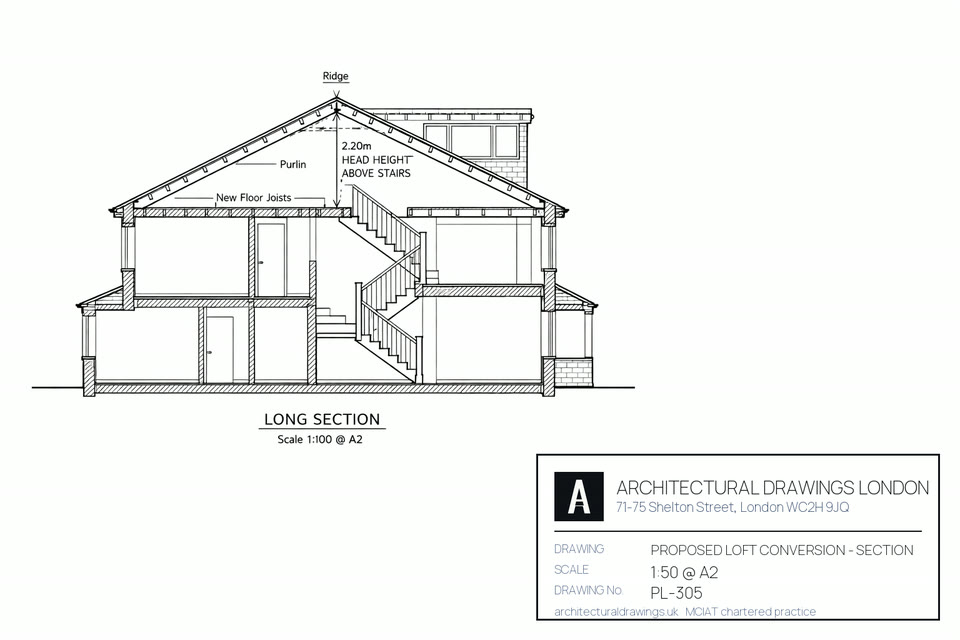
Becontree's cottage designs are the marginal case in London for headroom. A loft wants roughly 2.2 metres from the top of the ceiling joists to the underside of the ridge before floor and insulation leave standing room, and these are shallow pitches on modest spans, often measuring in the low 2s at the apex and dropping away fast. That is why the hip usually has to go. We measure it at survey before anyone talks about cost.
Do I need a Party Wall Agreement for a loft conversion in Barking and Dagenham?
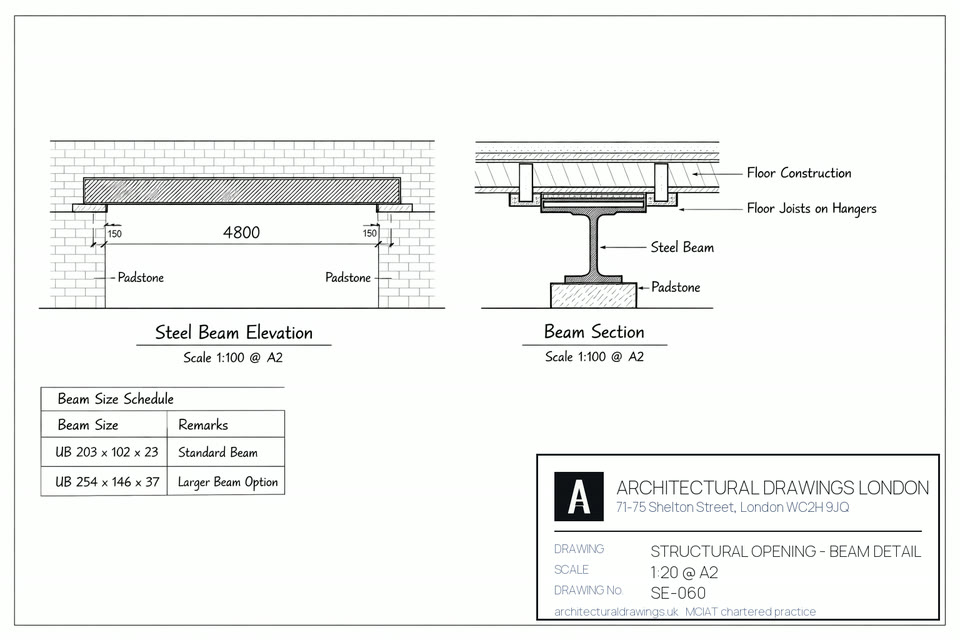
Almost always, because Becontree was built as terraces and short semi-detached runs and very little of it is detached. Cutting into the party wall to seat a steel beam, or raising it to take a new dormer cheek, both trigger the Party Wall etc. Act 1996 and both need notice served on the adjoining owner before work starts. Two months for a party wall notice, one for a line-of-junction notice.
Can I get a mansard loft conversion approved in Barking and Dagenham?
Barking and Dagenham assesses mansard applications on a case-by-case basis. Barking and Dagenham Council will consider the impact on the streetscene, conservation area status, design quality, and any existing precedents on your street.