Key facts at a glance
- Always needs planning permission — not Permitted Development
- Typical rear projection: 3m max for two-storey (45-degree rule)
- Matching materials critical for planning approval
- Privacy/overlooking assessment: 21m window-to-window standard
- Build costs £1,800–£3,000/sqm in London
Can a two-storey extension be permitted development?
Only within 3m of the original rear wall and no closer than 7m to the rear boundary, with a roof pitch matching the existing house. Most London gardens fail the 7m test once the extension is built, so the great majority are full applications.
| Class A limit, two storeys | Value | Note |
|---|---|---|
| Rear depth from the original wall | 3m | no prior approval route |
| Distance to the rear boundary | at least 7m | the test most London plots fail |
| Height | no higher than the existing roof | — |
| Roof pitch on the upper storey | must match the existing house | — |
| Two-storey side extension | not permitted development | — |
| On Article 2(3) land | not permitted development | — |
| Householder application fee if needed | £548 | statutory, England 2026 |
Sources: the Town and Country Planning (General Permitted Development) (England) Order 2015, Schedule 2, Part 1, Class A, paragraphs A.1 and A.2; fees from the Fees for Applications Regulations 2012 as amended, 2026 rates. Read at 1 September 2026. Build costs quoted on this page are our own 2026 London range and are an estimate, not a published statistic.
What is a double storey extension?
A double storey extension -- also called a two-storey extension -- adds new living space on both the ground floor and first floor simultaneously. The most common configuration is a kitchen or kitchen-diner on the ground floor with a bedroom or bathroom on the first floor above. This gives you roughly twice the floor area of a single-storey extension for only around 50-60% more cost, because you share the same foundations, roof, and much of the structural work.
In London, where land values are high and plot sizes constrained, a double storey extension is one of the most cost-effective ways to add significant space to a family home. A typical 3-metre deep, full-width two-storey rear extension on a terraced house adds 25-35 sqm of new floor space -- enough for a generous kitchen-diner below and a master bedroom with en-suite above.
Double storey extensions can be built at the rear, the side, or as a combination of both (a two-storey wraparound). Each configuration has different planning implications and design challenges, which we cover below.
Planning permission: always required
Unlike single-storey rear extensions, which can often proceed under Permitted Development, double storey extensions always require planning permission. There are no PD rights for two-storey extensions under any circumstances. The application is a standard householder planning application (£548, 8-week determination period).
What planning officers assess
- Scale and massing: The extension should appear subordinate to the original house. A two-storey extension that is as wide and as deep as the existing house will likely be refused as overdevelopment.
- Impact on neighbours: The 45-degree rule is commonly applied -- an imaginary line drawn at 45 degrees from the centre of your neighbour's nearest habitable window should not be breached. Loss of light, overshadowing, and overbearing impact are assessed.
- Overlooking and privacy: First-floor windows in the extension must not directly overlook neighbouring gardens or habitable rooms. The standard minimum back-to-back distance is 21 metres between facing habitable windows.
- Materials and design: The extension must use matching materials -- brickwork that matches the existing house in colour, bond, and mortar, and roof tiles or slates that match the existing roof. Planning officers regularly refuse extensions with materials that do not match.
- Roof design: A pitched roof that matches the existing roof angle is usually expected. Flat-roofed two-storey extensions are more contentious and are often refused on design grounds unless there is a specific design justification.
We strongly recommend pre-application advice for double storey extensions. At £300-£600 depending on the borough, it gives you written officer feedback before you commit to the full application fee and professional costs. We prepare the pre-application drawings and handle the submission.
The 3-metre rear projection guideline
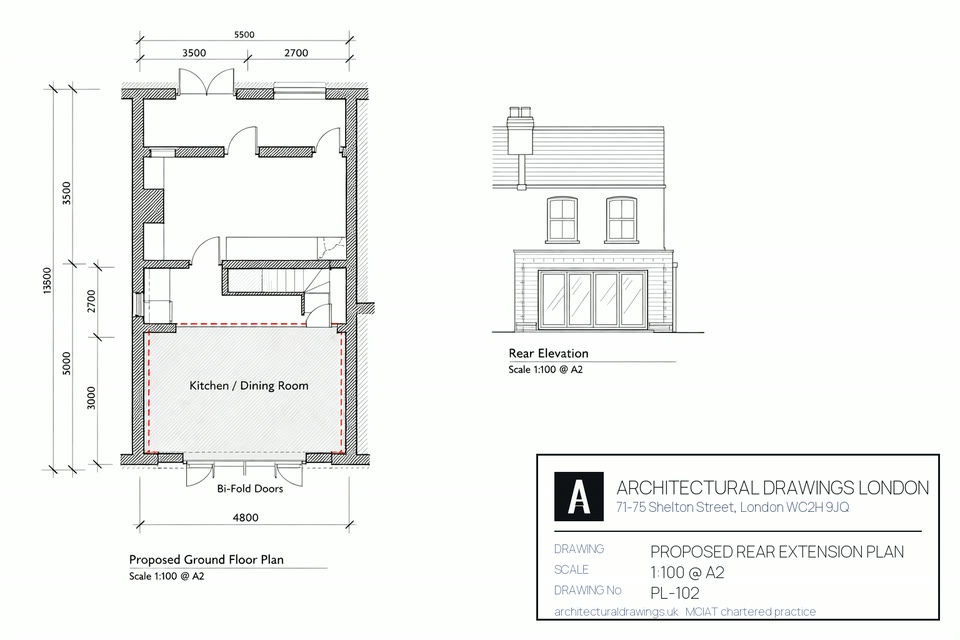
Most London boroughs apply an informal guideline of 3 metres maximum rear projection for two-storey extensions on terraced and semi-detached houses. This is not a hard rule -- it is a starting point for assessment. On detached houses, or where the site has unusual characteristics (e.g., no adjoining neighbour on one side), a deeper projection may be acceptable. Conversely, in tight terraces with short gardens, even 3 metres may be resisted if the impact on neighbours is significant.
Structural and foundation requirements
A double storey extension carries significantly more load than a single storey, which means the structural design is more demanding.
Foundations
Foundations for a two-storey extension must support twice the wall height and the additional floor loads. In London clay, strip foundations are typically 1-1.2 metres deep minimum, increasing to 2 metres or more near mature trees (due to clay shrinkage). Where trees are close or the soil conditions are poor, piled foundations may be required, adding £5,000-£15,000 to the cost. A desktop investigation of the soil and tree conditions is essential before finalising the structural design.
Structural openings
Where the extension connects to the existing house, existing walls are typically removed or opened up with steel beams. For a two-storey extension, steels at both ground and first floor level are common. The ground-floor steel supports the first-floor structure above the opening; the first-floor steel supports any roof structure above. The structural engineer designs the beam sizes, bearing details, and any required temporary propping during construction.
First floor structure
The new first floor is usually formed with timber joists or engineered timber I-joists spanning between the new external walls and the existing house wall. For spans over 4 metres, steel secondary beams may be needed. The floor must comply with Part E sound insulation standards if there is a habitable room below.
Matching materials: the make-or-break detail
Matching materials is the single most important design consideration for a two-storey extension. Because the extension is the same height as the existing house and sits directly alongside it, any mismatch in brick colour, bond pattern, mortar colour, or roof tiles is immediately and permanently visible.
- Bricks: Source matching bricks from a specialist reclamation yard or brick matching service. For London stock brick (the yellow/brown brick common on Victorian houses), services like Brick Warehouse, Imperial Bricks, or London Brick Company can supply close matches. Allow £1.20-£2.50 per brick for good reclaimed London stocks.
- Mortar: Match the mortar colour, joint profile (flush, weatherstruck, or bucket-handle), and joint width. Sample panels should be built and approved before the main brickwork begins.
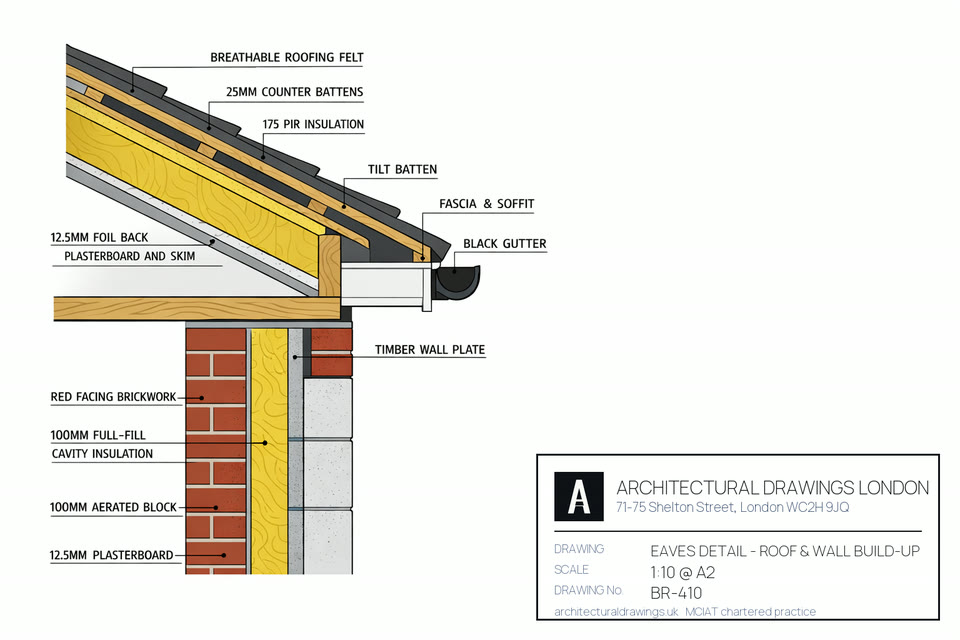
- Roof: Use reclaimed tiles or slates that match the existing roof. Where the extension roof meets the existing roof, the junction must be weathered with matching lead flashings.
- Windows: Match the existing window style, proportions, and material. In conservation areas, timber windows may be required even if the existing house has uPVC replacements (the original windows are the reference point, not the replacement ones).
Double storey extension costs in London
Typical cost breakdown: 30 sqm double storey (15 sqm per floor)
Total project cost for a 30 sqm double storey extension in London: £60,000-£110,000 including all professional fees, council fees, and building works. The cost per sqm is significantly lower than a single-storey extension because the foundations, roof, and much of the structural work are shared across two floors.
Build timeline
A double storey extension is a substantial construction project. Here is a realistic timeline for a London project:
- Design and planning (12-16 weeks): Measured survey, design development, pre-application advice (optional), planning application submission and determination
- Building regulations and structural (4-6 weeks): Building regs application, structural engineer calculations and detailing
- Party Wall (2-4 months): Serving notices and obtaining agreements (can run in parallel with planning)
- Tendering and contractor appointment (2-4 weeks): Getting quotes, reviewing, and appointing a builder
- Construction (14-20 weeks): Foundations, walls, first floor, roof, internal fit-out, services, decoration
Total timeline: 8-12 months from initial instruction to moving into the completed space.
Frequently asked questions
Do I need planning permission for a double storey extension in London?
Yes, always. Two-storey extensions do not fall under Permitted Development. You need a householder planning application (£548, 8-week determination). The council assesses overlooking, light impact, materials, and design. We handle the full application process. See our planning service.
How much does a double storey extension cost in London?
Build costs range from £1,800 to £3,000/sqm. A typical 30 sqm double storey extension costs £60,000-£110,000 total including all professional fees, council fees, and building works. Get a free quote.
How far can a double storey extension project at the rear?
Most London boroughs apply a 3m rear projection guideline for two-storey extensions. This is not a hard limit -- detached houses or properties with unusual site conditions may be approved for deeper projections. The 45-degree rule from neighbours' windows is the key test. We assess the 45-degree impact during design and advise on the maximum achievable projection.
What are the overlooking and privacy rules for double storey extensions?
Most boroughs require 21m minimum between directly facing habitable windows at first floor level. Side-facing windows should be obscure-glazed and non-opening (or opening above 1.7m from floor level). We design layouts that meet these standards while maximising light and views. See our extension service.
How long does it take to build a double storey extension in London?
Construction takes 14-20 weeks. Including planning permission (12-16 weeks), building regulations (4-6 weeks), and Party Wall agreements (2-4 months, often in parallel), total timeline is 8-12 months from initial instruction to completion.