TL;DR — Key Facts
- Planning authority: Tower Hamlets Council
- Conservation areas: 58 designated areas
- Article 4 Directions: Yes
- Postcodes covered: E1, E2, E3, E14
- Typical housing: Georgian in Spitalfields and Wapping
- Householder application fee: £548 (2026 rate)
Planning in Tower Hamlets — what you need to know
Tower Hamlets took 563 householder decisions in three years, against 2,873 planning decisions in total (MHCLG planning statistics, retrieved 1 September 2026). That is the smallest householder caseload of any London borough with a functioning one, and the reason is structural rather than administrative: this is a borough of flats. Most residents cannot make a householder application, because the works they want are alterations to a leasehold unit inside a building somebody else owns.
High heritage value in pockets (Spitalfields, Wapping), mixed with substantial regeneration areas; active planning committee. The borough has a population of approximately 324,000 residents and covers postcodes E1, E2, E3, E14.
The housing stock in Tower Hamlets is predominantly georgian in Spitalfields and Wapping; Victorian industrial conversions; extensive post-war social housing; modern high-density towers in Canary Wharf and Aldgate. This mix of property types means that Tower Hamlets Council deals with a wide range of applications, from rear extensions on terraced houses to loft conversions on semi-detached properties and full refurbishments of period homes in conservation areas.
With 58 designated conservation areas and active Article 4 Directions, Tower Hamlets has a relatively controlled planning environment where Permitted Development rights may be restricted in many areas.
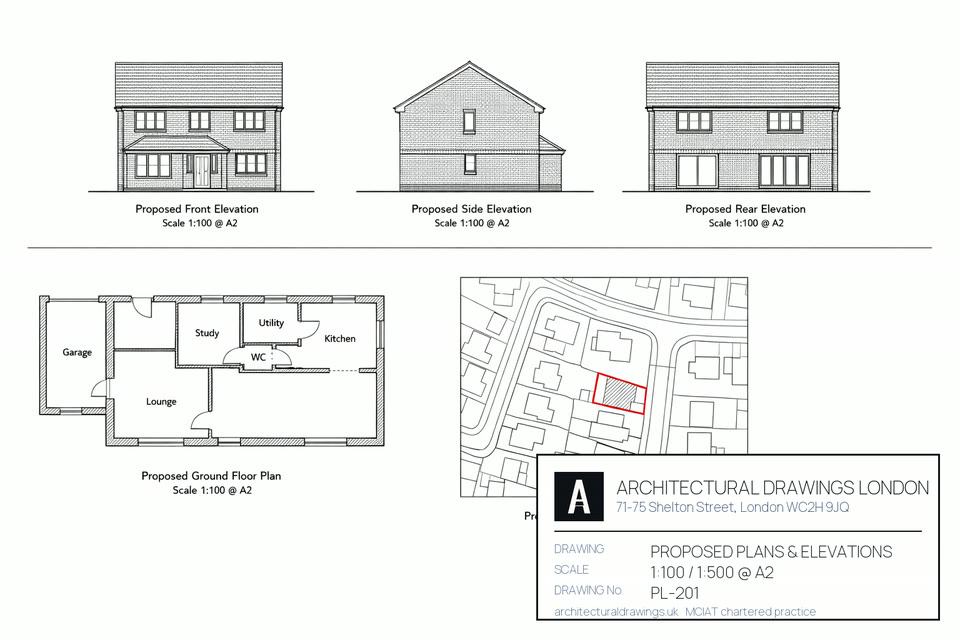
At Architectural Drawings London, we prepare planning drawings and building regulations drawings for properties across all Tower Hamlets postcodes. Our MCIAT chartered architectural technologists have experience with Tower Hamlets Council and understand the specific policies, design guides, and precedents that apply in Tower Hamlets.
Article 4 Directions in Tower Hamlets
Tower Hamlets has Article 4 Directions in place that remove certain Permitted Development rights. Article 4 for HMOs borough-wide; additional Article 4 covering office-to-residential in Canary Wharf and City Fringe.
Article 4 Directions are used by councils to protect the character of an area by requiring planning permission for changes that would otherwise be permitted. If your property is affected by an Article 4 Direction in Tower Hamlets, you will need to submit a full planning application even for works that would normally fall under Permitted Development. The council fee for a householder application is £548, and we prepare the necessary drawings and supporting documents.
It is important to note that Article 4 Directions in Tower Hamlets are separate from conservation area restrictions. A property can be affected by both, and in practice many Article 4 areas overlap with conservation areas. We check the specific restrictions affecting your property as part of our initial assessment.
Conservation areas in Tower Hamlets
Tower Hamlets has 58 designated conservation areas. Notable conservation areas include:
- Spitalfields
- Whitechapel Market
- Fournier Street
- Tredegar Square
- Wapping Pierhead
In conservation areas, Permitted Development rights are more restricted than in non-designated areas. Key restrictions include:
- No cladding, stone, artificial stone, pebble dash, render, timber, plastic, or tile to any external wall without planning permission
- No side extensions under Permitted Development
- Rear extensions are limited and may require planning permission
- Dormer loft conversions facing the highway require planning permission
- Satellite dishes on front elevations or chimneys are not permitted
- Demolition of gates, walls, fences, or other boundary treatment requires planning permission
Fifty-eight conservation areas, third-most in London, sitting over a borough where the protected fabric is concentrated in tight historic pockets rather than spread evenly. In Spitalfields and Wapping the Georgian frontages are among the most closely controlled in the country, and listed building consent is frequently a separate requirement from planning permission. The council also served 21 breach-of-condition notices in three years (MHCLG planning statistics, retrieved 1 September 2026), so conditions attached to a consent here are enforced rather than assumed.
Popular projects in Tower Hamlets
The stock splits three ways and each produces a different application. Georgian Spitalfields and Wapping generate listed building and conservation work on individual houses; the post-war estates generate very little, because the freeholder decides; and Canary Wharf and Aldgate generate the major applications that make up the bulk of the 2,873 decisions. Schemes creating new dwellings were approved at 53.9% (MHCLG planning statistics, retrieved 1 September 2026) — close to even, and the number to know if you are converting.
Loft conversions and extensions
Loft conversions and house extensions are the most common residential planning projects in Tower Hamlets. Whether you are extending a 1930s semi-detached, converting the loft of a Victorian terrace, or adding a rear extension, we prepare the planning and building regulations drawings needed for Tower Hamlets Council.
How much do planning drawings cost in Tower Hamlets?
Statutory charges here are £548 to determine a householder submission and £274 to certify lawfulness; Tower Hamlets issued 399 of the latter over the window (MHCLG planning statistics, retrieved 1 September 2026). If you own a flat rather than a house, the fee is often the smallest obstacle: the freeholder's licence to alter, and any listed building consent, usually cost more and take longer. We establish which consents apply before drawing anything.
Planning costs in Tower Hamlets
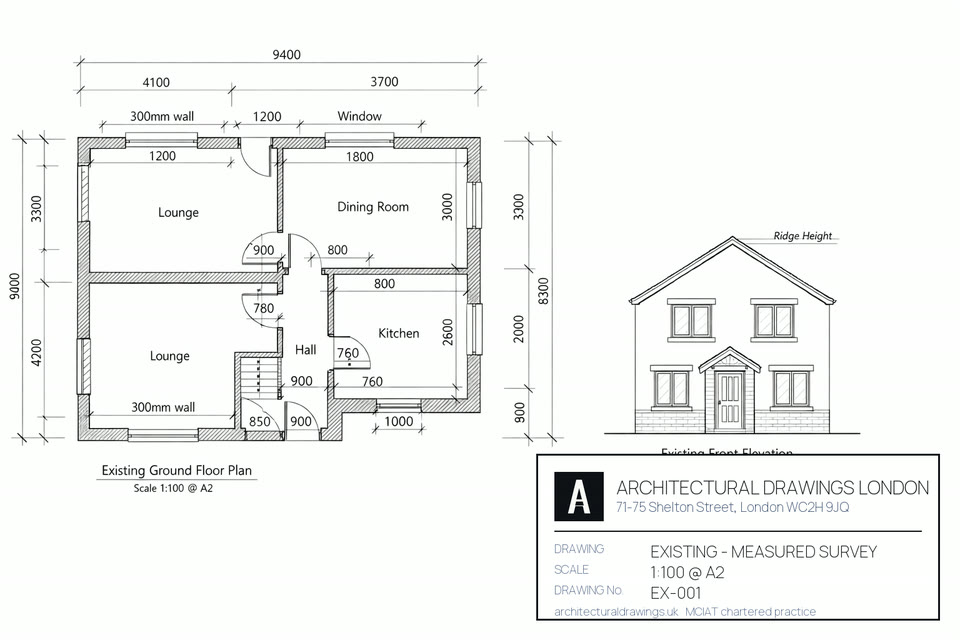
We include a measured survey, existing and proposed plans, elevations, and a site plan — everything required for a valid planning submission to Tower Hamlets Council. Our fees are 30% below typical London architect rates for the same scope of work.
A Lawful Development Certificate confirms permitted development rights, and flats have none under Schedule 2, Part 1 of the Town and Country Planning (General Permitted Development) (England) Order 2015. That is why the council issued only 399 certificates of lawfulness in three years (MHCLG planning statistics, retrieved 1 September 2026). If you own one of the borough's few houses, the proposed-works form is the one to ask for.
Our experience in Tower Hamlets
We cover all Tower Hamlets postcodes: E1, E2, E3, E14. Whether your property is in a conservation area, affected by an Article 4 Direction, or in an unrestricted residential street, we have experience with Tower Hamlets Council and understand the borough's planning policies.
Our MCIAT chartered architectural technologists prepare planning drawings and building regulations drawings for residential projects across Tower Hamlets. We handle the full process from initial measured survey through to planning submission, and we liaise with Tower Hamlets Council on your behalf.
We also work in Tower Hamlets's neighbouring boroughs:
What are the odds of approval in Tower Hamlets?
Tower Hamlets records fewer householder decisions than almost any London borough, and the reason is structural rather than administrative. Just 563 were determined in the three years to March 2026 — against 4,584 in Barnet — of which 490 were approved, a rate of 87.0% comfortably above the London average of 83.0%.
The explanation is that flats and maisonettes have no permitted development rights at all, and they have no householder extension route in the ordinary sense either. In a borough of Victorian industrial conversions, extensive post-war social housing and modern towers, most homes simply never generate a householder application: the work that happens inside them is either internal and needs no consent, or it is a change of use and takes a different route entirely.
So the high approval rate should be read carefully. It describes the small population of houses in Spitalfields, Wapping and the Georgian pockets, where owners tend to arrive with heritage-aware schemes because the constraints are obvious from the street. If you own a flat here, the questions that matter are your lease, the freeholder's consent and the borough-wide Article 4 direction on houses in multiple occupation — not the permitted-development limits that govern a house.
Source: MHCLG District Planning Application Statistics (PS1 and PS2), the statutory return every English planning authority files. Figures cover the twelve quarters to March 2026 and are decisions made in that window, not applications submitted. Published under the Open Government Licence v3.0.
Frequently asked questions
Do I need planning permission in Tower Hamlets?
For most residents here, the question does not arise: permitted development rights under Schedule 2, Part 1 apply to dwellinghouses, not to flats, so a leasehold flat has none of them regardless of the Article 4 Direction or the 58 conservation areas. If you own a house here you are in the minority, and the ordinary allowances apply: a single-storey rear extension of 3 metres, or 6 with neighbour consultation, subject to whichever designation covers your street. Internal work to a listed building needs consent whether or not planning permission does.
Does Tower Hamlets have Article 4 Directions?
Yes. Article 4 for HMOs borough-wide; additional Article 4 covering office-to-residential in Canary Wharf and City Fringe.
How many conservation areas are in Tower Hamlets?
Tower Hamlets has 58 designated conservation areas, including Spitalfields, Whitechapel Market, Fournier Street, Tredegar Square, Wapping Pierhead. In conservation areas, Permitted Development rights are more restricted. For example, you cannot add cladding, build side extensions, or install satellite dishes without planning permission. Rear extensions and loft conversions may also be restricted. Always check whether your property falls within a conservation area before starting work.
How much does a London Borough of Tower Hamlets planning application cost?
For most Tower Hamlets residents the published planning fees never come into it. The borough took 563 householder planning decisions in three years (MHCLG planning statistics, retrieved 1 September 2026), the smallest real caseload in London, because the stock is overwhelmingly flats. The costs that bite here are the freeholder's licence to alter and, in Spitalfields or Wapping, listed building consent. For the few who do apply, drawings from £840 bring the total to about £1,388.
How long does London Borough of Tower Hamlets take to decide a planning application?
From a caseload of only 563 decisions, Tower Hamlets settled 90.9% of householder applications inside 8 weeks, with 2.7% passing 13 weeks (MHCLG planning statistics, retrieved 1 September 2026). Because the householder caseload is so small, those percentages move on comparatively few applications and are worth treating as indicative. The applications that dominate this borough — conversions, listed building consent, major schemes — run on longer timetables. Pre-application advice adds 4-6 weeks. Major applications carry a thirteen-week target.