Key facts at a glance
- Most London boroughs have Article 4 Directions removing C3→C4 PD rights
- Mandatory HMO licence required for 5+ occupants / 2+ households
- Minimum room size: 6.51 sqm single, 10.22 sqm double
- Fire safety to Approved Document B: FD30S doors, LD2 alarm, escape routes
- Our HMO conversion drawings from £2,450
- Build costs typically £800–£1,500/sqm for conversion works
Do I need planning permission to convert a house into an HMO in London?
In most of London, yes. An Article 4 direction has removed the permitted development right to change from C3 to C4 across a majority of boroughs, so even a small HMO for three to six sharers needs a full planning application. Seven or more sharers is sui generis and always needs one.
| Occupants | Use class | Planning | Licence |
|---|---|---|---|
| One household | C3 | None needed | None |
| Two sharers, two households | C3 | None needed | Selective, if designated |
| 3–4 sharers | C4 | Full application under Article 4 | Additional, in many boroughs |
| 5–6 sharers | C4 | Full application under Article 4 | Mandatory |
| 7+ sharers | Sui generis | Full application, always | Mandatory |
Use classes from the Town and Country Planning (Use Classes) Order 1987 as amended; mandatory licensing from the Licensing of Houses in Multiple Occupation (Prescribed Description) (England) Order 2018, which removed the old three-storey condition on 1 October 2018. Article 4 coverage is set borough by borough and can apply to only part of a borough — check the designation, not the borough name.
What is an HMO?
A House in Multiple Occupation (HMO) is a property rented out by three or more tenants who form two or more separate households and share a kitchen, bathroom, or toilet. The legal definition is set out in Sections 254-260 of the Housing Act 2004. Classic examples include shared houses, bedsits, and properties let on a room-by-room basis. In London, HMOs have become an increasingly important part of the rental housing stock, driven by high property prices, constrained supply, and strong demand from young professionals and key workers.
Understanding the precise legal definition matters because it determines your licensing obligations and planning requirements. A property does not need to be purpose-built as an HMO to be classified as one -- if you rent a standard family house to three unrelated sharers, it is legally an HMO from day one, regardless of whether you have made any physical changes to the building.
The Use Classes Order distinguishes between two categories. Class C4 covers small HMOs occupied by between three and six unrelated individuals. Sui generis (a class of its own) applies to large HMOs with seven or more occupants. This distinction is critical for planning purposes, as different rules apply to each.
Why does an Article 4 direction take the permitted development right away?
Under the General Permitted Development Order (GPDO), converting a dwelling (C3) to a small HMO (C4) would normally be Permitted Development -- meaning no planning application is needed. However, this right can be removed by an Article 4 Direction, and in London, the overwhelming majority of boroughs have done exactly that.
As of 2026, the following London boroughs have borough-wide or area-specific Article 4 Directions removing C3 to C4 Permitted Development rights:
- Borough-wide Article 4: Barnet, Brent, Camden, Ealing, Enfield, Greenwich, Hackney, Hammersmith & Fulham, Haringey, Islington, Kensington & Chelsea, Lambeth, Lewisham, Merton, Newham, Redbridge, Southwark, Tower Hamlets, Waltham Forest, Wandsworth, Westminster
- Area-specific Article 4: Barking & Dagenham, Bromley, Croydon, Harrow, Havering, Hillingdon, Hounslow, Kingston upon Thames, Richmond upon Thames, Sutton
- No Article 4 currently: Bexley, City of London (very few residential properties)
Always verify the current Article 4 status with your specific borough council before proceeding. Article 4 Directions can be introduced or amended at any time, and some boroughs apply them only in certain wards or streets rather than borough-wide.
Where an Article 4 Direction is in place, you need full planning permission for the change of use from C3 to C4. For large HMOs (sui generis, 7+ occupants), planning permission is always required regardless of Article 4 status, because the change from C3 or C4 to sui generis is not covered by any PD right.
Does your HMO need a licence, and which kind?
HMO licensing is separate from planning permission. Even if your property has the correct planning use class, you cannot legally operate it as an HMO without the appropriate licence. There are two licensing regimes that apply in London.
Mandatory licensing
Since October 2018, mandatory licensing applies to any HMO occupied by five or more people who form two or more separate households, regardless of the number of storeys. This is a national requirement under the Housing Act 2004 (as amended). The licence is issued by your borough council and typically lasts five years. Operating a licensable HMO without a licence is a criminal offence carrying an unlimited fine, and tenants may be able to claim back up to 12 months' rent through a Rent Repayment Order.
Additional licensing
Additional licensing is a discretionary scheme that boroughs can adopt to cover smaller HMOs that fall outside the mandatory threshold. In practice, most London boroughs have adopted additional licensing schemes, extending licensing requirements to properties occupied by three or more people forming two or more households. Some boroughs apply additional licensing borough-wide; others target specific wards with high concentrations of HMOs. Check your borough's housing team for the latest scheme details.
Licence application process
To apply for an HMO licence, you will need to provide:
- Floor plans showing room layouts and dimensions (we prepare these as part of our HMO drawing package)
- Gas safety certificate
- Electrical Installation Condition Report (EICR)
- Fire risk assessment
- Evidence of smoke and carbon monoxide alarms
- Details of the proposed manager and licence holder
- The licence fee (typically £500–£1,500 depending on the borough and number of rooms)
What does an HMO planning application involve?
Where planning permission is required (which, as we have established, is nearly everywhere in London), you will need to submit a full planning application for change of use. This is different from a householder application -- it falls under the "minor" or "other" development category, which means the council fee is £610 (2026 rate) rather than the £548 householder fee.
What you need to submit
- Application forms completed via the Planning Portal
- Site location plan at 1:1250 scale showing the property outlined in red
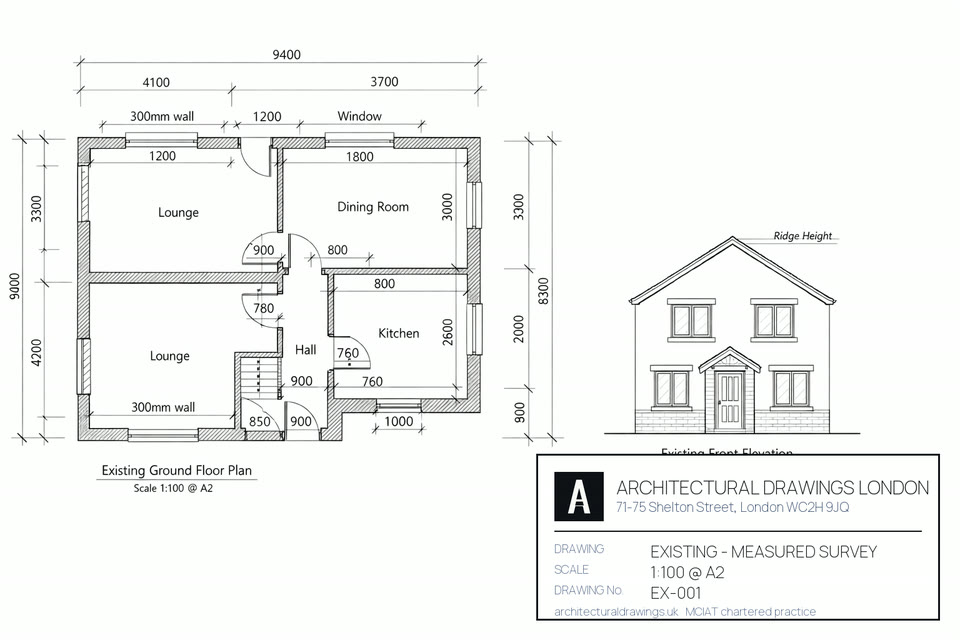
- Existing floor plans at 1:50 or 1:100 showing the current layout
- Proposed floor plans showing the HMO layout with room dimensions, en-suites, shared facilities
- Design and Access Statement explaining the proposal
- Waste storage plan showing bin provision for the increased number of occupants
- Cycle storage plan (most boroughs require one cycle space per bedroom)
The determination period for a change-of-use application is eight weeks. In practice, you should allow 10-14 weeks including validation and any requests for additional information. Pre-application advice is strongly recommended, particularly for larger HMOs, and typically costs £300-£600 depending on the borough.
Common reasons for refusal
London boroughs assess HMO applications against local plan policies. Common grounds for refusal include:
- Over-concentration -- many boroughs limit the proportion of HMOs on a street or within a defined radius (e.g. no more than 10-20% of properties within 50 metres)
- Amenity impact -- noise, disturbance, and reduced quality of life for neighbouring residents
- Inadequate room sizes or facilities failing to meet the council's HMO space standards
- Insufficient waste and cycle storage
- Loss of family housing -- many London boroughs have policies protecting C3 family dwellings, particularly larger properties (3+ bedrooms)
What do fire safety and the building regulations require?
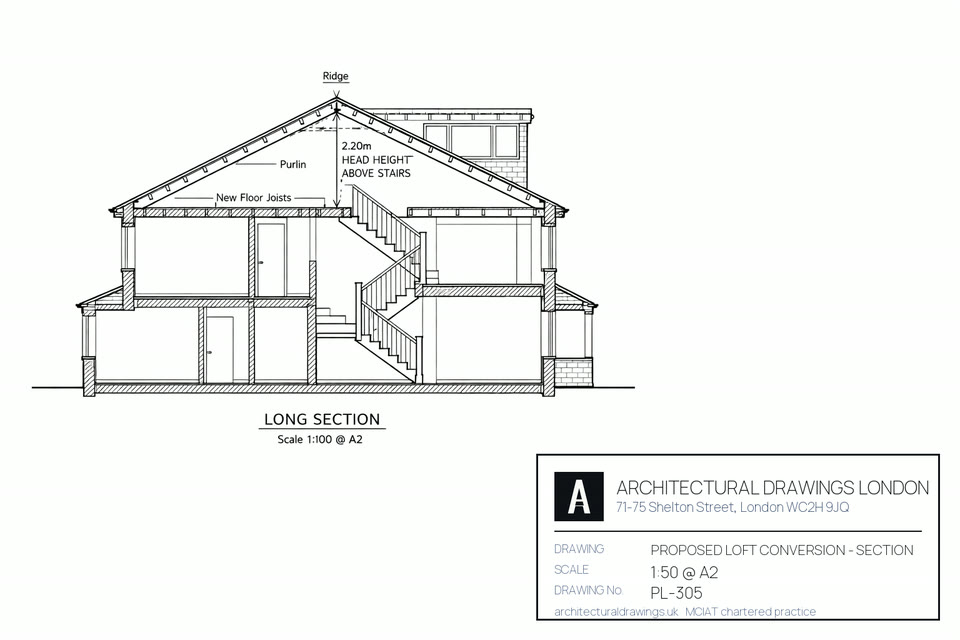
HMO conversions must comply with Building Regulations, with fire safety under Approved Document B being the most significant area. The fire safety requirements for HMOs are substantially more onerous than for a standard dwelling because the occupants are in separate households who may not be aware of a fire in another part of the building.
Key fire safety requirements
- Fire detection and alarm: An LD2 grade fire alarm system is required for most HMOs, with interlinked smoke detectors in every habitable room, kitchen heat detectors, and detectors in escape routes. Larger HMOs (three or more storeys) may need a full addressable fire alarm panel.
- Fire doors: FD30S (30-minute fire-resistant, self-closing) doors to all habitable rooms, kitchens, and rooms opening onto escape routes. These must have intumescent strips and cold smoke seals.
- Protected escape routes: Hallways and staircases must have 30-minute fire-resistant construction (walls, ceilings, and any glazing). The escape route must lead to a final exit without passing through a high-risk room.
- Emergency lighting: Maintained emergency lighting in all common areas and escape routes, typically with 3-hour battery backup.
- Fire blankets: A fire blanket complying with BS EN 1869 in every shared kitchen.
- Signage: Fire action notices and exit signs in common areas.
For HMOs of three or more storeys, the London Fire Brigade and your borough's Building Control team may require additional measures including sprinkler systems, external escape routes, or enhanced compartmentation. The LACORS fire safety guidance (published by the Chartered Institute of Environmental Health) is the key reference document used by most London boroughs when assessing HMO fire safety.
Other Building Regulations considerations
- Part E (sound insulation): If you are creating new separating walls or floors between rooms, they must meet Part E sound performance standards
- Part F (ventilation): Each habitable room must have adequate ventilation; kitchens and bathrooms need mechanical extract
- Part L (energy): Any new heating installations or window replacements must meet current energy efficiency standards
- Part M (access): Consideration of accessible bedroom and bathroom provision, particularly for ground-floor rooms
How small can an HMO bedroom legally be?
The Housing Act 2004 and the Licensing of Houses in Multiple Occupation (Mandatory Conditions of Licences) (England) Regulations 2018 set national minimum room sizes for licensed HMOs:
| Room type | Minimum floor area |
|---|---|
| Single bedroom (1 person) | 6.51 sqm |
| Double/twin bedroom (2 persons) | 10.22 sqm |
| Bedroom with cooking facilities (1 person) | 13 sqm |
| Shared living/dining room | 4.64 sqm per person |
Many London boroughs set higher local standards. For example, some require a minimum of 7.5 sqm for a single room and 11.5 sqm for a double, or specify that rooms below a certain ceiling height cannot count towards the minimum. Always check your specific borough's HMO standards guide before designing the layout.
Kitchen and bathroom provision
- Bathrooms: One bathroom (with bath or shower, toilet, and washbasin) per four to five occupants. Many landlords now provide en-suite shower rooms to maximise rental value and reduce conflicts.
- Kitchens: One set of cooking facilities (oven/hob, sink, worktop, food storage) per five occupants. Where a shared kitchen serves more than five, duplicate sets of appliances are needed.
- Communal space: Some boroughs require a shared living room if there is no communal kitchen-diner. Check your local plan policy.
What does an HMO conversion cost in London?
The total cost of converting a property to an HMO in London varies significantly depending on the size of the property, the extent of work needed, and the number of bedrooms. Here is a realistic breakdown for a typical 5-6 bedroom HMO conversion.
Typical HMO conversion cost breakdown
For a typical Victorian terraced house in London being converted to a 5-bedroom HMO with en-suite shower rooms, you should budget £40,000-£75,000 for the total conversion cost including all professional fees, council fees, and building works. Larger properties or those requiring significant structural work will cost more.
Our HMO conversion drawing package from £2,450 includes the measured survey, existing and proposed floor plans, fire strategy drawings, waste and cycle storage plans, and the Design and Access Statement required for the planning application. We handle the Planning Portal submission on your behalf. Get a free quote for your specific project.
What does your borough actually look for?
Each London borough has its own local plan policies relating to HMOs. While the details vary, most boroughs focus on a similar set of concerns. Understanding your borough's specific approach before designing the layout and submitting the application significantly increases your chances of approval.
Concentration thresholds
Many boroughs have adopted concentration thresholds to prevent the over-proliferation of HMOs in any one area. For example, Newham applies a 15% threshold within a 50-metre radius. If more than 15% of properties within 50 metres are already HMOs, a new conversion is unlikely to be approved. Lewisham, Southwark, and several other boroughs apply similar policies. We check the HMO register and planning records for your street before submitting, so you know the concentration level before committing to costs.
Loss of family housing
Boroughs such as Camden, Islington, and Westminster have strong policies protecting existing family-sized dwellings (3+ bedrooms). Converting a 4-bedroom family house to an HMO in these boroughs faces significant resistance unless you can demonstrate that the property was not providing adequate family accommodation or that there is an overriding need for HMO housing in the area.
Amenity and character
All boroughs assess the impact of the HMO on the amenity of neighbouring residents. This includes noise (especially from communal areas and comings and goings), waste accumulation, cycle and car parking pressure, and the general character of the street. A well-designed HMO with proper sound insulation, adequate bin storage, and a clear management plan addresses these concerns head-on.
Frequently asked questions
Do I need planning permission for an HMO conversion in London?
In most London boroughs, yes. The change of use from a dwelling (C3) to a small HMO (C4) can fall under Permitted Development nationally, but the majority of London boroughs have adopted Article 4 Directions removing this right. This means you need full planning permission for the change of use. Large HMOs with 7 or more occupants (sui generis) always require planning permission regardless of Article 4 status. We handle the full planning application process, including drawings, supporting statements, and Portal submission. See our planning drawings service.
What is the difference between mandatory and additional HMO licensing?
Mandatory licensing applies nationally to all HMOs with 5 or more occupants forming 2 or more separate households. Additional licensing is a discretionary scheme that individual boroughs can adopt to cover smaller HMOs -- typically properties with 3 or 4 occupants forming 2 or more households. Most London boroughs operate additional licensing schemes, so even a smaller HMO will likely need a licence. Both types of licence last up to five years and require the property to meet specific safety and amenity standards.
What are the minimum room sizes for an HMO in London?
The national minimum is 6.51 sqm for a single bedroom and 10.22 sqm for a double. Many London boroughs set higher standards -- for example, 7.5 sqm for singles and 11.5 sqm for doubles. Shared kitchens must be large enough to provide one set of cooking facilities per five occupants, and bathroom provision is typically one bathroom per four to five occupants. We design HMO layouts to exceed the minimum standards, which helps with both planning approval and HMO licensing.
How much does an HMO conversion cost in London?
Total costs for a typical 5-6 bedroom HMO conversion in London range from £40,000 to £75,000 including all professional fees, council fees, and building works. Our architectural drawings start from £2,450 and include the measured survey, existing and proposed floor plans, fire strategy, and the planning application submission. Build costs typically run £800-£1,500 per sqm. Additional costs include the HMO licence (£500-£1,500), planning fee (£610), and structural engineer (£800-£1,500). Get a free quote.
What fire safety requirements apply to HMOs in London?
HMOs must comply with Approved Document B of the Building Regulations. Key requirements include an LD2 grade fire alarm system with interlinked detectors, FD30S fire doors to all habitable rooms and kitchens, protected escape routes with 30-minute fire resistance, emergency lighting, and fire blankets in kitchens. Three-storey HMOs may also need sprinkler systems. We include fire strategy drawings in every HMO package, and we coordinate with Building Control to ensure full compliance before the licence application. See our building regulations service.