Key facts at a glance
- Use Classes Order 2020: Class E (commercial), C3 (residential), sui generis
- Class MA Prior Approval: commercial to residential (conditions apply)
- Many London boroughs have Article 4s blocking Class MA in town centres
- Full planning fee: £610 per dwelling; Prior Approval: £249 per dwelling
- CIL deductible if building in lawful use for 6+ months in past 3 years
Which change of use needs permission in London?
Any move between use classes that is not covered by a permitted change. Since the 2020 reform most shops, offices and cafes sit inside Class E and can change freely between those uses; moving from Class E to residential uses the Class MA prior approval route instead.
| Change | Route | Notes |
|---|---|---|
| Within Class E (shop, office, cafe, gym) | no application | single use class since 1 September 2020 |
| Class E to residential (C3) | Class MA prior approval | vacancy and size conditions apply |
| C3 dwelling to a small HMO (C4) | permitted development | unless an Article 4 direction applies |
| C4 to a large HMO (sui generis) | full planning permission | — |
| House to flats | full planning permission | always |
| Householder planning application fee | £548 | statutory, England 2026 |
Sources: the Town and Country Planning (Use Classes) Order 1987 as amended by the 2020 Regulations; the General Permitted Development (England) Order 2015, Schedule 2, Part 3, Classes L and MA; fee from the Fees for Applications Regulations 2012 as amended. Read at 1 September 2026. Article 4 directions removing the C3-to-C4 right are widespread in London — Waltham Forest alone has 807 Article 4 areas in the national register.
What did the 2020 Use Classes reform change?
The Town and Country Planning (Use Classes) (Amendment) (England) Regulations 2020, which came into force on 1 September 2020, fundamentally restructured the Use Classes Order. The most significant change was the creation of Class E, which merged what were previously separate use classes for shops (A1), restaurants (A3), offices (B1), light industry (B1c), gyms (D2), health centres (D1), creches (D1), and other commercial uses into a single, broad class.
This means that changes of use within Class E do not require planning permission -- a shop can become a gym, an office can become a restaurant, and a light industrial unit can become a creche, all without any planning application. The planning significance arises when you want to change between classes -- particularly from commercial use (Class E) to residential use (Class C3).
| Use Class | Description | Examples |
|---|---|---|
| Class E | Commercial, business & service | Shops, restaurants, offices, light industry, gyms, health centres, creches |
| Class F.1 | Learning & non-residential institutions | Schools, museums, galleries, libraries, churches |
| Class F.2 | Local community | Community halls, small local shops (<280 sqm) |
| Class C1 | Hotels | Hotels, boarding houses, guest houses |
| Class C3 | Dwelling houses | Houses, flats (single household or up to 6 people living as single household) |
| Class C4 | HMOs (small) | Shared houses for 3-6 unrelated people |
| Sui generis | In a class of its own | Pubs, cinemas, theatres, hot food takeaways, petrol stations, large HMOs (7+) |
How does Class MA work?
Class MA of Part 3 of the GPDO allows the change of use from Class E (commercial) to Class C3 (residential) through the Prior Approval process. This is a lighter-touch process than a full planning application -- the council can only assess the proposal against a limited number of criteria, and if those criteria are met, approval cannot be refused.
Conditions for Class MA
- The building must have been in Class E use for at least 2 continuous years immediately before the date of the application
- The cumulative residential floor space must not exceed 1,500 sqm
- The building must not be a listed building
- The site must not be within a Safety Hazard Zone, Military Explosives Storage Area, or SSSI
- The building must not be in an area where the council has issued an Article 4 Direction specifically removing the Class MA right
What the council assesses (Prior Approval matters)
The council can only consider the following matters when determining a Class MA Prior Approval application:
- Transport and highways: Impact on the road network
- Contamination: Risk from contaminated land
- Flooding: Flood risk to the development
- Noise: Impact of noise from commercial premises on the intended residents
- Natural light: Whether each habitable room has adequate natural light
- Fire safety: Whether the building can provide safe means of escape
- Impact on the sustainability of a key shopping area (for ground-floor premises in Conservation Areas only)
The Prior Approval fee is £249 per dwelling -- significantly lower than the £610 per dwelling for a full planning application. There is also no affordable housing requirement under Class MA, even if the scheme creates 10 or more units. These are substantial financial advantages that make Class MA the preferred route where it is available.
Article 4 Directions blocking Class MA in London
Many London boroughs have introduced Article 4 Directions specifically to remove Class MA rights in town centres, high streets, and designated shopping frontages. This reflects concern about losing commercial activity and local services. Boroughs with significant Article 4 Directions affecting Class MA include Westminster, Camden, Islington, Hackney, Tower Hamlets, and Southwark, among others. Where an Article 4 is in place, a full planning application is required instead.
Full planning applications for change of use
Where Class MA does not apply -- because the building is in an Article 4 area, the use does not qualify, or the building exceeds the floor area threshold -- you need to submit a full planning application for the change of use.
What you need to submit
- Application forms via the Planning Portal
- Site location plan at 1:1250
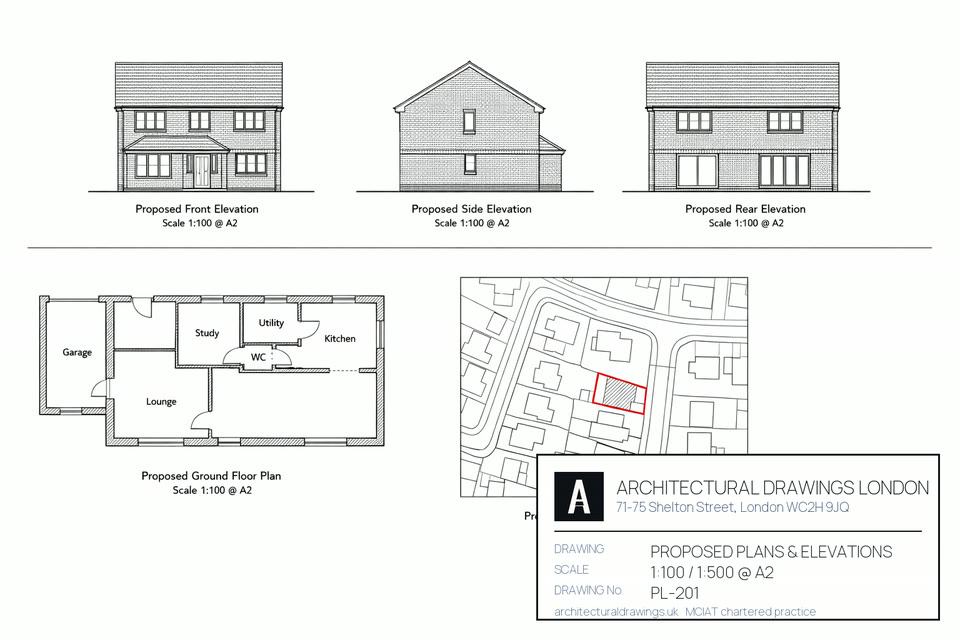
- Existing and proposed floor plans showing the current commercial layout and the proposed residential layout
- Existing and proposed elevations (if external changes are proposed)
- Design and Access Statement
- Planning Statement explaining the justification for the change of use
- Waste and cycle storage plans
- CIL Additional Information form
- Potentially: noise assessment, contamination report, transport statement, flood risk assessment
Key policy considerations
Borough planning officers assess full change-of-use applications against local plan policies. The key issues are:
- Loss of commercial space: Many boroughs protect commercial uses in designated employment areas, town centres, and primary shopping frontages. You may need to demonstrate that the premises have been vacant and actively marketed for at least 12-24 months.
- Housing quality: The proposed flats must meet the London Plan minimum space standards, have adequate natural light and ventilation, and provide a good standard of amenity for future residents.
- Affordable housing: Schemes creating 10 or more dwellings typically trigger affordable housing requirements (35% in most London boroughs).
- Impact on neighbours: Noise, overlooking, and compatibility of residential use with surrounding commercial activity.
Which building regulations apply to a change of use?
Converting a commercial building to residential use is a "material change of use" under Regulation 5 of the Building Regulations 2010. The building must be brought up to current residential standards in all relevant areas:
- Part B (fire safety): Residential fire safety standards apply, including compartmentation between flats, fire detection, protected escape routes, and potentially a sprinkler system for buildings above 11 metres
- Part E (sound): Separating floors and walls between flats must meet airborne and impact sound insulation standards
- Part L (energy): The building must meet current residential energy performance standards, which may require significant insulation upgrades to older commercial buildings
- Part M (access): At least 10% of dwellings in buildings with 10+ units should be wheelchair-accessible (M4(3) standard), with all others meeting M4(2) accessible and adaptable standards
- Structural adequacy: Commercial floors designed for heavy loads are usually adequate for residential use, but verification by a structural engineer is still required
CIL and affordable housing
Community Infrastructure Levy
CIL is calculated on net additional residential floor area. For change-of-use conversions, the existing lawful floor area is usually deductible if the building has been in continuous lawful use for at least 6 months within the 3 years before planning permission is granted. For a straightforward conversion of a shop or office to flats with no extension, this often means zero CIL, because the existing floor area equals the proposed residential floor area. However, if you add floor area (e.g., a rooftop extension), the additional area will attract CIL.
Affordable housing contributions
For full planning applications creating 10 or more dwellings, affordable housing is required under the London Plan and local plan policies. The standard requirement in most London boroughs is 35% of units as affordable housing (typically split between social rent and intermediate tenure). For Class MA Prior Approval, there is no affordable housing requirement regardless of the number of units -- this is a significant financial benefit that can be worth hundreds of thousands of pounds on larger schemes.
What does a change of use cost in London?
Typical cost comparison: Prior Approval vs full planning
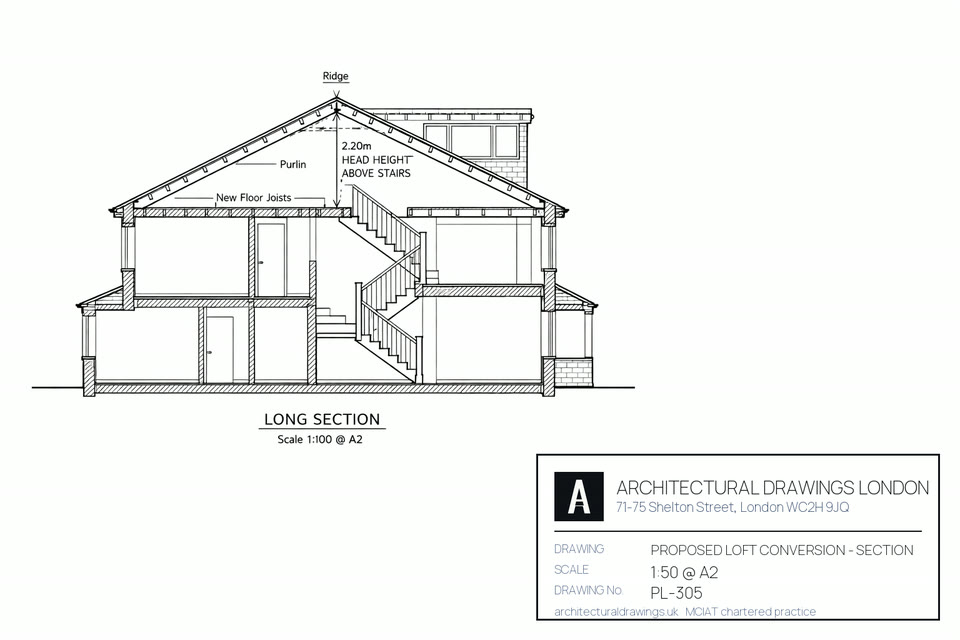
For larger schemes, we provide a full package including elevations, section drawings, and supporting statements. Get a free quote.
Frequently asked questions
What are the Use Classes in England?
The Use Classes Order 2020 groups uses into classes: Class E (commercial -- shops, restaurants, offices, gyms, light industry), Class C3 (dwelling houses), Class C4 (small HMOs), and sui generis (pubs, theatres, takeaways, large HMOs). Changes within the same class generally do not need planning permission. Changes between classes usually do. See our planning service.
Can I convert a shop to a flat in London without planning permission?
Potentially, via Class MA Prior Approval. The building must have been in Class E use for 2+ years, the floor area must not exceed 1,500 sqm, and the site must not be in an area where the borough has issued an Article 4 Direction removing the right. Many London boroughs have blocked Class MA in town centres. We check eligibility and handle the Prior Approval application. Get a free quote.
How much does a change of use application cost?
Prior Approval under Class MA costs £249 per dwelling. Full planning costs £610 per dwelling.
Do I need to pay CIL on a change of use?
CIL is payable on net additional residential floor area only. If the building has been in lawful use for 6+ months in the past 3 years, the existing floor area is deducted. For a straightforward conversion with no extension, CIL is often zero. We advise on CIL liability and help you complete the CIL forms correctly.
What is affordable housing and does it apply to change of use?
Affordable housing contributions apply to full planning applications creating 10+ dwellings (typically 35% in London). For Class MA Prior Approval, there is no affordable housing requirement regardless of the number of units -- a key financial advantage. We advise on the best route for your scheme to minimise costs and maximise certainty.