Key facts at a glance
- Cellar conversion (existing cellar): £1,500–£2,500/sqm
- New basement dig (lowering floor): £3,000–£5,000/sqm
- Planning permission required in most London boroughs
- Party Wall Act almost always applies
- Waterproofing is critical — cavity drain or tanking system
- Several boroughs restrict new basements (RBKC, Camden, Westminster)
Which London boroughs actually approve basements?
The ones with the deepest basement culture are also the strictest. Kensington and Chelsea recorded 1,027 basement applications at 96% approved, Islington 10,989 at 61%, Westminster 8,139 at 82%. A cellar conversion that stays within the existing footprint is usually permitted development; a new dig never is.
| Borough | Basement applications in the Datahub | Approved |
|---|---|---|
| Islington | 10,989 | 61% |
| Westminster | 8,139 | 82% |
| Ealing | 4,003 | 75% |
| Camden | 3,209 | 83% |
| Wandsworth | 3,280 | 88% |
| Southwark | 3,498 | 81% |
| Kensington and Chelsea | 1,027 | 96% |
Source: Planning London Datahub (Greater London Authority), retrieved 15 August 2026. These counts phrase-match published application descriptions rather than registering development types, and the Datahub’s own guidance is that ingestion depth differs by borough, so the counts are comparable within a borough and not between them — read the approval percentages, not the league table. Camden, Westminster and Kensington and Chelsea each operate a specific basement policy on top of the London Plan.
Cellar conversion or a new dig — which are you doing?
There are two fundamentally different types of basement project in London, and the cost, complexity, and planning implications differ enormously.
Cellar conversion
Many London houses -- particularly Georgian and early Victorian properties -- already have a cellar. A cellar conversion transforms this existing underground space into a habitable room without significantly increasing the excavation depth. The work typically involves tanking or installing a cavity drain waterproofing system, improving ventilation, adding lighting and electrical services, insulating the walls and floor, and creating a proper staircase access.
Cellar conversions are simpler, cheaper, and often do not require planning permission (the space already exists and the external appearance does not change). They typically cost £1,500–£2,500 per square metre.
New basement dig (lowering or new excavation)
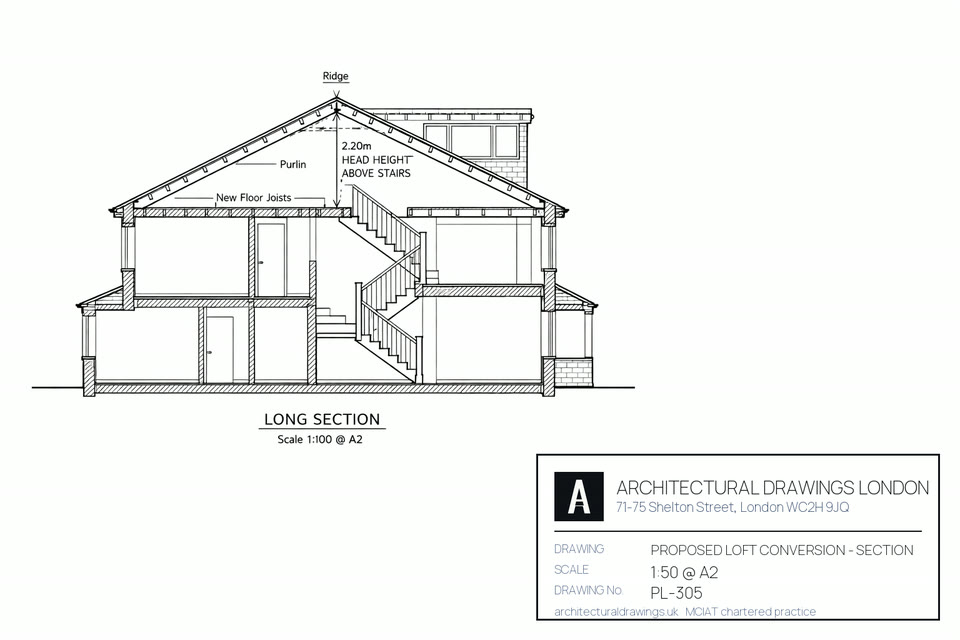
A new basement dig involves excavating below the existing ground floor level to create a new basement storey. This is a major structural project that involves underpinning the existing foundations (so the house does not collapse into the hole), excavating and removing soil, constructing new retaining walls, installing waterproofing, and building a new reinforced concrete floor slab.
New basement digs are complex, expensive, and almost always require planning permission. They typically cost £3,000–£5,000 per square metre, with total project costs for a typical London terraced house ranging from £150,000 to £400,000+.
What does a London basement conversion cost?
Cost breakdown by type
Does a London basement need planning permission?
Whether you need planning permission depends on the type of basement project and the borough:
Cellar conversion (no external changes)
If you are converting an existing cellar without any external changes (no lightwell, no changes to the front area, no extension of the basement footprint), you typically do not need planning permission. The work is treated as an internal alteration. However, you will need building regulations approval.
New basement dig or external changes
If you are digging a new basement, lowering the floor level, adding a lightwell, or making any external changes, you will almost certainly need planning permission. Many London boroughs have specific basement policies that go beyond general planning rules.
Borough-specific basement policies
Several London boroughs have introduced or strengthened basement policies due to the disruption caused by large-scale basement projects:
- Kensington and Chelsea (RBKC): restricts basements to a single storey below the original lowest floor level. No multi-storey or "iceberg" basements. Maximum 50% of the garden at basement level. Construction management plans required.
- Camden: restrictive policy on basements -- limits on size, requires construction impact assessments, and restricts basements under gardens.
- Westminster: detailed basement policy requiring structural methodology statements, construction management plans, and restrictions on size.
- Islington: generally permits single-storey basements but requires detailed structural and drainage assessments.
- Wandsworth: relatively permissive but requires detailed applications for new basement excavations.
Why is waterproofing the element that fails?
Waterproofing is not an optional extra for a London basement -- it is the single most important element of the project. London's clay soils hold water, and the water table is relatively high in many areas. A basement that is not properly waterproofed will leak, and the damage from water ingress can be catastrophic.
The three approaches
- Type A -- Tanked protection (barrier): a waterproof membrane applied to the external face of the walls and under the floor. Effective but relies on the membrane being continuous and undamaged. Difficult to repair if it fails.
- Type B -- Structurally integral (waterproof concrete): the basement structure itself is made waterproof using specialist concrete mixes and construction techniques. Requires very high-quality workmanship.
- Type C -- Drained protection (cavity drain): a dimpled membrane is fitted to the internal walls and floor, creating a cavity that collects any water ingress and channels it to a sump pump, which pumps it to a drain. This is the most common system in London because it is the most forgiving -- it does not try to stop water entering, it manages it.
Most London basement specialists recommend a combination approach: Type C cavity drain system with a Type A or B external barrier as a belt-and-braces solution. Always insist on a 10-year insurance-backed waterproofing guarantee.
Party Wall implications
Basement conversions almost always trigger the Party Wall Act. Underpinning the existing foundations involves excavating within 3 metres of your neighbour's building below their foundation level (Section 6). If the party wall between your house and the neighbour's is being underpinned, Section 2 also applies.
Party Wall surveyor costs for basement projects are typically higher than for simple extensions because the work is more complex and the risk to the neighbouring property is greater. Budget £2,000–£5,000 for Party Wall costs on a basement project.
Structural engineering
A basement conversion requires specialist structural engineering. The engineer designs:
- The underpinning sequence (which sections of foundation are underpinned first, and in what order, to prevent settlement)
- The retaining wall design (to resist the lateral pressure of the surrounding soil)
- The reinforced concrete floor slab
- Any new internal columns or beams
- Temporary works (propping and shoring during construction)
Structural engineer fees for basement projects are £2,000–£5,000+. We coordinate with specialist basement engineers as part of our service.
Our drawing fees for basements
Frequently asked questions
How much does a basement conversion cost in London?
A cellar conversion costs £1,500–£2,500 per sqm. A new basement dig costs £3,000–£5,000 per sqm. A typical London terraced house basement (40–60 sqm) ranges from £150,000 to £400,000+ total including waterproofing, structural engineering, Party Wall, and professional fees.
Do I need planning permission for a basement conversion?
A simple cellar conversion with no external changes typically does not need planning. A new basement dig, floor lowering, or any external changes (lightwells, garden excavation) almost always require planning. Several boroughs (RBKC, Camden, Westminster) have specific restrictive basement policies.
What waterproofing system is best for a London basement?
Most London specialists recommend a Type C cavity drain system, often combined with an external barrier (Type A). The cavity drain system manages water rather than trying to stop it, which is more forgiving in London’s clay soils. Always insist on a 10-year insurance-backed guarantee.
Does the Party Wall Act apply to basement conversions?
Yes, almost always. Underpinning foundations involves excavating within 3 metres of your neighbour at a depth below their foundations (Section 6). If you are also working on the shared party wall, Section 2 applies. Budget £2,000–£5,000 for Party Wall costs.
Which London boroughs restrict basement conversions?
Kensington and Chelsea, Camden, and Westminster have the most restrictive basement policies, limiting basements to single storey and imposing construction management requirements. Islington and other boroughs have lighter-touch policies but still require detailed applications.