TL;DR — Three routes, one goal
Every residential building project in England follows one of three legal routes: permitted development (automatic rights within strict limits), full planning permission (a formal application assessed by your council), or a Lawful Development Certificate (official proof that permission was not required). The route you need depends on your property type, its location, and the scale of what you want to build. Get the route wrong and you risk enforcement action, demolition orders, and serious problems when you come to sell.
Permission, permitted development or a certificate — which is which?
Permitted development is a right, not an application. A lawful development certificate proves you hold it, for £274. Planning permission is a grant, for £548. The certificate is the document a buyer’s solicitor asks for, and it is decided on fact and law rather than on design.
| Permitted development | Lawful development certificate | Planning permission | |
|---|---|---|---|
| What it is | a right in the GPDO | proof you hold the right | a grant by the council |
| Fee (England, 2026) | none | £274 | £548 householder |
| Decided on | — | fact and law | planning merits |
| Refused on design | — | no | yes |
| Available in a conservation area | restricted | yes, if the right survives | yes |
| Available on a flat | no | no | yes |
| London appeals allowed | — | 38.2% of 1,510 | 40.8% of 13,067 |
Sources: the Town and Country Planning (General Permitted Development) (England) Order 2015; the Fees for Applications Regulations 2012 as amended, 2026 rates; appeal outcomes from Planning Inspectorate casework decided 2016–2026, counting decided appeals only. Read at 1 September 2026. A certificate cannot be refused because the council dislikes the design — only because the evidence does not establish the right.
What is Permitted Development?
Permitted development (PD) rights are a set of automatic planning permissions granted by Parliament through the Town and Country Planning (General Permitted Development) (England) Order 2015 (as amended). They allow homeowners to carry out certain types of building work without submitting a planning application to their local council.
PD rights are organised into Classes. The ones most relevant to London homeowners are:
- Class A — Enlargement, improvement or other alteration of a dwellinghouse. This covers rear extensions, side extensions, and internal alterations that change the external appearance. Single-storey rear extensions can project up to 3 metres from the rear wall (attached/semi-detached) or 4 metres (detached). Maximum height is 4 metres at the eaves. Two-storey rear extensions are limited to 3 metres depth with a 7-metre eaves restriction and must be at least 7 metres from the rear boundary.
- Class B — Additions to the roof of a dwellinghouse. Loft conversions, including rear dormers, can add up to 40 cubic metres of additional roof space on terraced houses, or 50 cubic metres on semi-detached and detached houses. The dormer must be set back at least 20 cm from the original eaves. Materials must match the existing house in appearance as closely as possible.
- Class C — Other alterations to the roof. Re-roofing, changing roof tiles, and adding rooflights that do not protrude more than 150 mm above the roof plane.
- Class D — Porches. A porch can be added without planning permission if it is no more than 3 square metres in floor area, no higher than 3 metres, and is at least 2 metres from any boundary fronting a highway.
- Class E — Buildings incidental to the enjoyment of a dwellinghouse. Garden rooms, sheds, greenhouses and outbuildings. These must not cover more than 50% of the garden area, must be single-storey, and must not be used for habitable accommodation (sleeping, cooking or sanitary facilities).
There are critical constraints that apply across all classes. Materials used in any extension must be similar in appearance to the existing dwelling. No part of the extension can be higher than the highest part of the existing roof. Extensions to the front elevation or facing a highway are generally not permitted. And on designated land — including conservation areas, Areas of Outstanding Natural Beauty, and National Parks — PD rights are significantly reduced.
It is important to understand that permitted development rights apply only to houses (Use Class C3). They do not apply to flats, maisonettes, or buildings that have been converted from commercial use. If your property was created by a prior approval conversion (for example, from office to residential under Class O or Class MA), your PD rights may have been removed by condition.
What is a Lawful Development Certificate?
A Lawful Development Certificate (LDC) is an official document issued by your local planning authority confirming that a particular development is — or was — lawful. It is not planning permission. It is proof that planning permission was not required.
There are two types:
- Proposed LDC (Section 192) — confirms that a development you intend to carry out falls within permitted development rights. You apply before you build. This is the type most commonly used for house extensions and loft conversions. The council application fee is £103.
- Existing LDC (Section 191) — confirms that a development that has already been completed was lawful at the time it was carried out. This is used when you need retrospective proof, often for a property sale. The council application fee is £206.
The council must determine an LDC application within 8 weeks. Unlike full planning permission, the council cannot refuse an LDC based on design quality, neighbour objections, or policy preferences. The only question they assess is: does this development fall within the legal definition of permitted development? If the answer is yes, they must issue the certificate.
Why should you get one? Because without an LDC, you have no official proof that your extension was built lawfully. This matters enormously when you come to sell. Conveyancing solicitors acting for buyers will ask for evidence that any extensions or alterations were carried out with appropriate permissions. An LDC is the cleanest, most defensible document you can provide. Without one, you may need to purchase indemnity insurance — and some buyers or lenders will refuse to proceed without formal evidence.
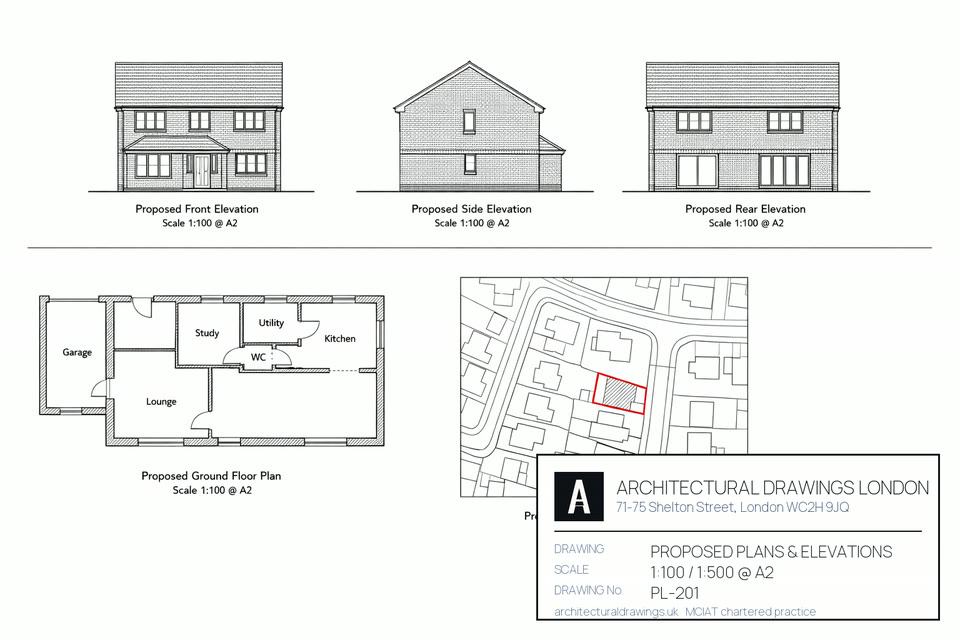
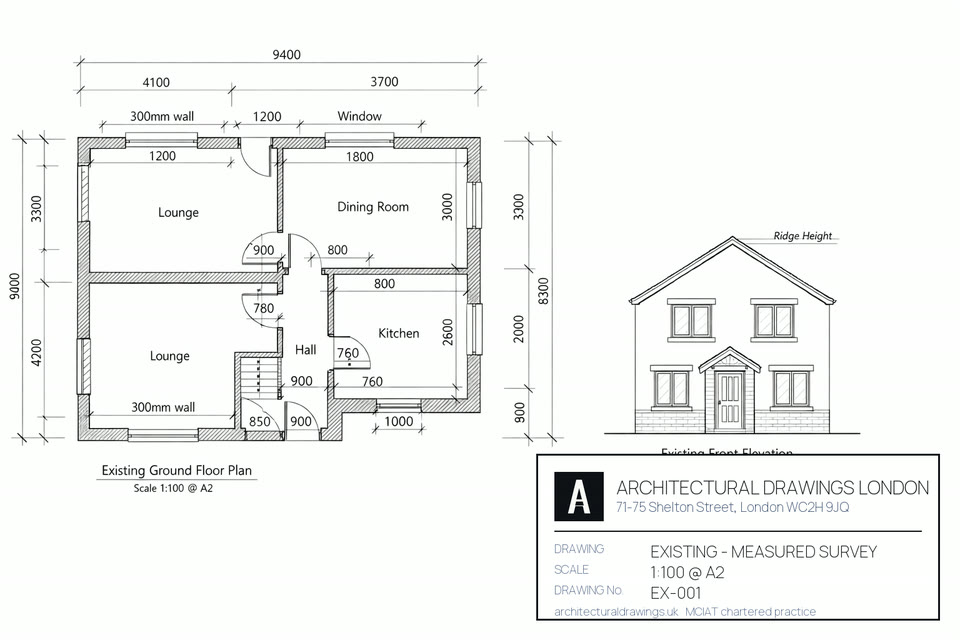
An LDC application requires detailed architectural drawings showing the existing property and the proposed development, with measurements demonstrating compliance with every PD limit. This is where most homeowners need professional help. The drawings must prove compliance with millimetre precision — if a dormer is 21 cm from the eaves instead of the required 20 cm, the application is straightforward; if it is 19 cm, it will be refused.
When do you need full planning permission?
Full planning permission (formally called a "householder planning application") is required when your project falls outside permitted development limits, or when your PD rights have been removed. Common triggers include:
- Conservation areas. PD rights are significantly restricted in conservation areas. Side extensions, cladding, and any extension visible from a highway or public space generally require full planning permission. Rear extensions are limited to single-storey under PD.
- Listed buildings. Any alteration to a listed building — internal or external — requires listed building consent, which is a separate application from planning permission. PD rights do not apply to listed buildings in any meaningful way.
- Article 4 Directions. A council can issue an Article 4 Direction to remove specific PD rights in a defined area. This is common across inner London boroughs, particularly in conservation areas. If your property is subject to an Article 4 Direction, you may need full planning permission for work that would otherwise be permitted development.
- Flats and maisonettes. PD rights under the GPDO apply only to dwellinghouses. If you live in a flat, even a ground-floor flat with a garden, you cannot use PD rights for extensions. Full planning permission is required.
- Change of use. Converting a house into flats (C3 to C4 or sui generis), or converting a commercial unit to residential use, requires either full planning permission or a Prior Approval application (see below).
- Exceeding PD size limits. A rear extension deeper than 3 metres (or 4 metres for detached), a loft conversion exceeding 40/50 cubic metres, or a two-storey extension deeper than 3 metres will all require full planning permission.
- Front extensions and major external alterations. PD rights do not generally cover extensions to the principal elevation. Any extension visible from the highway that changes the front appearance of the dwelling requires planning permission.
The council application fee for a householder planning application is £548. The determination period is 8 weeks. The council will assess your application against its Local Plan policies, the National Planning Policy Framework, and any relevant supplementary planning documents. Neighbours are consulted, and their objections are a material consideration — though not a decisive one.
For London projects, you should also be aware that some boroughs have additional local restrictions. Basement development is heavily restricted in several boroughs (including Kensington and Chelsea, Camden, and Westminster). Roof extensions visible from the street are often resisted in conservation areas even where PD rights technically apply. A pre-application meeting with the council (£150–£600 depending on borough) can save significant time and cost.
PD vs LDC vs full planning: comparison
| Permitted Development | Lawful Development Certificate | Full Planning Permission | |
|---|---|---|---|
| What it is | Automatic right to build within set limits | Official proof that PD rights apply to your specific project | Formal application assessed by the council against planning policy |
| When needed | Extensions, loft conversions, outbuildings within PD limits on a house | When you want certainty that your project is lawful, or when selling a property with PD works | Conservation areas, listed buildings, Article 4, flats, projects exceeding PD limits, change of use |
| Council fee | None | £103 (proposed) / £206 (existing) | £548 (householder) |
| Timeline | Immediate (no application) | 8 weeks | 8 weeks (13 weeks for major applications) |
| Drawings required | Not legally required, but recommended for builders and for mortgage/sale purposes | Yes — detailed plans, sections and elevations demonstrating PD compliance | Yes — full set including site plan, floor plans, elevations, sections, design and access statement |
| Council involvement | None (unless Prior Approval applies) | Assessment of legal compliance only — no design judgement | Full assessment: policy, design, neighbour impact, highways, trees, ecology |
| Can be refused? | N/A | Only if the proposal does not comply with PD rules | Yes — on policy, design, amenity, or other material planning grounds |
Prior Approval: the fourth route
Prior Approval is a streamlined planning process that falls between permitted development and full planning permission. It applies to specific categories of development where Parliament has decided that the principle of development is acceptable, but the council may still assess certain limited impacts.
The most relevant Prior Approval routes for London homeowners and developers are:
- Larger home extensions (Class A, paragraph A.4). Single-storey rear extensions between 4–8 metres (detached) or 3–6 metres (all other houses) can be built under Prior Approval. The council notifies adjoining neighbours, who have 21 days to respond. The council then has 42 days to decide, assessing only the impact on the amenity of adjoining properties. If the council does not respond within 42 days, approval is deemed granted.
- Commercial-to-residential conversions (Class MA). This replaced the former Class O (office to residential). It allows the change of use from Class E (commercial, business and service) to Class C3 (residential) subject to Prior Approval. The council assesses transport, contamination, flooding, noise, natural light, fire safety, and the impact on the provision of local services. The building must have been in commercial use for at least 2 continuous years before the application. There is a floor space limit of 1,500 square metres.
- Upward extensions (Class AA). This relatively new right allows the construction of up to 2 additional storeys on top of existing purpose-built detached blocks of flats (3+ storeys) or on certain detached commercial buildings. The council assesses external appearance, air traffic and defence, impact on neighbours, and the provision of adequate natural light. This route is increasingly used in London for densification without full planning.
Prior Approval applications typically cost £249 and must be determined within 56 days. The key difference from full planning permission is that the council can only assess the specific impacts listed in the legislation — they cannot refuse on broader policy grounds such as housing mix, affordable housing contributions, or design quality beyond the specified criteria.
How Article 4 Directions change everything
An Article 4 Direction is a legal order made by a local council that withdraws specific permitted development rights in a defined area. When an Article 4 Direction applies to your property, work that would normally be permitted development instead requires full planning permission.
Article 4 Directions are widespread across London, particularly in conservation areas. They are used to give councils greater control over changes that could harm the character of sensitive areas. Common restrictions include:
- Removal of PD rights for rear dormer loft conversions
- Restrictions on window and door replacements (especially uPVC in Victorian/Edwardian terraces)
- Controls on painting, rendering or cladding external walls
- Restrictions on satellite dishes, aerials and solar panels visible from the highway
- Removal of rights for outbuildings, garden structures and boundary treatments
London boroughs with particularly extensive Article 4 coverage include:
- Camden — covers most conservation areas borough-wide
- Islington — extensive Article 4 covering almost all conservation areas
- Westminster — near-blanket Article 4 across the borough
- Kensington and Chelsea — widespread conservation area Article 4s
- Hackney — growing coverage, especially in De Beauvoir, Dalston and Stoke Newington
- Richmond upon Thames — extensive conservation area coverage
- Lambeth — Article 4s in Brixton, Clapham and Streatham conservation areas
- Haringey — Muswell Hill, Hornsey and Crouch End areas
- Wandsworth — multiple conservation area Article 4s
- Southwark — Dulwich, Bermondsey and Borough areas
Before starting any project, check whether your property is affected by an Article 4 Direction. Your council's planning department or interactive planning map will confirm this. If an Article 4 applies, budget for a full planning application rather than relying on PD rights.
Which route is right for your project?
The decision tree is more straightforward than it appears. Work through these questions in order:
1. Is your property a house (Use Class C3)? If you live in a flat, maisonette, or a converted commercial unit where PD rights were removed by condition, you need full planning permission for any extension work. Stop here.
2. Is your property listed? If yes, you need listed building consent (plus planning permission if external work is involved). PD rights are effectively irrelevant. Stop here.
3. Is your property in a conservation area or subject to an Article 4 Direction? Check your council's interactive map. If an Article 4 removes the specific PD right you need, you will require full planning permission. If you are in a conservation area without an Article 4, PD rights still apply but with restrictions (no side extensions, no cladding, single-storey rear only).
4. Does your project fall within PD size limits? Measure carefully. If your rear extension is under 3 metres (or 4 metres detached), your loft conversion adds under 40 cubic metres (50 detached), and all other conditions are met, you can proceed under permitted development. We strongly recommend applying for a Lawful Development Certificate to obtain official proof.
5. Does your project exceed PD limits but remain single-storey? If you want a larger single-storey rear extension (up to 6 metres, or 8 metres detached), consider the Prior Approval route for larger home extensions. It is faster and cheaper than full planning, and the council can only assess impact on neighbours.
6. Does your project exceed all PD routes? You need full planning permission. Consider a pre-application meeting with the council to understand their likely position before investing in a full drawing set.
If you are unsure, get in touch for a free assessment.
Frequently asked questions
Do I need planning permission or permitted development?
It depends on your project type, size and location. Single-storey rear extensions under 3 metres (detached: 4 metres) typically fall under permitted development. You need full planning permission if your property is in a conservation area with relevant restrictions, is a flat, is a listed building, has an Article 4 Direction removing the relevant PD right, or if the extension exceeds PD size limits. A architectural technologist can assess your project in a brief conversation and confirm the correct route.
What is a Lawful Development Certificate?
A Lawful Development Certificate (LDC) is an official document from your local council confirming that a proposed or existing development is lawful under current planning rules. A "proposed" LDC confirms your plans fall within permitted development before you build. An "existing" LDC confirms work already completed was lawful at the time it was carried out. It is not planning permission — it is proof that permission was not required. It is strongly recommended for any PD project, particularly if you plan to sell the property in future.
How much does a Lawful Development Certificate cost?
The council application fee for a proposed LDC is £103. For an existing LDC it is £206. You will also need professional architectural drawings to accompany the application, demonstrating compliance with every PD limit.
Can I extend under permitted development in a conservation area?
Yes, but with significant restrictions. In conservation areas, permitted development rights are reduced: you cannot add cladding, extend the side of a dwelling, or build more than one storey at the rear. Rear extensions are limited to single-storey and must not exceed 3 metres from the rear wall (4 metres for detached properties). Some conservation areas also have Article 4 Directions that remove PD rights entirely for certain types of work. Always check with your local council's planning department or interactive map before proceeding.
What is Prior Approval?
Prior Approval is a lightweight planning process that sits between full planning permission and standard permitted development. The council can only assess specific impacts — such as the effect on neighbouring amenity, transport, flooding, contamination, or natural light — rather than the full range of planning considerations. Common Prior Approval routes include larger home extensions, commercial-to-residential conversions (Class MA), and upward extensions to add additional storeys to existing buildings. The council has 56 days to decide.
Do I need a certificate for permitted development?
You are not legally required to obtain a Lawful Development Certificate before carrying out permitted development work. However, we strongly recommend it. An LDC provides official proof that your development is lawful, which protects you against enforcement action and is essential when selling your property. Conveyancing solicitors acting for buyers will almost always ask for evidence that extensions were built lawfully — an LDC is the clearest, most authoritative proof available. The cost (£103 council fee plus drawings) is minimal compared to the complications of selling without one.
Not sure which route your project needs?
Our CIAT-affiliated technologists assess your project, confirm the correct planning route. No obligation.
Get a free quote →