TL;DR — Key Facts
- Planning authority: Lambeth Council
- Conservation areas: 64 designated areas
- Article 4 Directions: Yes
- Postcodes covered: SE1, SE11, SE24, SE27, SW2, SW4, SW8, SW9, SW16
- Typical housing: Victorian terraces in Clapham, Brixton, Herne Hill
- Householder application fee: £548 (2026 rate)
What is the pattern of Lambeth decisions?
Fast on the clock, heavily designated underneath. Lambeth settled 95.2% of householder decisions inside eight weeks and approved 80.1%, but it agreed an extension of time on 48.2% of applications and holds 223 Article 4 areas, the third most in London.
| Measure | Lambeth | London |
|---|---|---|
| Decided inside eight weeks | 95.2% | — |
| Applications with an agreed extension of time | 48.2% | 34.5% |
| Householder approval rate | 80.1% | 83.0% |
| Article 4 areas in the register | 223 | third most of the 16 boroughs in the Article 4 register |
| Conservation areas | 65 covering 863 ha | 1,141 across London |
| Lawful development certificates issued | 1,138 | — |
| Householder appeals allowed after refusal | 41.2% of 313 | 40.8% of 13,067 |
Sources: decision figures from MHCLG District Planning Application Statistics (PS1 and PS2), twelve quarters to March 2026; registers from the MHCLG Planning Data Platform, retrieved 1 September 2026, excluding revoked entries; appeals from Planning Inspectorate casework decided 2016–2026. The in-time figure and the extension rate belong together: many Lambeth decisions are inside a period that was itself extended by agreement.
Planning in Lambeth — what you need to know
Only Richmond upon Thames has more conservation areas than Lambeth's 64, which is not what most people expect of a borough better known for its estates than its heritage. The designations run from Clapham Common and Kennington's Georgian squares out through Herne Hill and Streatham Hill, and they are the single biggest determinant of what you can do to a Lambeth house without asking. Establish which one covers your address before anything else.
Mix of dense Victorian residential and post-war estate; strong conservation area coverage; generally design-led planning decisions. The borough has a population of approximately 318,000 residents and covers postcodes SE1, SE11, SE24, SE27, SW2, SW4, SW8, SW9, SW16.
The housing stock in Lambeth is predominantly victorian terraces in Clapham, Brixton, Herne Hill; Edwardian villas; 1930s and post-war estates in parts of Streatham; Georgian in Kennington. This mix of property types means that Lambeth Council deals with a wide range of applications, from rear extensions on terraced houses to loft conversions on semi-detached properties and full refurbishments of period homes in conservation areas.
With 64 designated conservation areas and active Article 4 Directions, Lambeth has a relatively controlled planning environment where Permitted Development rights may be restricted in many areas.
At Architectural Drawings London, we prepare planning drawings and building regulations drawings for properties across all Lambeth postcodes. Our MCIAT chartered architectural technologists have experience with Lambeth Council and understand the specific policies, design guides, and precedents that apply in Lambeth.
Where do Lambeth's 223 Article 4 areas apply?
Lambeth has Article 4 Directions in place that remove certain Permitted Development rights. Borough-wide Article 4 for HMO conversions; plus office-to-residential restrictions.
Article 4 Directions are used by councils to protect the character of an area by requiring planning permission for changes that would otherwise be permitted. If your property is affected by an Article 4 Direction in Lambeth, you will need to submit a full planning application even for works that would normally fall under Permitted Development. The council fee for a householder application is £548, and we prepare the necessary drawings and supporting documents.
It is important to note that Article 4 Directions in Lambeth are separate from conservation area restrictions. A property can be affected by both, and in practice many Article 4 areas overlap with conservation areas. We check the specific restrictions affecting your property as part of our initial assessment.
How much of Lambeth is a conservation area?
Lambeth has 64 designated conservation areas. Notable conservation areas include:
- Clapham Common
- Herne Hill
- Brixton Road
- Kennington
- Brockwell Park
- Streatham Hill
In conservation areas, Permitted Development rights are more restricted than in non-designated areas. Key restrictions include:
- No cladding, stone, artificial stone, pebble dash, render, timber, plastic, or tile to any external wall without planning permission
- No side extensions under Permitted Development
- Rear extensions are limited and may require planning permission
- Dormer loft conversions facing the highway require planning permission
- Satellite dishes on front elevations or chimneys are not permitted
- Demolition of gates, walls, fences, or other boundary treatment requires planning permission
Sixty-four designated areas mean the odds are that yours is one of them, and in Lambeth the assessment tends to turn on the rear elevation and roofline rather than the front, because so much of the protected stock is terraced and the fronts are already uniform. The council issued two certificates for proposed works to listed buildings over three years (MHCLG planning statistics, retrieved 1 September 2026), so listed status is rare here even where designation is not — worth knowing, because the two carry very different consent requirements.
Popular projects in Lambeth
Householder work is a minority of the caseload here. Lambeth took 5,139 planning decisions in the three years to March 2026, of which 1,736 were householder applications (MHCLG planning statistics, retrieved 1 September 2026) — the balance is conversions, changes of use and the flat subdivisions that a borough of Victorian terraces and mansion blocks generates continuously. Schemes that create a new dwelling are the hard ones: Lambeth approved 46.5% of minor dwelling proposals, so roughly half fail.
Loft conversions
Lambeth has extensive streets of terraced housing, making loft conversions one of the most popular home improvement projects in the borough. A rear dormer loft conversion on a typical Victorian or Edwardian mid-terrace can add 20-30 square metres of living space and significant value to the property. In many cases, rear dormers fall under Permitted Development rights, though properties in conservation areas or subject to Article 4 Directions will need full planning permission. We prepare loft conversion drawings for properties across Lambeth.
Side-return and rear extensions
The classic Victorian and Edwardian terrace layout in Lambeth leaves a side return passage that is prime territory for a kitchen extension. A single-storey rear or side-return extension can often be built under Permitted Development, extending up to 6 metres from the rear wall (or up to 8 metres for detached houses under the Prior Approval process). We prepare extension plans for properties across all Lambeth postcodes (SE1, SE11, SE24, SE27, SW2, SW4, SW8, SW9, SW16).
Flat conversions and internal alterations
With mansion blocks and converted flats forming part of Lambeth's housing stock, internal layout changes and flat conversions are common projects. While internal alterations rarely need planning permission, converting a house to flats (C3 to C4 HMO) or vice versa may require planning approval, particularly given Lambeth's Article 4 Direction covering HMO conversions. We can prepare the necessary floor plans, elevations, and supporting documents for flat conversion applications in Lambeth.
How much do planning drawings cost in Lambeth?
The fee for a householder application is £548 and a lawful development certificate is £274. The number that should shape your budget in Lambeth is neither: 335 applications were withdrawn in three years (MHCLG planning statistics, retrieved 1 September 2026), and a withdrawal means the fee and the drawings were both spent on something that never got determined. We would rather establish the conservation position first and submit once.
Planning costs in Lambeth
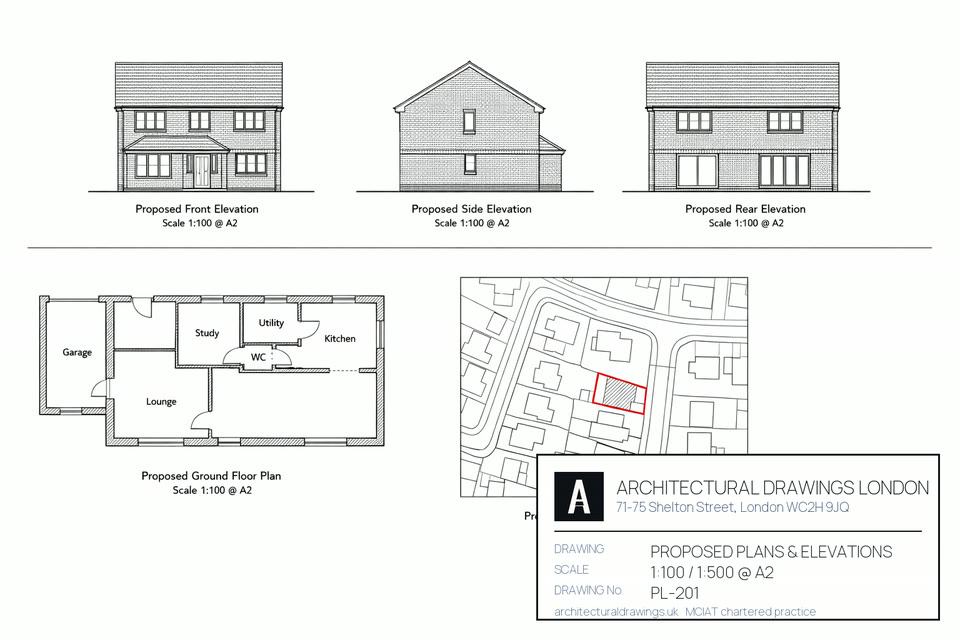
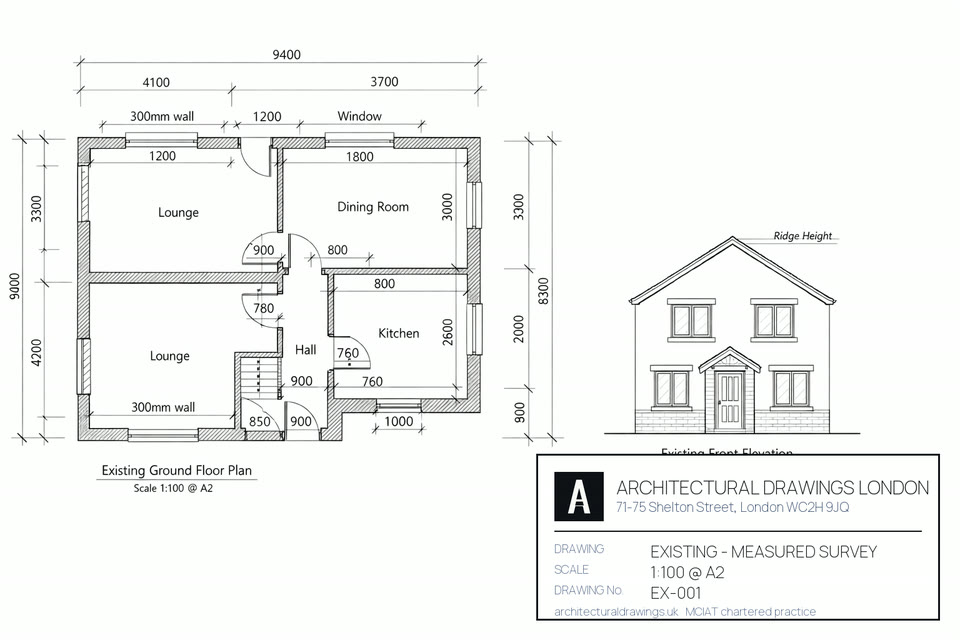
We include a measured survey, existing and proposed plans, elevations, and a site plan — everything required for a valid planning submission to Lambeth Council. Our fees are 30% below typical London architect rates for the same scope of work.
With designation this widespread, the first question is whether either applies to your address at all - Lambeth issued 1,138 certificates in three years (MHCLG planning statistics, retrieved 1 September 2026), which is a substantial number but drawn from the streets that fall outside the 64 conservation areas.
Our experience in Lambeth
We cover all Lambeth postcodes: SE1, SE11, SE24, SE27, SW2, SW4, SW8, SW9, SW16. Whether your property is in a conservation area, affected by an Article 4 Direction, or in an unrestricted residential street, we have experience with Lambeth Council and understand the borough's planning policies.
Our MCIAT chartered architectural technologists prepare planning drawings and building regulations drawings for residential projects across Lambeth. We handle the full process from initial measured survey through to planning submission, and we liaise with Lambeth Council on your behalf.
We also work in Lambeth's neighbouring boroughs:
What are the odds of approval in Lambeth?
Lambeth sits close to the London average. Of 1,736 householder decisions in the three years to March 2026, 1,390 were approved and 346 refused — 80.1%, against 83.0% London-wide. In practice that means the outcome is decided by the scheme and the drawings rather than by the authority: there is no local bias to plan around, and no local leniency to rely on.
Speed is not the problem here. Lambeth decided 95.2% of householder applications within the statutory eight weeks. If your project has a fixed start date, the determination period is the predictable part of the programme — the variable is how long the drawings take before submission.
Of the 175 larger rear extensions determined in Lambeth under the neighbour-consultation scheme, 46.3% were granted. That is close to a coin toss, and which side it lands on is usually decided by whether an adjoining owner objects — which makes an early conversation with the neighbour worth more than anything on the drawings.
Lambeth also issued 1,138 certificates of lawful development over the same period — a high number relative to its householder caseload, and a sign that a lot of work in the borough proceeds under permitted development with a certificate rather than through a full application. A certificate costs £274 and is the document a buyer's solicitor will ask for.
Source: MHCLG District Planning Application Statistics (PS1 and PS2), the statutory return every English planning authority files. Figures cover the twelve quarters to March 2026 and are decisions made in that window, not applications submitted. Published under the Open Government Licence v3.0.
Frequently asked questions
Do I need planning permission in Lambeth?
It depends almost entirely on which of the 64 conservation areas you are in, and Lambeth also has a borough-wide Article 4 Direction covering HMO conversions. Outside a designated area, a single-storey rear extension, a rear roof dormer out of sight of the street and internal remodelling are normally available without an application. Inside one, treat every external change as needing permission until a search of the address says otherwise.
Does Lambeth have Article 4 Directions?
Yes. Borough-wide Article 4 for HMO conversions; plus office-to-residential restrictions.
How many conservation areas are in Lambeth?
Lambeth has 64 designated conservation areas, including Clapham Common, Herne Hill, Brixton Road, Kennington, Brockwell Park, Streatham Hill. In conservation areas, Permitted Development rights are more restricted. For example, you cannot add cladding, build side extensions, or install satellite dishes without planning permission. Rear extensions and loft conversions may also be restricted. Always check whether your property falls within a conservation area before starting work.
How much does a London Borough of Lambeth planning application cost?
With 64 conservation areas, second only to Richmond, the odds are that your Lambeth address is designated and the application route is the one available. Lambeth also withdrew 335 applications in three years (MHCLG planning statistics, retrieved 1 September 2026), and a withdrawal costs the fee and the drawings both.
How long does London Borough of Lambeth take to decide a planning application?
Just 0.3% of Lambeth householder applications took longer than 13 weeks — among the three lowest figures in London (MHCLG planning statistics, retrieved 1 September 2026). The long tail that frustrates people in other boroughs barely exists here. What does exist is a 48.2% extension-of-time rate across all application types, so if your project is a conversion rather than an extension, expect the timetable to be agreed rather than assumed. Pre-application advice adds four to six weeks before any of that starts. Major applications carry a thirteen-week target.