TL;DR — Key Facts
- Planning authority: Islington Council
- Conservation areas: 40 designated areas
- Article 4 Directions: Yes
- Postcodes covered: N1, N4, N5, N7, N19, EC1
- Typical housing: Georgian and early Victorian terraces, Victorian bye-law housing, 1930s mansion blocks, converted industrial buildings in Clerkenwell and Farringdon
- Householder application fee: £548 (2026 rate)
What is the pattern of Islington decisions?
High approval, and refusals that stick. Islington approved 90.9% of the 1,279 householder applications it decided, and the Inspectorate allowed just 29.6% of the 159 appeals that followed a refusal — the fourth lowest overturn rate of any London borough.
| Measure | Islington | London |
|---|---|---|
| Householder approval rate | 90.9% | 83.0% |
| Householder decisions made | 1,279 | 77,680 |
| Householder appeals allowed after refusal | 29.6% of 159 | 40.8% of 13,067 |
| Applications with an agreed extension of time | 51.6% | 34.5% |
| Conservation areas | 41 covering 583 ha | 1,141 across London |
| Basement applications in the Datahub | 10,989 | 61% approved |
| Decided inside eight weeks | 94.5% | — |
Sources: decision figures from MHCLG District Planning Application Statistics (PS1 and PS2), twelve quarters to March 2026; conservation areas from planning.data.gov.uk, retrieved 1 September 2026; the Datahub row from the Planning London Datahub, retrieved 15 August 2026, comparable within Islington only; appeals from Planning Inspectorate casework decided 2016–2026. The 51.6% extension-of-time rate belongs beside the 94.5% in-time figure: half of Islington’s decisions run on a clock that was extended by agreement.
Planning in Islington — what you need to know
Islington determined thirteen larger rear extensions under the neighbour-consultation scheme in three years — eight needed no prior approval, two were granted, three refused (MHCLG planning statistics, retrieved 1 September 2026). Thirteen, in a borough of over 200,000 people. That is not a policy position; it is geometry. The Georgian and early Victorian terraces here sit on plots with almost no rear depth to give away, so the extension route that dominates outer London is close to irrelevant, and the space is found upwards and downwards instead.
Densely terraced, gentrified; strong conservation area coverage; active planning department. The borough has a population of approximately 216,000 residents and covers postcodes N1, N4, N5, N7, N19, EC1.
The housing stock in Islington is predominantly georgian and early Victorian terraces, Victorian bye-law housing, 1930s mansion blocks, converted industrial buildings in Clerkenwell and Farringdon. This mix of property types means that Islington Council deals with a wide range of applications, from rear extensions on terraced houses to loft conversions on semi-detached properties and full refurbishments of period homes in conservation areas.
With 40 designated conservation areas and active Article 4 Directions, Islington has a relatively controlled planning environment where Permitted Development rights may be restricted in many areas.
At Architectural Drawings London, we prepare planning drawings and building regulations drawings for properties across all Islington postcodes. Our MCIAT chartered architectural technologists have experience with Islington Council and understand the specific policies, design guides, and precedents that apply in Islington.
Are there Article 4 Directions in Islington?
Islington has Article 4 Directions in place that remove certain Permitted Development rights. Article 4 Direction covering the whole borough removes permitted development rights for HMO conversions (C3 to C4). Separate Article 4 for office-to-residential in key areas.
Article 4 Directions are used by councils to protect the character of an area by requiring planning permission for changes that would otherwise be permitted. If your property is affected by an Article 4 Direction in Islington, you will need to submit a full planning application even for works that would normally fall under Permitted Development. The council fee for a householder application is £548, and we prepare the necessary drawings and supporting documents.
It is important to note that Article 4 Directions in Islington are separate from conservation area restrictions. A property can be affected by both, and in practice many Article 4 areas overlap with conservation areas. We check the specific restrictions affecting your property as part of our initial assessment.
How much of Islington is a conservation area?
Islington has 40 designated conservation areas. Notable conservation areas include:
- Barnsbury
- Canonbury
- Highbury
- Clerkenwell
- Angel
In conservation areas, Permitted Development rights are more restricted than in non-designated areas. Key restrictions include:
- No cladding, stone, artificial stone, pebble dash, render, timber, plastic, or tile to any external wall without planning permission
- No side extensions under Permitted Development
- Rear extensions are limited and may require planning permission
- Dormer loft conversions facing the highway require planning permission
- Satellite dishes on front elevations or chimneys are not permitted
- Demolition of gates, walls, fences, or other boundary treatment requires planning permission
Forty conservation areas and an Article 4 Direction, over one of the most consistently Georgian street patterns in London. The practical consequence is that the terrace, not the house, is the unit being assessed: window pattern, parapet line, railings and the rhythm of front doors are what the designation protects, and a proposal is judged on whether it disturbs them. We survey the neighbouring frontages as well as yours, because on an Islington terrace the evidence that a change is acceptable is usually next door.
Popular projects in Islington
Islington's planning work is mostly not householder work. Of 4,350 decisions in the three years to March 2026, 1,279 were householder (MHCLG planning statistics, retrieved 1 September 2026) — the rest is conversions, commercial change of use and the Clerkenwell and Farringdon industrial buildings that have been turned into flats over the last two decades. If you own a whole house here you are in a minority, and the application that fits your project is more often a flat conversion or an alteration to a front elevation than a rear extension.
Loft conversions
Islington has extensive streets of terraced housing, making loft conversions one of the most popular home improvement projects in the borough. A rear dormer loft conversion on a typical Victorian or Edwardian mid-terrace can add 20-30 square metres of living space and significant value to the property. In many cases, rear dormers fall under Permitted Development rights, though properties in conservation areas or subject to Article 4 Directions will need full planning permission. We prepare loft conversion drawings for properties across Islington.
Side-return and rear extensions
The classic Victorian and Edwardian terrace layout in Islington leaves a side return passage that is prime territory for a kitchen extension. A single-storey rear or side-return extension can often be built under Permitted Development, extending up to 6 metres from the rear wall (or up to 8 metres for detached houses under the Prior Approval process). We prepare extension plans for properties across all Islington postcodes (N1, N4, N5, N7, N19, EC1).
Flat conversions and internal alterations
With mansion blocks and converted flats forming part of Islington's housing stock, internal layout changes and flat conversions are common projects. While internal alterations rarely need planning permission, converting a house to flats (C3 to C4 HMO) or vice versa may require planning approval, particularly given Islington's Article 4 Direction covering HMO conversions. We can prepare the necessary floor plans, elevations, and supporting documents for flat conversion applications in Islington.
How much do planning drawings cost in Islington?
Islington charges the fees set nationally: £548 to determine a householder application, £274 to certify lawful development. Islington issued 398 certificates in three years (MHCLG planning statistics, retrieved 1 September 2026) — a low figure that follows from the same fact as everything else on this page: with little permitted development available on a dense terrace, there is less that a certificate can usefully confirm. We price the drawings as a single fixed sum at the outset, and it lands about 30% under the London architect rate for an identical scope.
Planning costs in Islington
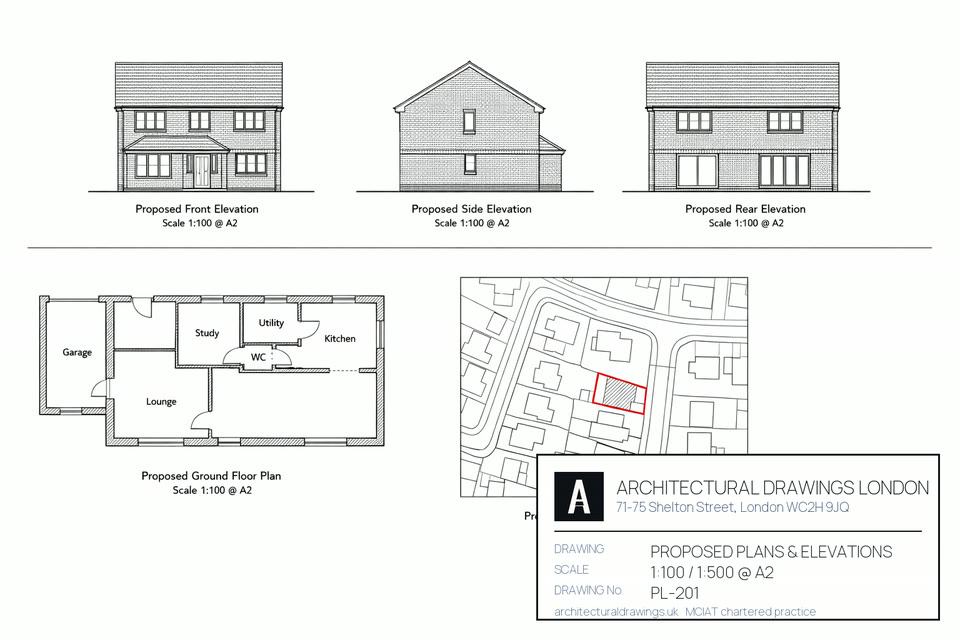
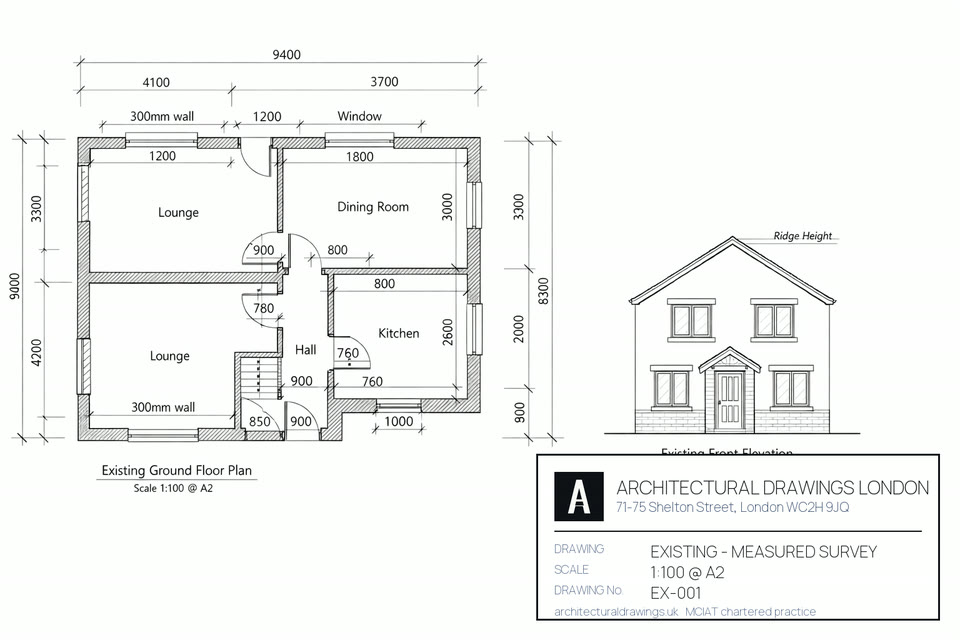
We include a measured survey, existing and proposed plans, elevations, and a site plan — everything required for a valid planning submission to Islington Council. Our fees are 30% below typical London architect rates for the same scope of work.
Islington granted 398 certificates of lawful development in three years (MHCLG planning statistics, retrieved 1 September 2026) - a low figure that follows from the Article 4 Direction, 40 conservation areas, and very little rear depth for permitted development to apply to. Where one is available on your address, it is worth having for exactly that reason.
Our experience in Islington
We cover all Islington postcodes: N1, N4, N5, N7, N19, EC1. Whether your property is in a conservation area, affected by an Article 4 Direction, or in an unrestricted residential street, we have experience with Islington Council and understand the borough's planning policies.
Our MCIAT chartered architectural technologists prepare planning drawings and building regulations drawings for residential projects across Islington. We handle the full process from initial measured survey through to planning submission, and we liaise with Islington Council on your behalf.
We also work in Islington's neighbouring boroughs:
What are the odds of approval in Islington?
The odds in Islington are better than the London average. The council decided 1,279 householder applications in the three years to March 2026 and approved 1,163 of them — 90.9%, against 83.0% across London. Only 116 were refused. That is not a reason to be casual: a refusal still costs eight weeks and a resubmission, and the applications that fail here tend to fail on the same avoidable points — missing or inconsistent drawings, and a scheme that ignores the immediate context.
Speed is not the problem here. Islington decided 94.5% of householder applications within the statutory eight weeks. If your project has a fixed start date, the determination period is the predictable part of the programme — the variable is how long the drawings take before submission.
Too few larger-extension prior approvals have been determined in Islington in this window to quote a rate. Where the numbers are thin, the prior-approval route is worth checking on its merits rather than on local precedent.
The council also issued 398 certificates of lawful development in the same three years. That is the route for work that is already permitted development: it is not a permission, it is proof you did not need one, and it costs £274 against the £548 householder application fee.
Source: MHCLG District Planning Application Statistics (PS1 and PS2), the statutory return every English planning authority files. Figures cover the twelve quarters to March 2026 and are decisions made in that window, not applications submitted. Published under the Open Government Licence v3.0.
Frequently asked questions
Do I need planning permission in Islington?
Less often than in outer London, and the reason is physical rather than legal. Islington has an Article 4 Direction and 40 conservation areas, but the binding constraint on most terraced addresses is that there is no rear garden depth to extend into — the borough determined just thirteen larger rear extensions under the neighbour-consultation scheme in three years (MHCLG planning statistics, retrieved 1 September 2026). Internal alterations and rear dormers not facing the highway remain the realistic permitted work, and both need checking against the designation covering your street.
Does Islington have Article 4 Directions?
Yes. Article 4 Direction covering the whole borough removes permitted development rights for HMO conversions (C3 to C4). Separate Article 4 for office-to-residential in key areas.
How many conservation areas are in Islington?
Islington has 40 designated conservation areas, including Barnsbury, Canonbury, Highbury, Clerkenwell, Angel. In conservation areas, Permitted Development rights are more restricted. For example, you cannot add cladding, build side extensions, or install satellite dishes without planning permission. Rear extensions and loft conversions may also be restricted. Always check whether your property falls within a conservation area before starting work.
How much does a London Borough of Islington planning application cost?
The £548 application fee is rarely the constraint here. Islington approves 90.9% of householder applications (MHCLG planning statistics, retrieved 1 September 2026), so the fee is rarely wasted. What limits projects here is not cost but space: the borough determined thirteen larger rear extensions in three years, because Georgian terraces have rear yards rather than gardens. Drawings from £840 put an Islington submission at roughly £1,388 in fees and paperwork.
How long does London Borough of Islington take to decide a planning application?
Islington decided 94.5% of householder applications within 8 weeks and 3.1% beyond thirteen, from 1,279 decisions (MHCLG planning statistics, retrieved 1 September 2026). It also approved 90.9% of them, so on the ordinary householder application this is a fast and permissive authority. The longer timetables in this borough attach to the applications that are not householder ones — conversions and listed building consent. A pre-application enquiry lengthens the run-up by four to six weeks. Major applications carry a thirteen-week target.