Key facts at a glance
- Anyone can submit a planning application — no architect legally required
- Professional submissions achieve 90–95%+ approval vs ~80% for DIY
- Council planning fee: £548 (householder) — same whether DIY or agent
- Common DIY mistakes: wrong scale, missing documents, policy non-compliance
What is a planning agent?
A planning agent is the person or firm named on your planning application as your representative. They handle every aspect of the submission process on your behalf: preparing drawings, completing the application forms on the Planning Portal, writing supporting documents, paying the council fee, and -- crucially -- liaising with the planning officer throughout the 8-week determination period.
In practice, the planning agent is usually the architect, architectural technologist, or planning consultant who designed the scheme. They understand the drawings intimately because they created them, and they understand the local planning policies because they work in that borough regularly.
The alternative -- a DIY application -- means you prepare and submit everything yourself. You still need drawings (the council will not validate an application without them), but you source them independently, complete the forms, and handle all council correspondence.
What a planning agent actually does
The value of a planning agent extends far beyond pressing "submit" on the Planning Portal. Here is what the role involves in practice:
- Site assessment and feasibility. Before any drawings are produced, a good agent checks the planning history of your property, identifies constraints (conservation area, Article 4, TPOs, flood zone), and confirms what is likely to be approved. This prevents wasted time and fees on schemes that were never going to succeed.
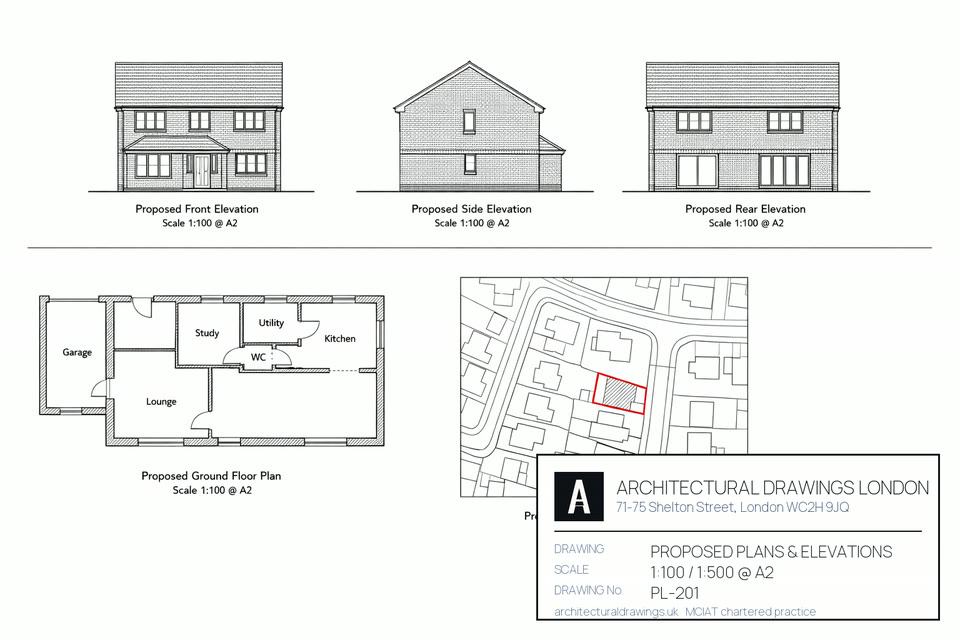
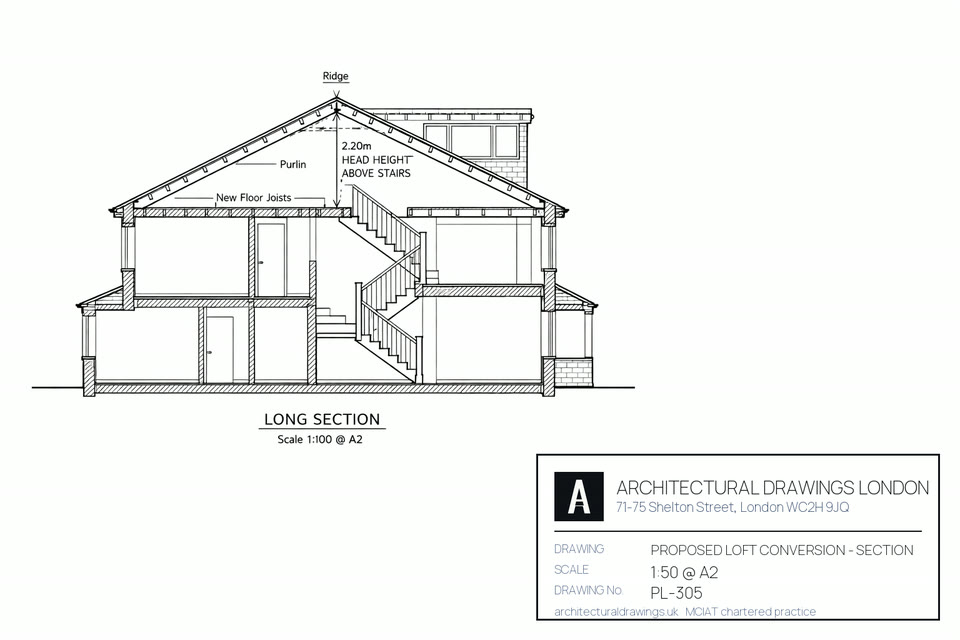
- Accurate drawings. The agent produces the required plans -- site plan, existing and proposed floor plans, existing and proposed elevations -- to the correct scale (1:50 or 1:100) with all the information the council requires. Inaccurate drawings are the most common reason for validation failure.
- Supporting documents. Depending on the project, the agent writes a Design and Access Statement, Heritage Statement, Planning Statement, daylight/sunlight assessment, or other specialist reports. In conservation areas, the Heritage Statement alone can be 10+ pages of policy justification.
- Form completion. The planning application form has 20+ sections covering ownership certificates, agricultural land declarations, access, trees, biodiversity, drainage, and more. Errors cause delays. Agents fill these in correctly first time.
- Officer liaison. After submission, the planning officer may have questions, request amendments, or flag policy concerns. The agent negotiates on your behalf, proposing design changes that address the officer's concerns without compromising your goals.
- Neighbour objections. If neighbours object, the agent reviews the objections and prepares responses for the planning officer, distinguishing material planning considerations from non-material complaints.
- Conditions discharge. If permission is granted with conditions (as most are), the agent can help you understand and discharge those conditions before construction begins.
The DIY application process
Submitting your own planning application is possible and legal. Here is what it involves:
Step 1: Prepare drawings
You need, at minimum: a site location plan (1:1250, available from the Ordnance Survey for about £30), a site block plan (1:500), existing floor plans and elevations (1:50 or 1:100), and proposed floor plans and elevations. These must be accurate, to scale, and clearly annotated with dimensions, materials, and north point.
If you cannot draw these yourself, you can commission them separately from a drawing service. However, if you are paying for professional drawings anyway, you may as well use an agent who includes submission in the fee.
Step 2: Complete the application form
The application is submitted online via the Planning Portal (planningportal.co.uk). The householder application form requires information about ownership, site area, existing and proposed use, materials, access, trees, drainage, and waste. You must sign an ownership certificate (Certificate A if you own the whole site, Certificate B if any land is owned by someone else).
Step 3: Pay the fee
The householder planning application fee is £548 (2026). This is a fixed government fee -- it is the same whether you submit DIY or through an agent.
Step 4: Wait for validation
After submission, the council checks that your application is valid -- that all required documents are present, the fee is correct, and the forms are properly completed. Validation can take 1–3 weeks. If anything is missing, the council will request additional information, and the clock does not start until validation is complete.
Step 5: Determination
Once validated, the council has 8 weeks to determine a householder application. During this time, neighbours are consulted, the planning officer assesses the scheme against local and national policy, and a decision is made. You will receive the decision notice by email.
Success rates: the numbers
The national average approval rate for householder planning applications is approximately 85–90%. This sounds high, but it masks a significant disparity between professional and DIY submissions.
Applications submitted by qualified architects, architectural technologists, and planning consultants consistently achieve approval rates of 90–95%+. At Architectural Drawings London, our approval rate is policy-led across all 33 London boroughs.
DIY applications have a notably higher refusal rate for several reasons:
- Drawing quality. Planning officers are trained to read technical drawings. Poorly drawn or inaccurate plans undermine confidence in the scheme and can lead to refusal even if the proposal is acceptable in principle.
- Policy non-compliance. Each London borough has its own Local Plan and Supplementary Planning Documents. Homeowners rarely read these, so DIY schemes often breach policies on height, depth, materials, or overlooking that a professional would have designed around.
- Missing documents. Conservation area applications need Heritage Statements. Some boroughs require daylight/sunlight assessments for certain extension types. Missing documents can lead to refusal rather than just a request for more information.
- No negotiation. When a planning officer raises a concern, DIY applicants often do not respond effectively. An agent negotiates amendments that address the concern while preserving the design intent.
The cost of a refusal is not just the wasted £548 fee and the 8 weeks of time. A refusal creates a planning history that the officer will refer to in any subsequent application. It is always cheaper to get professional help upfront than to fix a refusal afterwards.
Cost comparison
| Cost element | DIY application | With planning agent |
|---|---|---|
| Council planning fee | £548 | £548 |
| Site location plan (OS) | £20–£30 | Included |
| Architectural drawings | £500–£1,500 (outsourced) | Included |
| Design & Access Statement | Self-written or £200–£500 | Included |
| Agent fee (submission + liaison) | £0 | Included in package |
| Total cost | £778–£2,288 | £1,098–£2,008 |
| Approval rate | ~80% | 90%+ |
The comparison reveals a counterintuitive truth: DIY is not always cheaper. If you need to commission drawings and a Design and Access Statement separately, the combined cost can exceed what a full-service agent charges.
The 7 most common DIY planning mistakes
We see these errors repeatedly when homeowners come to us after a DIY application has been refused or invalidated:
- Drawings not to scale. Plans must be at 1:50 or 1:100. Sketches, even if well-drawn, are rejected at validation if they lack a proper scale bar and dimensions.
- Missing the site location plan. Every application needs a 1:1250 site location plan with the site edged in red and any other land owned edged in blue. Many DIY applicants either omit this or download a map at the wrong scale.
- Wrong ownership certificate. If any part of the application site (including the access road) is owned by someone other than you, you need Certificate B and must serve notice on the other owner. Getting this wrong can invalidate the permission even after it is granted.
- Ignoring the Design and Access Statement. Required for all applications in conservation areas and for major development. Many DIY applicants in conservation areas submit without one, causing automatic invalidation.
- Exceeding Permitted Development limits. Some homeowners apply for planning permission "just in case" but design a scheme that breaches PD limits without realising. A professional would either confirm PD (no application needed) or design to comply with full planning policy.
- Not checking for Article 4 or conservation area status. Many London properties are in conservation areas or subject to Article 4 Directions without the owner's knowledge. This fundamentally changes what can be built and what documents are needed.
- Not responding to the officer's concerns. If the planning officer calls or emails with questions, DIY applicants often delay or respond inadequately. The officer then determines the application on the information available, which may result in refusal.
When DIY might work
There are limited scenarios where submitting your own application can be reasonable:
- Very simple proposals -- a small porch, a replacement window, or a change of use that does not alter the building. These are straightforward applications where the risk of refusal is low.
- You have planning experience. If you work in planning or construction and understand how to read policy documents, complete forms, and produce technical drawings, the DIY route can save money.
- Pre-application advice is positive. If you have already obtained pre-application advice from the council and they have indicated the scheme is acceptable, the risk is lower (though not zero -- pre-app is informal and non-binding).
For anything involving a conservation area, a listed building, a complex extension (rear, loft, mansard), or a borough with strict local policies (Camden, Islington, Westminster, Kensington and Chelsea), we strongly recommend using a professional agent.
What we include as your planning agent
As MCIAT chartered architectural technologists, we act as your planning agent on every project. Here is what each package includes:
Our planning agent packages
All fees are 30% below typical London architect rates. Our council-ready drawing review across all 33 London boroughs means you are very unlikely to face the cost and delay of a refusal.
Frequently asked questions
What does a planning agent do?
A planning agent prepares and submits your planning application on your behalf. They produce the required drawings, write supporting documents, complete the forms, pay the fee, liaise with the planning officer, respond to queries and objections, and negotiate amendments. They are named as your agent on the application and handle all correspondence with the council.
How much does a planning agent cost in London?
Traditional architects charge £2,000–£5,000+. See our full pricing.
Can I submit my own planning application without an architect?
Yes, anyone can submit a planning application. There is no legal requirement for an architect or agent. However, you still need accurate, to-scale drawings that meet the council's validation requirements. Many DIY applications fail at validation because the drawings are inaccurate or incomplete, and the approval rate for DIY submissions is notably lower than for professional ones.
What is the success rate of DIY vs agent-submitted applications?
Professionally submitted applications achieve 90–95%+ approval rates. Our process is policy-led before submission. DIY applications have a notably higher refusal rate, particularly in boroughs with strict local policies like Camden, Islington, and Westminster. The overall national average is 85–90%, but this includes all professional submissions pulling the average up.
What happens if my planning application is refused?
If refused, you can: (1) submit a revised application addressing the reasons for refusal -- no fee for resubmission within 12 months; (2) appeal to the Planning Inspectorate -- free but takes 6–12 months with ~30% success rate; (3) negotiate with the officer. The cost of refusal is not just the fee and time -- it creates a planning history that can make future applications harder. Read our guide on what to do after refusal.