Key facts at a glance
- Householder applications: 8-week statutory target
- Major applications: 13-week statutory target
- Pre-application advice: 4–8 weeks (varies by borough)
- Validation can add 1–3 weeks before the clock starts
- Extensions of time: councils routinely request 10–12 weeks
- Our drawings delivered in 2–3 weeks to start the clock faster
How long does a London householder application really take?
Eight weeks is the statutory target and most boroughs meet it, but the spread is wide. Barking and Dagenham decided 100% inside eight weeks; Camden managed 73.8% and Westminster 74.5%. Across London, 34.5% of applications carried an agreed extension of time.
| Borough | Decided inside 8 weeks | Beyond 13 weeks |
|---|---|---|
| Barking and Dagenham | 100.0% | 0.0% |
| Ealing | 98.6% | 0.4% |
| Sutton | 98.6% | 0.4% |
| Havering | 97.9% | 0.6% |
| Hackney | 84.1% | 7.6% |
| Westminster | 74.5% | 16.2% |
| Camden | 73.8% | 17.2% |
Source: MHCLG District Planning Application Statistics (PS1 and PS2), householder decisions made in the twelve quarters to March 2026, Open Government Licence v3.0, retrieved 1 September 2026. The eight-week clock can be extended by written agreement, and 34.5% of London applications were decided under such an extension — so a borough with a high in-time figure and a high extension rate is not necessarily quick.
What are the statutory timescales?
Planning permission in England operates on statutory timescales set by the Town and Country Planning (Development Management Procedure) Order. These are targets, not guarantees, but councils face government performance monitoring if they miss them consistently.
For residential projects in London, the categories are:
- Householder applications (extensions, loft conversions, alterations to a single dwelling): 8 weeks from validation to decision
- Minor applications (new dwellings under 10 units, changes of use): 8 weeks
- Major applications (10+ dwellings, sites over 0.5 hectares): 13 weeks
The vast majority of homeowner projects in London -- rear extensions, side return extensions, loft conversions, mansard roofs -- fall into the householder category with an 8-week target.
What happens in practice?
The 8-week statutory target is measured from the date of validation, not the date you submit your application. In practice, the total elapsed time from submission to decision letter landing in your inbox is often longer than 8 weeks.
Validation: 1–3 weeks
After you submit your application (online via the Planning Portal or directly to the council), the validation team checks that everything is in order: correct forms, correct fee (£548 for householder in 2026), all required documents and drawings, ownership certificates signed, and site plans at the correct scale. If anything is missing, they request it, and the 8-week clock does not start until validation is complete.
Professional submissions are typically validated within 3–5 working days because all documents are correct first time. DIY applications often take longer due to missing or incorrect items. See our planning agent vs DIY comparison.
Neighbour consultation: weeks 1–3
Once validated, the council notifies neighbours by letter and any relevant statutory consultees (conservation officer, highways, environmental health, Thames Water). Neighbours typically have 21 days to submit comments. This consultation period runs concurrently with the planning officer's assessment.
Officer assessment: weeks 2–6
The case officer reviews the application against the Local Plan, London Plan, National Planning Policy Framework, and any relevant supplementary planning documents. They conduct a site visit (or use Google Street View and aerial photography), review neighbour comments, and assess design quality, scale, impact on neighbours, and policy compliance.
During this period, the officer may contact your agent (or you, if applying DIY) with questions, concerns, or requests for amendments. A good planning agent responds promptly and negotiates design changes that address the officer's concerns without compromising your project goals.
Decision: week 8 (or later)
Most householder applications are decided under delegated authority by the planning officer, without going to a planning committee. The officer writes a report and issues the decision notice. If approved, the notice will include conditions that must be complied with (materials, hours of construction, landscaping, drainage details, and so on).
Extensions of time: the hidden delay
Councils routinely ask applicants to agree to an "extension of time" beyond the 8-week target. This is standard practice when the officer is negotiating amendments, waiting for additional information from a consultee, or simply managing a large caseload. In busy London boroughs, extensions of time to 10–12 weeks are the norm rather than the exception.
Refusing an extension of time does not speed things up. It just means the council may rush to a decision (potentially refusal) to protect their performance statistics, rather than taking the time to negotiate an approval. We always recommend agreeing to reasonable extensions.
Which London boroughs are slowest?
London's 33 boroughs vary significantly in how quickly they process householder applications. These timelines reflect our experience submitting across all boroughs:
| Borough | Typical timeline | Key factor |
|---|---|---|
| Camden | 10–12 weeks | High volume, extensive conservation areas |
| Islington | 9–11 weeks | Almost entirely conservation area coverage |
| Westminster | 10–14 weeks | Complex heritage considerations throughout |
| Kensington & Chelsea | 10–12 weeks | Strict design policies, basement policy |
| Hackney | 8–10 weeks | Generally meets targets |
| Wandsworth | 8–10 weeks | High volume but efficient processing |
| Lambeth | 9–11 weeks | Variable depending on area within borough |
| Tower Hamlets | 9–12 weeks | High density, complex mixed-use schemes |
| Bromley | 8–9 weeks | Generally meets statutory targets |
| Croydon | 8–10 weeks | Large borough, variable workload |
| Southwark | 9–11 weeks | Busy inner-London borough |
| Lewisham | 8–10 weeks | Improving processing times |
These are indicative averages. Actual times depend on scheme complexity, the officer's workload, whether amendments are needed, and seasonal fluctuations (January is typically quiet; May–July are peak).
Pre-application advice timelines
Pre-application advice is an optional, paid service where you submit an informal proposal to the council before making a formal application. The council provides written feedback on whether the scheme is likely to be approved and what changes would improve its chances.
Pre-app response times vary by borough and by the scale of the proposal:
- Householder pre-app: 4–6 weeks in most boroughs, up to 8 weeks in Westminster and Camden
- Minor pre-app: 6–8 weeks, often with an officer meeting
- Major pre-app: 8–12 weeks, typically with multiple meetings
Pre-app adds time to the overall project timeline, but it can significantly reduce the risk of refusal on the formal application. For complex schemes, conservation areas, or controversial proposals, it is often worth the investment. Costs range from £200 to £600 for householder pre-app depending on the borough.
How do you avoid delay?
You cannot control the council's processing speed. But you can minimise delays on your side:
- Submit a complete, accurate application. Missing documents cause validation delays. A professional agent gets it right first time, saving 1–2 weeks.
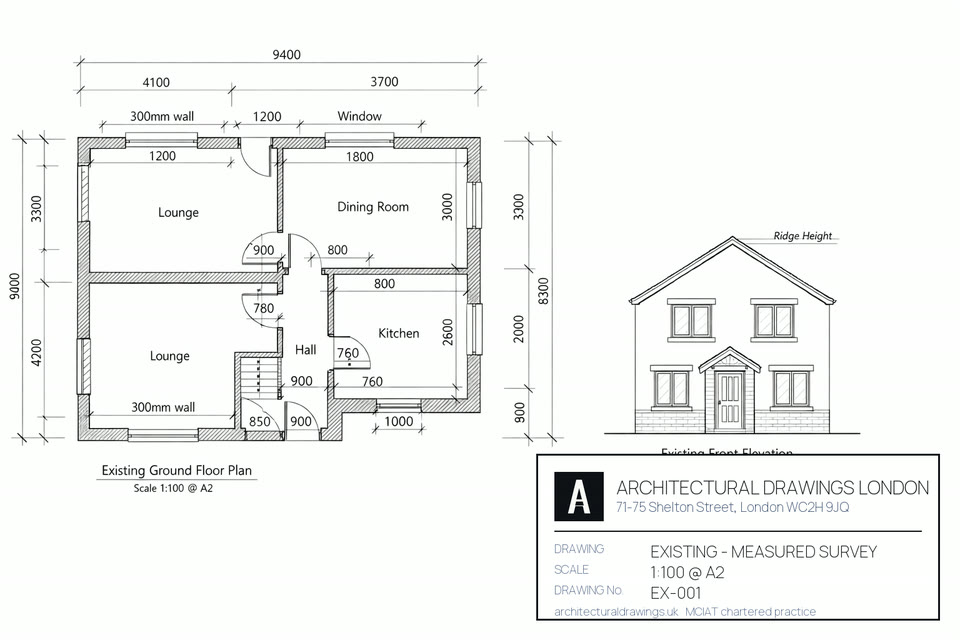
- Produce high-quality drawings. Clear, accurate, to-scale drawings reduce officer queries and increase confidence in the scheme. Our drawings are prepared by MCIAT chartered architectural technologists.
- Include supporting documents proactively. A Design and Access Statement, even when not strictly required, demonstrates policy awareness. In conservation areas, a Heritage Statement is essential.
- Respond to officer queries within 48 hours. Every day of delay on your side adds a day to the total timeline. Our agent service includes prompt officer liaison.
- Agree to reasonable extensions of time. Paradoxically, agreeing often results in approval; refusing can trigger a rushed refusal.
- Engage neighbours before you apply. Speak to affected neighbours about your plans, explain the design, and address their concerns in the drawings. Fewer objections means a smoother assessment.
After approval: the next steps and their timelines
Planning permission is just one stage. Once approved, you still need:
- Building regulations approval: 3–5 weeks for a Full Plans application.
- Party Wall notices: 2 months minimum before starting work if the Act applies. See our Party Wall guide.
- Conditions discharge: some planning conditions must be formally discharged before construction starts (e.g. materials approval, construction management plan). This takes 6–8 weeks per application.
- Contractor quotes and scheduling: 2–6 weeks to obtain competitive quotes and agree a start date.
The total timeline from initial instruction to builder on site is typically 5–8 months. Many stages can overlap (building regs submitted during planning determination; Party Wall notices served in parallel), and our project management keeps everything moving in parallel wherever possible.
Planning permission is valid for 3 years from the date of the decision notice. You must commence work within that period or the permission expires.
Where do we fit in the timeline?
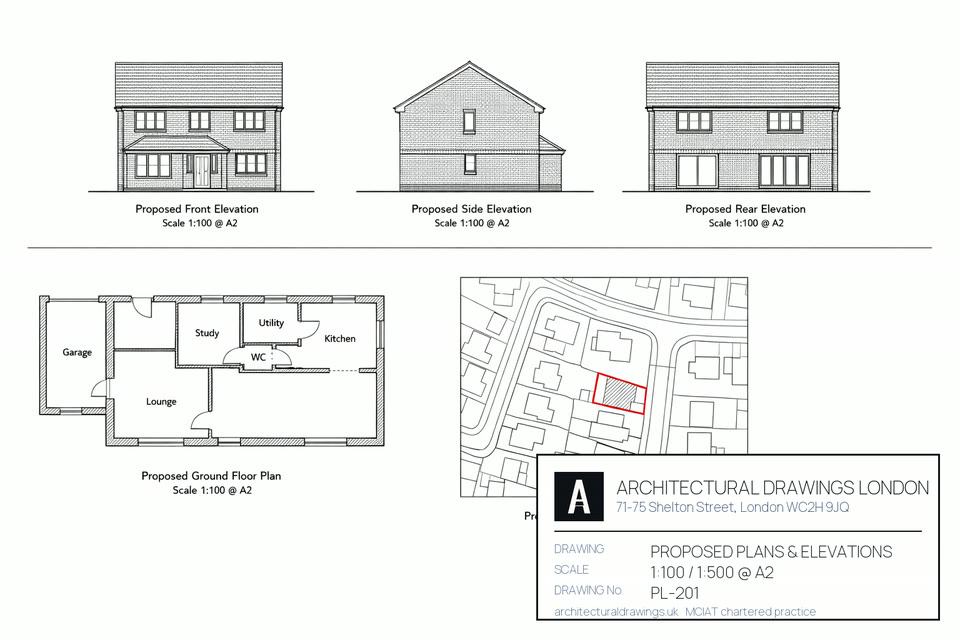
We deliver your planning drawings within 2–3 weeks of instruction and submit the application immediately. Our council-ready drawing review means most projects move straight from planning approval to building regulations without the delay and cost of a resubmission.
Our fees
Frequently asked questions
How long does a householder planning application take in London?
The statutory target is 8 weeks from validation. In practice, most London boroughs take 8–12 weeks including validation time and extensions of time agreed with the applicant. The total from submission to decision is typically 9–13 weeks.
Can I speed up a planning application?
You cannot speed up the council's processing, but you can minimise delays by submitting a complete, accurate application with professional drawings, responding promptly to officer queries, and agreeing to reasonable extensions of time. Professional submissions validate faster and receive fewer queries.
What happens if the council does not decide within 8 weeks?
If the council does not decide within the 8-week period or any agreed extension of time, you can appeal to the Planning Inspectorate for "non-determination." However, this is rarely advisable -- the appeal process takes 6–12 months, and the Inspectorate assesses the application on its merits regardless of the council's delay.
How long does pre-application advice take?
Householder pre-app advice typically takes 4–6 weeks in most London boroughs, up to 8 weeks in busy ones like Camden and Westminster. It adds time but reduces refusal risk. Read our pre-app guide.
How long is planning permission valid for?
Planning permission is valid for 3 years from the date of the decision notice. You must commence work (break ground or begin demolition) within that period. If the 3 years expire without work starting, you must apply again.