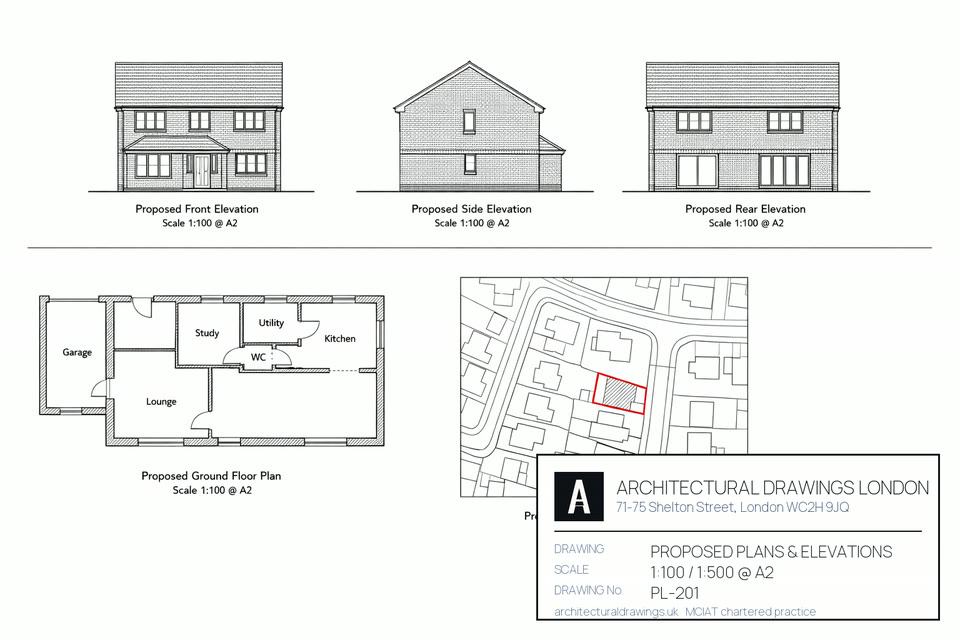
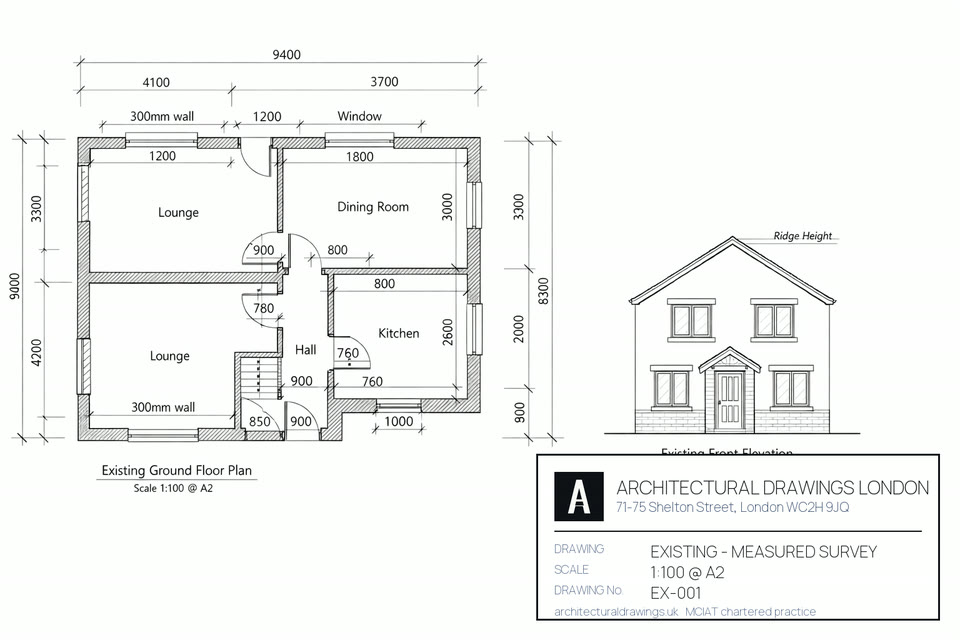
Which postcode districts around Tower Hamlets do we cover for conservation area application work?
Tower Hamlets is the most designated borough in east London and the newest-built in the whole capital at the same time. Some 28.1% of its 149,820 dwellings date from 2010 or later, a higher share than any other borough, while the Georgian streets around Fournier Street and Wapping are among the most tightly protected fabric in England (VOA council tax stock by build period at 31 March 2025, retrieved 1 September 2026). The table below sets out, district by district, which of those two worlds an address sits in and who validates the application. The fees are the statutory England rates for 2026.
| Postcode | Area | Dominant stock | What it means for a conservation area application |
|---|
| E1 | Whitechapel / Spitalfields | Warehouse conversions, modern infill | E1 sits entirely inside the borough, so a Whitechapel or Spitalfields address is validated by Tower Hamlets and read against the E1 designation boundaries. |
| E1W | Wapping | Georgian terraces, warehouse conversions | Wapping sits wholly inside E1W, so Tower Hamlets Council validates every conservation area application submitted from an E1W address. |
| E2 | Bethnal Green | Warehouse conversions, modern infill | E2 crosses into Hackney around Bethnal Green, so the street address rather than the postcode decides which of the two authorities validates and whose appraisal applies. |
| E3 | Bow | Victorian terraces, Georgian fragments | Bow addresses are all E3 and all Tower Hamlets; the E3 map is the one a case officer opens first. |
| E14 | Canary Wharf / Poplar / Limehouse | Modern apartments | A conservation area application at an E14 address in Canary Wharf / Poplar / Limehouse is determined by Tower Hamlets Council under its own Local Plan policies for Canary Wharf / Poplar / Limehouse. |
What changes about a conservation area application in each part of Tower Hamlets?
One number explains what heritage work here really involves. Over the twelve quarters to March 2026 the council decided 492 applications to alter or extend a listed building and 563 householder planning applications (MHCLG planning statistics, retrieved 1 September 2026). In most boroughs the first figure is a rounding error beside the second. Here they are nearly the same size, which means a Tower Hamlets conservation area application is as likely to be a listed building matter as an ordinary planning one, and the two are separate consents with separate tests.
- Bethnal Green (E2) — conservation area application work in Bethnal Green means victorian terraces, post-war estates. Bethnal Green is Victorian terraces, post-war estates. Most applications on these Victorian streets are householder applications validated on existing and proposed plans throughout E2. Tower Hamlets Council decides the Bethnal Green application, and Victoria Park anchors the Bethnal Green location plan.
- Bow (E3) — a conservation area application in Bow starts from victorian terraces, georgian fragments, and Bow reads as Victorian terraces, Georgian fragments. Applications on Georgian stock here almost always need a heritage statement alongside the drawings in E3. Tower Hamlets Council assesses Bow conservation area applications against its own Bow character guidance, and the location plan we draw for Bow references Bow Bells.
- Mile End (E1, E3) — a conservation area application in Mile End starts from victorian terraces, post-war estates, and Mile End reads as Victorian terraces, post-war estates. Most applications on these Victorian streets are householder applications validated on existing and proposed plans in E1. Tower Hamlets Council assesses Mile End conservation area applications against its own Mile End character guidance, and the location plan we draw for Mile End references Mile End Park.
- Wapping (E1W) — a conservation area application in Wapping starts from georgian terraces, warehouse conversions, and Wapping reads as Georgian fragments, warehouse conversions. Applications on Georgian stock here almost always need a heritage statement alongside the drawings in E1W. Tower Hamlets Council assesses Wapping conservation area applications against its own Wapping character guidance, and the location plan we draw for Wapping references St Katharine Docks.
- Canary Wharf (E14) — modern high-density towers defines Canary Wharf, where modern apartments set what a conservation area application can do. Modern housing here is usually condition-bound across E14. Any Canary Wharf conservation area application is validated by Tower Hamlets Council, with One Canada Square the usual Canary Wharf reference point on the site plan.
- Limehouse (E14) — conservation area application work in Limehouse means georgian and victorian terraces, warehouse conversions. Limehouse is Georgian and Victorian terraces, dockside. Applications on Georgian stock here almost always need a heritage statement alongside the drawings throughout E14. Tower Hamlets Council decides the Limehouse application, and Limehouse Basin anchors the Limehouse location plan.
- Poplar (E14) — post-war estates, regen defines Poplar, where post-war estates, new-build set what a conservation area application can do. Post-war stock here frequently sits inside an estate layout across E14. Any Poplar conservation area application is validated by Tower Hamlets Council, with Robin Hood Gardens (former) the usual Poplar reference point on the site plan.
What local planning policy applies to a conservation area application in Tower Hamlets?
How many designations, and on what: the council publishes 58 conservation areas; the national register at planning.data.gov.uk holds 61 boundaries under 59 distinct names, covering around 673 hectares (retrieved 1 September 2026). Spitalfields, Fournier Street and Whitechapel Market are the ones most owners meet, and inside any designation article 2(3) removes the side-extension, cladding and roof-enlargement allowances, so the submission is a £548 householder application in eight weeks rather than a £249 prior approval in six.
Why permitted development is rarely the argument here: the borough determined just 38 larger-householder prior approvals across the whole three-year window — a handful, not a caseload, and too few to publish an outcome rate from. That is a consequence of the stock rather than of policy. Most Tower Hamlets homes are flats, and Schedule 2, Part 1 of the Town and Country Planning (General Permitted Development) (England) Order 2015 has never applied to flats. The Article 4 directions on houses in multiple occupation and on office-to-residential change of use in Canary Wharf and the City Fringe sit on top of that, and their boundaries follow individual blocks, so the policies map is read for the specific address rather than the postcode.
What the outcomes look like: Tower Hamlets granted 440 of those 492 listed building consents, 89.4%, and 87.0% of its 563 householder applications — both above the London figure. It is a receptive authority to a well-evidenced heritage application. It is a difficult one to overturn: of 717 appeals of all types decided against the council between 2016 and 2026, 23.4% were allowed, the third lowest share in London against 30.9% for England (Planning Inspectorate casework, retrieved 1 September 2026). Getting the first application right matters more here than the appeal fallback suggests. One caution on the same return: the council recorded zero applications for demolition in a conservation area in every quarter, which on this form reads as a recording convention rather than as proof that none were made.
Which neighbouring authorities border Tower Hamlets?
- Hackney — the boundary runs through E2 and E8, dividing continuous Victorian terraces between two authorities. Hackney publishes roof design guidance that Tower Hamlets does not, so a mansard on the north side of that line is argued against a written standard and one on the south side against precedent. Same street, different case to make.
- City of London — a short boundary at Aldgate and Bishopsgate, and by far the most different regime of the four. The Corporation handles a caseload that is overwhelmingly commercial, and residential heritage work there is uncommon enough that precedent is thin. Confirm the authority from the map: the line does not follow the EC1 and E1 postcode edge.
- Southwark — across the river, reached at Rotherhithe through the tunnel rather than along a street, so it rarely splits a terrace. It matters instead as a comparator: Southwark allows fewer appeals than almost any London borough, and Tower Hamlets is close behind, so on this stretch of the river neither council is easily overturned.
- Newham — the eastern edge at Bromley-by-Bow and the Lea. Far lighter designation than Tower Hamlets, and mostly later stock, so a scheme refused on heritage grounds one side of the river may face no heritage test at all on the other. Worth confirming which side an address sits on before assuming the constraint applies.
Sources for this Tower Hamlets conservation area application page: borough policies maps and
conservation-area registers (2025–26), Royal Mail postcode district boundaries,
the Town and Country Planning (Fees for Applications) (England) Regulations, the Town
and Country Planning (General Permitted Development) (England) Order 2015 as amended,
and the Party Wall etc. Act 1996. A certificate of lawful development confirming the position in writing is £274.