TL;DR — Key Facts
- Planning authority: Richmond Council
- Conservation areas: 72 designated areas
- Article 4 Directions: None currently in force
- Postcodes covered: SW13, SW14, TW1, TW2, TW9, TW10, TW11, TW12
- Typical housing: Georgian in Richmond Green and Twickenham
- Householder application fee: £548 (2026 rate)
What makes Richmond upon Thames different?
Designation, at a scale no other borough matches: 85 conservation areas covering about 3,172 hectares. 12.1% of its householder appeals involve a listed building. It still approved 80.2% of 4,125 householder decisions and delegated 99.1% of all decisions to case officers.
| Measure | Richmond upon Thames | London |
|---|---|---|
| Conservation areas | 85 covering 3,172 ha | 1,141 across London |
| Householder approval rate | 80.2% | 83.0% |
| Householder decisions made | 4,125 | 77,680 |
| Decisions made under delegated powers | 99.1% | 97.0% |
| Householder appeals involving a listed building | 12.1% | — |
| Larger-extension prior approvals granted | 211 | 73.0% of those determined |
| Householder appeals allowed after refusal | 43.8% of 667 | 40.8% of 13,067 |
Sources: conservation areas from planning.data.gov.uk, retrieved 1 September 2026, hectares computed from the published boundaries; decision figures from MHCLG PS1 and PS2, twelve quarters to March 2026; appeals from Planning Inspectorate casework decided 2016–2026. Open Government Licence v3.0.
Planning in Richmond upon Thames — what you need to know
Richmond upon Thames has 72 conservation areas, more than any other London borough, and it behaves accordingly: 818 householder refusals in three years, the second-highest count in London (MHCLG planning statistics, retrieved 1 September 2026). The approval rate of 80.2% looks unremarkable until you notice it is being produced on 4,125 decisions, one of the larger householder caseloads anywhere. A lot of people apply here, and a lot are turned down.
Highest conservation area coverage in London; Royal Parks and Thames corridor add heritage layers; design quality heavily scrutinised. The borough has a population of approximately 197,000 residents and covers postcodes SW13, SW14, TW1, TW2, TW9, TW10, TW11, TW12.
The housing stock in Richmond upon Thames is predominantly georgian in Richmond Green and Twickenham; Edwardian villas in Barnes and East Sheen; 1930s semi-detached in Whitton; riverside cottages along the Thames. This mix of property types means that Richmond Council deals with a wide range of applications, from rear extensions on terraced houses to loft conversions on semi-detached properties and full refurbishments of period homes in conservation areas.
With 72 designated conservation areas and no current Article 4 Directions, Richmond upon Thames has a planning environment that balances heritage protection in conservation areas with generally permissive policies elsewhere.
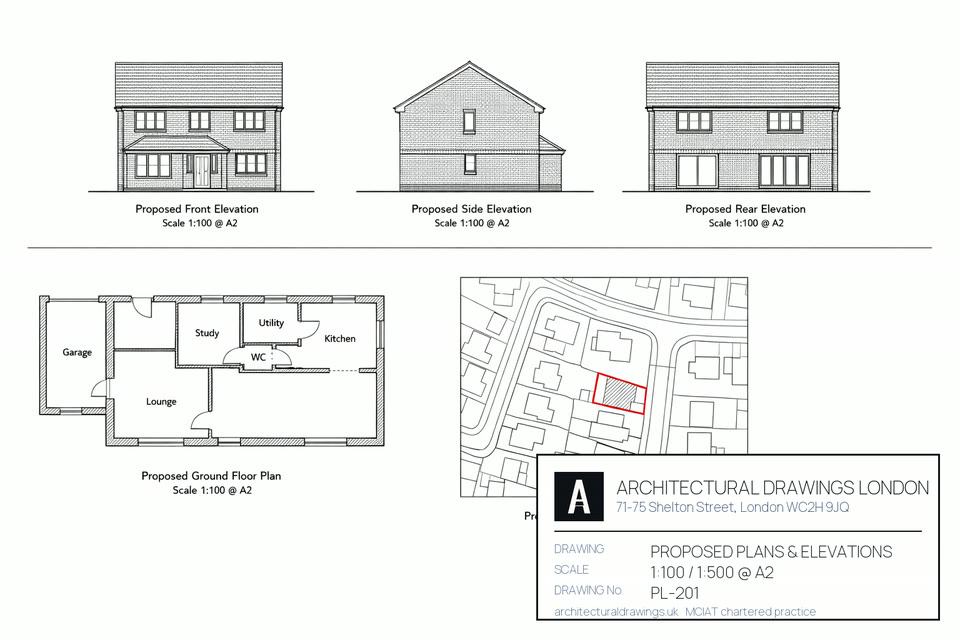
At Architectural Drawings London, we prepare planning drawings and building regulations drawings for properties across all Richmond upon Thames postcodes. Our MCIAT chartered architectural technologists have experience with Richmond Council and understand the specific policies, design guides, and precedents that apply in Richmond upon Thames.
Are there Article 4 Directions in Richmond upon Thames?
Richmond upon Thames does not currently have any borough-wide Article 4 Directions that restrict Permitted Development rights for standard householder developments such as loft conversions, rear extensions, or outbuildings.
This means that most common home improvements in Richmond upon Thames can proceed under Permitted Development without needing to apply for planning permission, provided they meet the national criteria for size, height, and position. We recommend applying for a Lawful Development Certificate (£274) to formally confirm that your project qualifies as Permitted Development. This provides legal certainty and is valuable when selling the property.
Even without Article 4 Directions, properties in Richmond upon Thames's 72 conservation areas have additional restrictions on permitted development. We check the specific restrictions affecting your property as part of our initial assessment.
How many conservation areas does Richmond have?
Richmond upon Thames has 72 designated conservation areas. Notable conservation areas include:
- Richmond Green
- Kew Green
- Hampton Wick
- Twickenham Riverside
- Barnes Village
- Ham Common
In conservation areas, Permitted Development rights are more restricted than in non-designated areas. Key restrictions include:
- No cladding, stone, artificial stone, pebble dash, render, timber, plastic, or tile to any external wall without planning permission
- No side extensions under Permitted Development
- Rear extensions are limited and may require planning permission
- Dormer loft conversions facing the highway require planning permission
- Satellite dishes on front elevations or chimneys are not permitted
- Demolition of gates, walls, fences, or other boundary treatment requires planning permission
Seventy-two designations is effectively borough-wide coverage, so the working assumption on a Richmond property should be that you are inside one. There is no Article 4 Direction on top, which means the conservation designation is doing all the restricting — and it does a lot of it. Of the 289 deep rear extensions the council did determine, 211 were granted and 78 refused, so a well-argued scheme is very far from hopeless. The argument has to be in the drawings.
Popular projects in Richmond upon Thames
Georgian around Richmond Green and Twickenham, Edwardian villas through Barnes and East Sheen, interwar semis at Whitton, and riverside cottages along the Thames: a stock where almost every street has a reason to be designated. The borough determined 289 larger rear extensions under the neighbour-consultation scheme and recorded not one as requiring no prior approval (MHCLG planning statistics, retrieved 1 September 2026) — unique among boroughs with a real caseload, and a sign that Richmond wants to look at each one rather than wave it through.
Two-storey extensions
The semi-detached and detached housing stock in Richmond upon Thames is well suited to two-storey rear extensions, which almost always require planning permission. A two-storey extension can add a larger kitchen-diner at ground floor and an additional bedroom and bathroom above. Richmond Council generally supports two-storey extensions that are subordinate to the original dwelling, set in from the boundary, and do not result in unacceptable loss of light or privacy to neighbours.
How much do planning drawings cost in Richmond upon Thames?
A householder application costs £548 and a lawful development certificate £274; Richmond issued 1,323 certificates in three years (MHCLG planning statistics, retrieved 1 September 2026). Against 818 refusals over the same window, the economics of getting it right first time are plainer here than in most boroughs: the wasted fee is the small part of the loss. We fix our fee before the survey, around 30% under the London architect rate for the same deliverables.
Planning costs in Richmond upon Thames
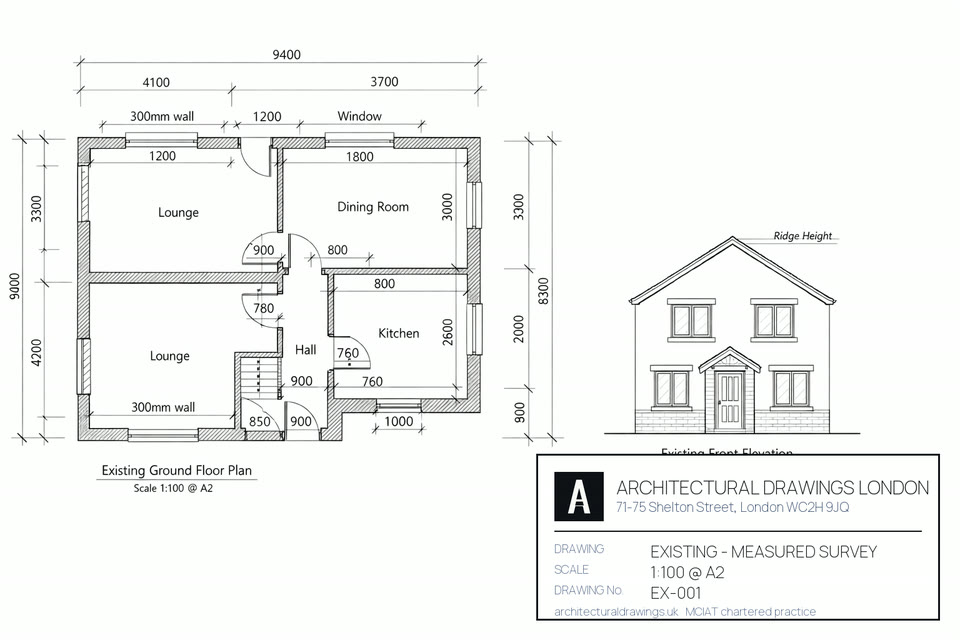
We include a measured survey, existing and proposed plans, elevations, and a site plan — everything required for a valid planning submission to Richmond Council. Our fees are 30% below typical London architect rates for the same scope of work.
Richmond issued 1,323 certificates of lawful development in three years (MHCLG planning statistics, retrieved 1 September 2026), but note what the same data says about the council's approach: across 289 deep rear extensions it recorded not one as requiring no prior approval. This authority prefers to look at schemes, so a certificate here confirms a genuinely narrow position.
Our experience in Richmond upon Thames
We cover all Richmond upon Thames postcodes: SW13, SW14, TW1, TW2, TW9, TW10, TW11, TW12. Whether your property is in a conservation area, affected by an Article 4 Direction, or in an unrestricted residential street, we have experience with Richmond Council and understand the borough's planning policies.
Our MCIAT chartered architectural technologists prepare planning drawings and building regulations drawings for residential projects across Richmond upon Thames. We handle the full process from initial measured survey through to planning submission, and we liaise with Richmond Council on your behalf.
We also work in Richmond upon Thames's neighbouring boroughs:
What are the odds of approval in Richmond upon Thames?
Richmond upon Thames sits close to the London average. Of 4,125 householder decisions in the three years to March 2026, 3,307 were approved and 818 refused — 80.2%, against 83.0% London-wide. In practice that means the outcome is decided by the scheme and the drawings rather than by the authority: there is no local bias to plan around, and no local leniency to rely on.
Speed is not the problem here. Richmond upon Thames decided 93.0% of householder applications within the statutory eight weeks. If your project has a fixed start date, the determination period is the predictable part of the programme — the variable is how long the drawings take before submission.
The prior-approval route works here. 73.0% of the 289 larger rear extensions determined in Richmond upon Thames under the neighbour-consultation scheme were granted. If your extension needs the extra depth that scheme allows, this is a borough where it is worth serving the notice rather than defaulting to a full application.
The council also issued 1,323 certificates of lawful development in the same three years. That is the route for work that is already permitted development: it is not a permission, it is proof you did not need one, and it costs £274 against the £548 householder application fee.
Source: MHCLG District Planning Application Statistics (PS1 and PS2), the statutory return every English planning authority files. Figures cover the twelve quarters to March 2026 and are decisions made in that window, not applications submitted. Published under the Open Government Licence v3.0.
Frequently asked questions
Do I need planning permission in Richmond upon Thames?
Less often than the absence of an Article 4 Direction suggests, because 72 conservation areas cover most of the borough. Richmond recorded not one rear extension deeper than 3 metres as requiring no prior approval across 289 determinations (MHCLG planning statistics, retrieved 1 September 2026) — in practice, expect to engage with the council rather than proceed quietly. Internal alterations remain the reliable exception, and the 3 metre single-storey allowance that applies elsewhere is largely academic inside a designation. Confirm the designation covering your address before you assume anything about the roof or the rear elevation.
Does Richmond upon Thames have Article 4 Directions?
No. Richmond upon Thames does not currently have any borough-wide Article 4 Directions that remove Permitted Development rights for residential householder developments. However, individual properties may still have conditions or restrictions, and conservation area rules apply separately.
How many conservation areas are in Richmond upon Thames?
Richmond upon Thames has 72 designated conservation areas, including Richmond Green, Kew Green, Hampton Wick, Twickenham Riverside, Barnes Village, Ham Common. In conservation areas, Permitted Development rights are more restricted. For example, you cannot add cladding, build side extensions, or install satellite dishes without planning permission. Rear extensions and loft conversions may also be restricted. Always check whether your property falls within a conservation area before starting work.
How much does a London Borough of Richmond upon Thames planning application cost?
Richmond refused 818 householder applications in three years (MHCLG planning statistics, retrieved 1 September 2026), the second-highest count in London, across 72 conservation areas. The fee is therefore among the more likely in London to be spent twice, and the heritage evidence that reduces that risk costs considerably more than the fee it protects. Our drawings start at £840, so each Richmond attempt costs about £1,388 in fees alone.
How long does London Borough of Richmond upon Thames take to decide a planning application?
Richmond decided 93.0% of householder applications inside 8 weeks and 1.5% beyond thirteen, from 4,125 decisions (MHCLG planning statistics, retrieved 1 September 2026). Timing is not this borough's difficulty; the 818 refusals are. Build the programme around the possibility of a revision and resubmission, and spend the extra time before submission on the heritage justification rather than after it on an appeal. Pre-application advice adds a further four to six weeks. Major applications carry a thirteen-week target.