Key facts at a glance
- Garage conversion costs £20,000–£35,000; kitchen extension costs £45,000–£80,000
- Garage conversion is cheaper but creates a less flexible space
- Kitchen extensions add more square footage and better natural light
- Garage conversions often don't need planning permission
- Losing a garage can reduce property value by 3–5% in some outer London boroughs
- Both need building regulations approval
Which one needs permission — the extension or the garage?
Usually only the extension, and often not even that. An attached garage conversion with no new opening onto a highway is normally permitted development; a rear extension is too, up to 3m on a terrace or semi. Neither escapes the building regulations.
| Garage conversion | Kitchen extension | |
|---|---|---|
| Usual planning route | lawful development certificate | certificate, or householder application |
| Fee | £274 | £274 or £548 |
| Permitted development limit | internal, no new highway-facing opening | 3m terrace or semi, 4m detached |
| Prior approval route | not applicable | 6m or 8m, £249 |
| Building regulations | always — new thermal elements | always |
| Party wall notice | rarely | usually, on a terrace |
| Floor area added | none — it converts existing space | new footprint |
Sources: the Town and Country Planning (General Permitted Development) (England) Order 2015, Schedule 2, Part 1, Class A; the Fees for Applications Regulations 2012 as amended, 2026 rates; Approved Document L, Volume 1 (2021 edition); the Party Wall etc. Act 1996. Read at 1 September 2026. Build costs quoted on this page are our own 2026 London range and are an estimate, not a published statistic.
When is a garage conversion the better move?
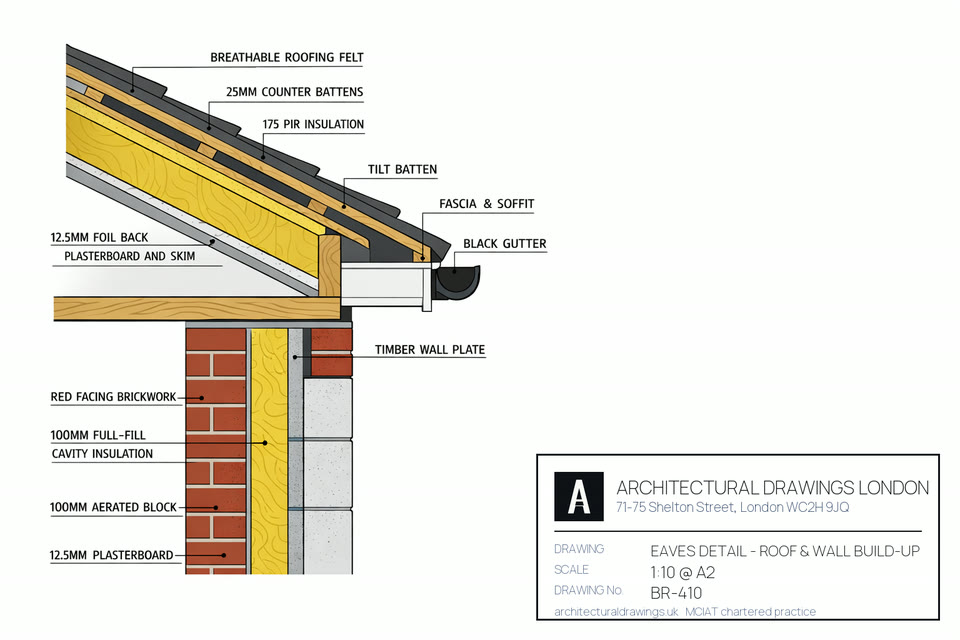
Converting an integral or attached garage to habitable space is one of the cheapest ways to add usable floor area to a house. The structure already exists — you need insulation, a new floor, heating, electrical work, and glazing to replace the garage door. In London, where garages are increasingly rare as parking, most integral garages are already used as storage. Converting them to a playroom, home office, utility room, or bedroom can be done for £20,000–£35,000 including building regulations compliance.
The main limitation is natural light. Garages typically have only a front-facing opening (the door) and sometimes a side window. Converting to habitable space requires either a large front window (which changes the street appearance) or accepting a degree of reliance on rooflights. A new rear-facing window requires structural works to the existing wall.
When does the extension win?
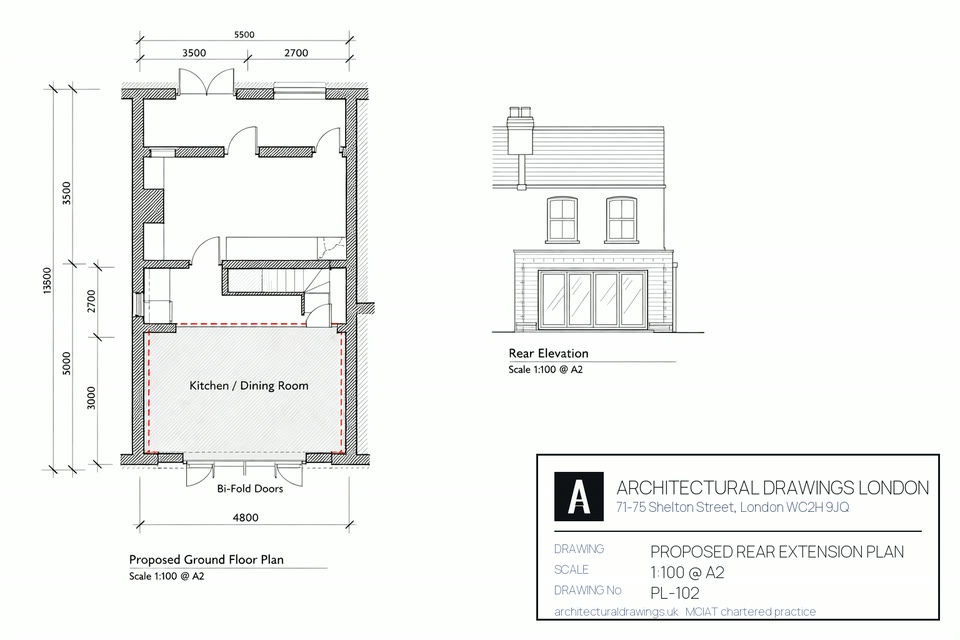
A rear kitchen extension adds new space to the rear of the existing house, typically enlarging the kitchen into an open-plan kitchen-diner. Natural light comes from rear-facing bifold or sliding doors and roof lanterns or rooflights. The space quality is generally higher than a garage conversion because it is purpose-designed for living, with the best garden aspect.
A kitchen extension costs £45,000–£80,000 in London (2026 prices) — significantly more than a garage conversion. Planning permission is required for most rear extensions on semi-detached properties or where the extension exceeds PD limits.
Which adds more value?
In inner London (zones 1–3), where street parking is scarce and garages are rarely used for cars, a well-executed garage conversion has minimal negative impact on value. In outer London (zones 4–6), where kerb appeal and parking matter more to buyers, losing a visible garage can affect the asking price — though the floor area gained typically offsets this.
A kitchen extension reliably adds value in any London borough — the open-plan kitchen-diner is a standard buyer expectation in the £500,000+ market. Estate agents consistently report that improved kitchen space is one of the top three value-adding works.
Verdict
If cost is the primary constraint and you have an underused garage, convert it — it is the most efficient spend. If you want the highest quality new space and best return on value, a kitchen extension wins.
Frequently asked questions
Does a garage conversion need planning permission?
Usually not. Converting an integral or attached garage to habitable use is typically permitted development, provided it does not involve extending the building's footprint. A Lawful Development Certificate is advisable to confirm lawfulness.
Do I need building regulations for a garage conversion?
Yes. Garage conversions require building regulations approval covering insulation (Part L), structural adequacy of the floor, fire safety, ventilation, and electrical works. A Full Plans submission is recommended.
Can I convert a detached garage?
Yes, but planning permission may be required if the conversion involves changing its use to a separate dwelling. Converting a detached garage to a home office or studio (ancillary to the main house) is typically permitted development.
Will converting my garage reduce my home's value?
In most London boroughs, no — the floor area gained outweighs the loss of parking. In outer boroughs with limited street parking (e.g. Havering, Bromley, Sutton), check local comparables before proceeding.
How long does a garage conversion take?
Typically 6–10 weeks from building regulations approval to completion. The programme is shorter than a full extension because the structure is already in place.