Key facts at a glance
- Loft conversions add 15–25% to property value; extensions add 8–20% depending on type
- Loft conversions disrupt living space less — work happens above you
- Extensions typically cost less per m² to build than loft conversions
- Loft conversions often need only PD or LDC; extensions more often need planning permission
- Adding a bedroom via loft vs extending kitchen-diner depends on what your home is missing
- In London, bedroom count drives value more than ground floor open plan
Value uplift: the London evidence
In London's market, bedroom count is the single strongest predictor of sale value. Converting from a 3-bed to a 4-bed via a loft conversion typically adds 15–25% to the property value — in a £700,000 house, that is £105,000–£175,000 of added value for a project costing £50,000–£75,000 to build. The return on investment is consistently strong.
Rear extensions — which typically add a kitchen-diner rather than a bedroom — add 8–15% in most London boroughs. The value is more modest because open-plan ground floor living is already common in the buyer pool, whereas an additional bedroom widens the market to families who need the space.
Cost per square metre
Single-storey extensions typically cost £1,200–£1,800/m² to build in London. Loft conversions cost £1,400–£2,200/m² — they are more expensive per square metre because of the structural complexity (new floor, dormer, staircase) and the access constraints of working at roof level.
However, loft conversions start from a smaller total project cost for the same number of new rooms — a typical loft adding two bedrooms and a bathroom costs £50,000–£70,000, comparable to a medium rear extension adding only additional kitchen space.
Planning complexity
Most loft conversions proceed via permitted development (LDC route) — particularly on terraces in boroughs without extensive Article 4 coverage. Extensions are more likely to need planning permission, particularly on semis (side elements), in conservation areas, or when exceeding PD depth limits.
This planning difference has a practical impact on programme. A loft with an LDC (6–8 weeks) plus building regs (4–6 weeks) can be on site within 12–14 weeks of instruction. An extension needing planning permission adds 8–13 weeks of planning determination before building regs can start.
Disruption during construction
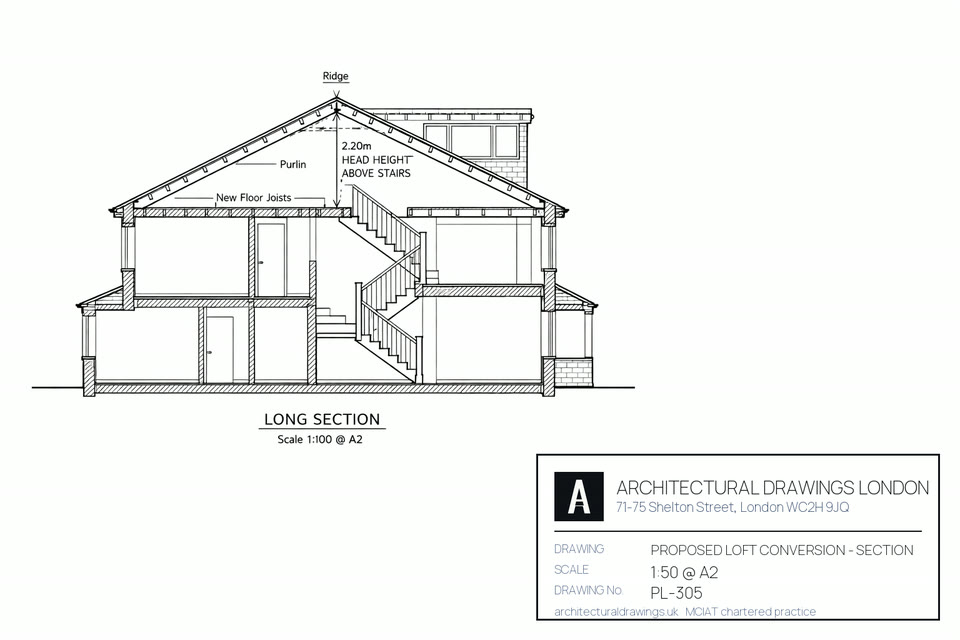
Loft conversions are less disruptive than extensions. The builder works primarily at roof level — new floor joists, dormer, roofing — and the main internal work is the staircase, which takes 1–2 days to install once the structure is ready. You can typically remain in the house throughout, with the main disruption being the staircase installation and final decoration.
Extensions involve opening up the rear of the house, removing the existing rear wall, and installing temporary weatherproofing. In wet weather, this is a genuine disruption to daily life. Most families with young children find loft conversions significantly more liveable during construction.
Verdict
If your house is short on bedrooms, do the loft conversion first — it adds more value per pound spent and is less disruptive. If your house has enough bedrooms but a cramped ground floor, the extension is the right call.
Frequently asked questions
Which adds more value: a loft bedroom or a ground floor extension?
In London, an additional bedroom (via loft) almost always adds more absolute value than an equivalent cost spent on ground floor space. Bedroom count is the primary driver of asking price in London's market.
Can I do both a loft conversion and an extension?
Yes — many London homeowners do both, often starting with the loft (faster, less disruptive) and then the extension. Both can be planned together with a single set of architectural drawings covering the complete scheme.
Does a loft conversion need building regulations?
Yes, always. Even a permitted development loft conversion requires full building regulations approval for structure, insulation, fire safety (escape windows on each new bedroom), and staircase. Building regulations are separate from planning permission.
How long does a loft conversion take?
What is the minimum headroom for a habitable loft room?
Building regulations require 2.2 m headroom over at least 50% of the floor area for the space to be classified as a habitable room. The 2.2 m measurement is taken at the finished ceiling level — factor in floor build-up when assessing your existing roof structure.