Key facts at a glance
- Hip-to-gable suits semi-detached and detached houses; rear dormers suit any roof type
- Hip-to-gable adds 15–25% more floor area than a rear dormer alone
- Combining both (L-shape) is the maximum-space option on semis
- Both routes can use permitted development on most London properties
- Hip-to-gable costs £800–£1,200 more to build than a straight rear dormer
- Both need a Lawful Development Certificate or planning permission depending on location
Hip-to-gable or rear dormer — which uses your allowance?
Both draw on the same Class B volume allowance: 40 cubic metres on a terrace, 50 on a semi or detached house, measured against the original roof. A hip-to-gable typically consumes most of it, which is why the pair are usually built together as one application rather than two.
| Class B limit | Terrace | Semi or detached |
|---|---|---|
| Additional roof volume allowed | 40 cubic metres | 50 cubic metres |
| Extension beyond the plane of the front roof slope | not permitted | not permitted |
| Height above the highest part of the existing roof | not permitted | not permitted |
| Set back from the eaves | at least 200mm | at least 200mm |
| Side-facing windows | obscure-glazed, non-opening below 1.7m | obscure-glazed, non-opening below 1.7m |
| On Article 2(3) land | not permitted development | not permitted development |
Source: Town and Country Planning (General Permitted Development) (England) Order 2015, Schedule 2, Part 1, Class B, as amended, read at 1 September 2026. The volume allowance is cumulative and measured against the roof as originally built, so any previous dormer counts against it. Class B does not apply in a conservation area at all, which is why so many London lofts on designated streets go in as a householder application.
What is a hip-to-gable loft conversion?
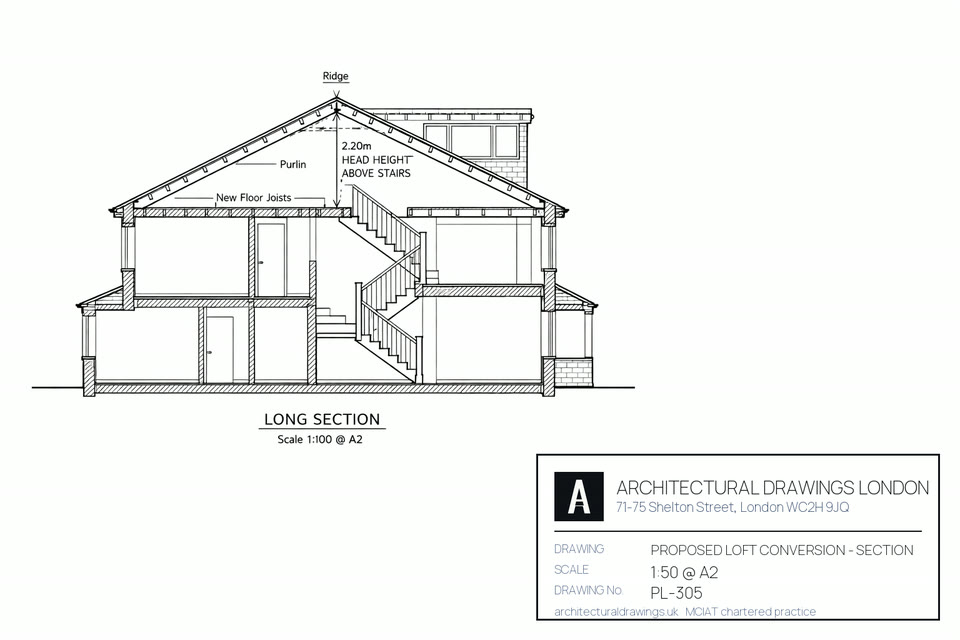
A hip-to-gable conversion infills the sloping hipped end of a roof, replacing it with a vertical gable wall. This creates a rectangular box room at the end of the loft where previously there was only a sloping void. On a 1930s semi-detached — the most common candidate — it turns a tight triangular space into a usable bedroom or dressing room.
The hip-to-gable element alone rarely provides enough headroom for a full bedroom. It is almost always combined with a full-width rear dormer to create a proper loft floor with two bedrooms and a bathroom. The combined form is called an L-shape loft conversion.
What is a rear dormer loft conversion?
A rear dormer is a vertical extension built out from the rear slope of an existing roof. It creates a box-shaped addition at roof level, with vertical walls and a flat roof. On a terrace, a full-width rear dormer running from party wall to party wall is the standard approach. On a semi, the dormer must be set back 200 mm from the party wall boundary projection under permitted development rules.
A rear dormer alone is sufficient for a Victorian or Edwardian terrace, where the hip does not exist. On a semi, a rear dormer alone produces a loft with a triangular room at the end — functional but limited.
Planning: which route applies?
Both conversions can proceed via permitted development (no planning permission required) provided the property meets the standard PD criteria: not in an Article 4 direction area, volume within limits (40 m³ terraces, 50 m³ detached/semis), set back from the eaves, and not visible from the principal elevation. A Lawful Development Certificate is strongly recommended — most mortgage lenders and conveyancers require it for either type.
In Article 4 direction areas — which are common in inner London boroughs such as Islington, Camden, Hackney, and parts of Lambeth — both conversions require full planning permission. The hip-to-gable is more contentious in conservation areas because it alters the roofline visible from neighbouring streets.
Cost and space comparison
A rear dormer alone on a terrace costs £35,000–£55,000 to build (2026 London prices). A hip-to-gable plus rear dormer on a semi typically costs £45,000–£70,000 — the additional £8,000–£15,000 reflects the structural work of infilling the hip and rebuilding the gable. The additional floor area gained by the hip-to-gable element is typically 6–10 m², which in London translates to meaningful added value.
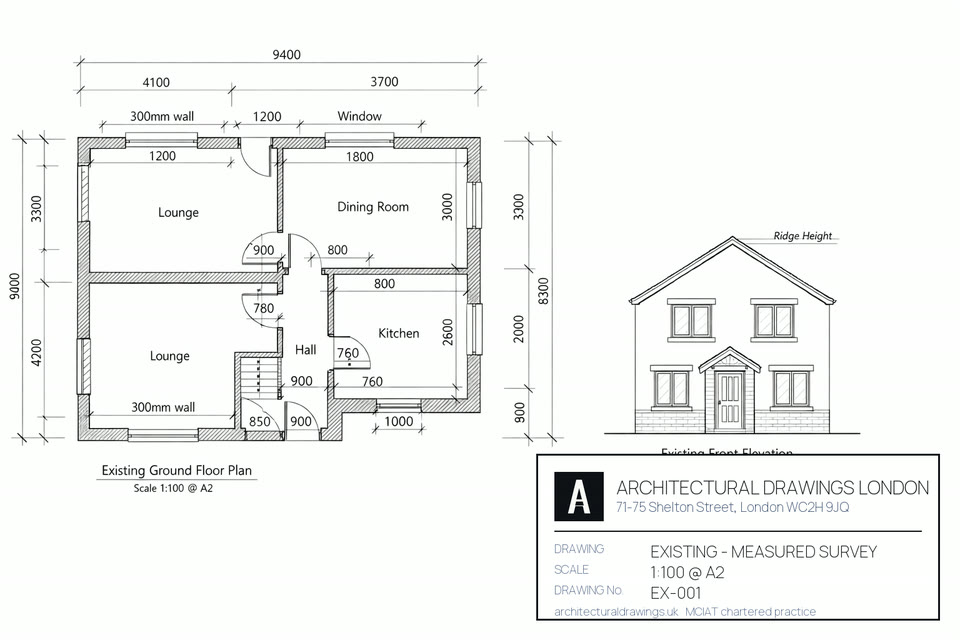
In terms of drawings fees, which covers existing and proposed plans, four elevations, a roof plan, and all documents needed for LDC or planning.
Verdict
On a semi-detached or detached, choose the L-shape (hip-to-gable plus rear dormer) — the extra build cost delivers significantly more usable space. On a terrace, a full-width rear dormer is the standard and most cost-effective approach.
Frequently asked questions
Can I do a hip-to-gable on a terraced house?
No. Terraced houses have gable ends, not hipped ends, so the hip-to-gable conversion does not apply. Terraces use a full-width rear dormer instead.
Does a hip-to-gable need planning permission in London?
Not in most cases. Permitted development covers hip-to-gable conversions on semis and detached houses that are not in Article 4 direction areas. A Lawful Development Certificate is required to confirm the works are lawful.
How much floor space does a hip-to-gable add?
Typically 6–10 m² of additional usable floor area compared to a rear dormer alone. Combined with a rear dormer, an L-shape loft conversion commonly adds 25–40 m² of new floor space to a 1930s semi.
What is an L-shape loft conversion?
An L-shape combines a hip-to-gable at the side with a full-width rear dormer. The two elements together produce the maximum usable loft space on a semi-detached house.
Which loft conversion adds more value in London?
The L-shape (hip-to-gable plus dormer) typically adds more absolute value because it creates a larger, more marketable floor area. Estate agents consistently report that a two-bedroom loft with en-suite adds 15–25% to a property's value in most London boroughs.