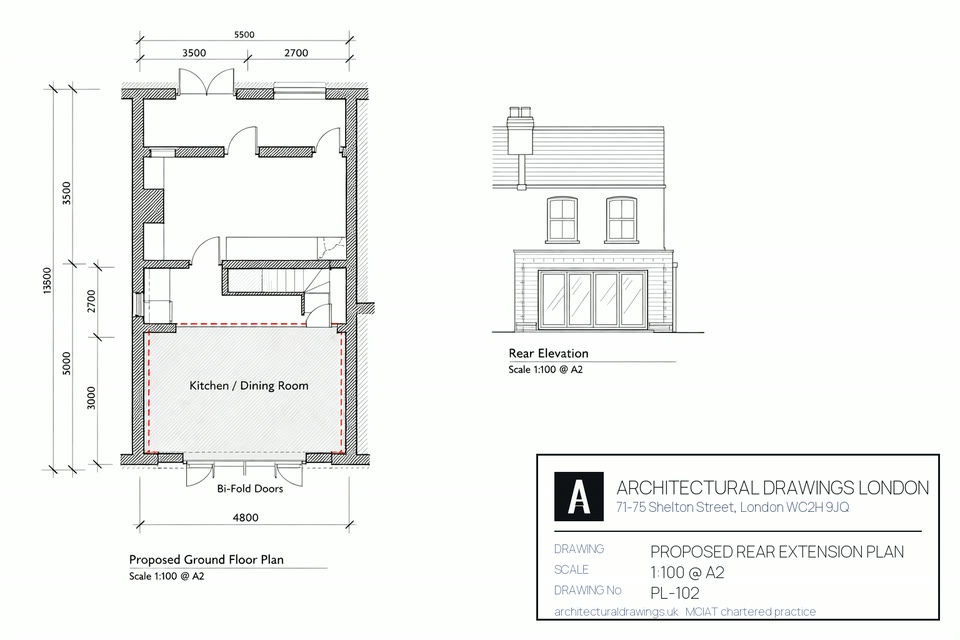
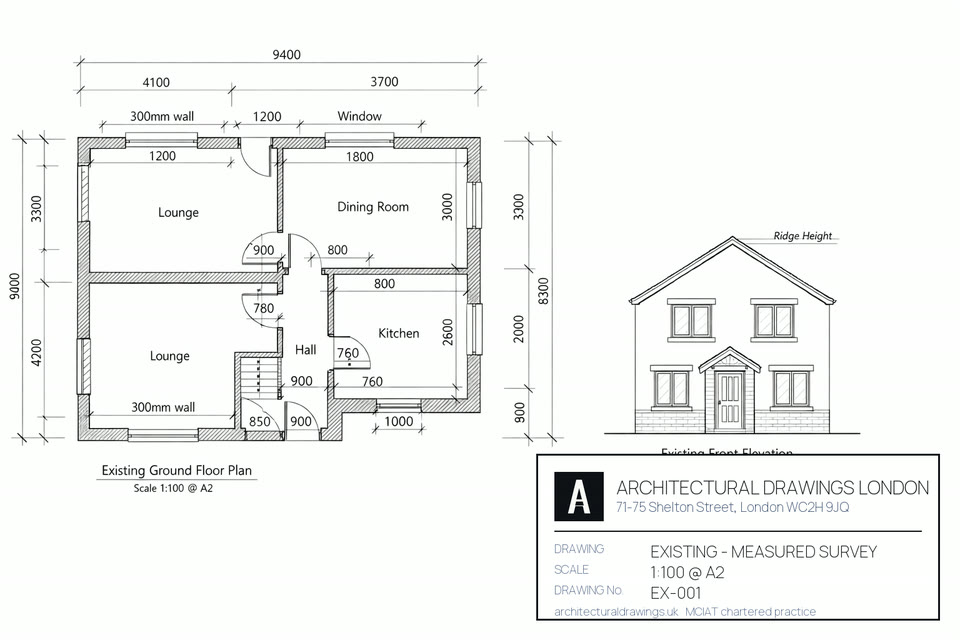
Which Southwark postcodes does this two storey rear service cover?
Every Southwark postcode district we draw in, the stock that dominates
it and the authority that validates a two storey rear there. Southwark fees below are the
statutory England rates for 2026, not two storey rear estimates.
| Postcode | Area | Dominant stock | What it means for a two storey rear |
|---|
| SE1 | Bermondsey / Borough / Waterloo | Georgian terraces, post-war flats, new-build | Bermondsey / Borough / Waterloo is split at SE1. Either Southwark Council or Lambeth Council can determine a two storey rear here, so the SE1 address is checked against both policies maps first. |
| SE5 | Camberwell | Georgian villas, Victorian terraces | SE5 straddles a boundary: Camberwell addresses fall to Southwark Council or Lambeth Council, so confirm which authority validates the two storey rear before submitting SE5 drawings. |
| SE15 | Peckham / Nunhead | Victorian terraces, post-war estates | Peckham / Nunhead sits wholly inside SE15, so Southwark Council validates every two storey rear submitted from an SE15 address. |
| SE16 | Bermondsey / Rotherhithe | Warehouse conversions, Georgian terraces, new-build | Bermondsey / Rotherhithe sits wholly inside SE16, so Southwark Council validates every two storey rear submitted from an SE16 address. |
| SE17 | Walworth | Post-war estates, new-build towers | Walworth sits wholly inside SE17, so Southwark Council validates every two storey rear submitted from an SE17 address. |
| SE21 | Dulwich Village | Georgian villas, Edwardian villas (Dulwich Estate) | SE21 straddles a boundary: Dulwich Village addresses fall to Southwark Council or Lambeth Council, so confirm which authority validates the two storey rear before submitting SE21 drawings. |
| SE22 | East Dulwich | Victorian and Edwardian terraces | A two storey rear at an SE22 address in East Dulwich is determined by Southwark Council under its own Local Plan policies for East Dulwich. |
| SE24 | Herne Hill | Victorian villas, Edwardian terraces | SE24 straddles a boundary: Herne Hill addresses fall to Lambeth Council or Southwark Council, so confirm which authority validates the two storey rear before submitting SE24 drawings. |
How does a two storey rear differ street by street across Southwark?
Roof pitch, wall build-up and plot depth change every few Southwark
streets, and each one changes what a two storey rear can achieve at that address.
- Elephant and Castle (SE1, SE17) — regenerated quarter, modernist origins defines Elephant and Castle, where post-war estates, new-build towers set what a two storey rear can do. Post-war houses on these estates often sit under an estate management scheme across SE1. Any Elephant and Castle two storey rear is validated by Southwark Council, with Elephant and Castle station the usual Elephant and Castle reference point on the site plan.
- Nunhead (SE15) — a two storey rear in Nunhead starts from victorian terraces, and Nunhead reads as Victorian terraces around the cemetery. The side-return infill is the classic move on these Victorian terraces — 3 m of permitted development depth plus the width of the original side passage in SE15. Southwark Council assesses Nunhead two storey rears against its own Nunhead character guidance, and the location plan we draw for Nunhead references Nunhead Cemetery.
- Bermondsey (SE1, SE16) — warehouse conversions, Georgian fragments defines Bermondsey, where warehouse conversions, georgian terraces, new-build set what a two storey rear can do. Georgian rear elevations here are usually the listed or locally listed face of the building across SE1. Any Bermondsey two storey rear is validated by Southwark Council, with Bermondsey Street the usual Bermondsey reference point on the site plan.
- Borough (SE1) — two storey rear work in Borough means georgian and victorian terraces, warehouse conversions. Borough is Georgian and Victorian terraces, market quarter. Georgian rear elevations here are usually the listed or locally listed face of the building throughout SE1. Southwark Council decides the Borough application, and Borough Market anchors the Borough location plan.
- Camberwell (SE5) — two storey rear work in Camberwell means georgian villas, victorian terraces. Camberwell is Georgian villas, Victorian terraces. Georgian rear elevations here are usually the listed or locally listed face of the building throughout SE5. Southwark Council decides the Camberwell application, and Camberwell Green anchors the Camberwell location plan.
- Peckham (SE15) — a two storey rear in Peckham starts from victorian terraces, post-war estates, and Peckham reads as Victorian terraces, creative renewal. The side-return infill is the classic move on these Victorian terraces — 3 m of permitted development depth plus the width of the original side passage in SE15. Southwark Council assesses Peckham two storey rears against its own Peckham character guidance, and the location plan we draw for Peckham references Peckham Rye.
- Dulwich Village (SE21) — two storey rear work in Dulwich Village means georgian villas, edwardian villas (dulwich estate). Dulwich Village is Georgian and Edwardian villas, Estate-managed. Georgian rear elevations here are usually the listed or locally listed face of the building throughout SE21. Southwark Council decides the Dulwich Village application, and Dulwich Picture Gallery anchors the Dulwich Village location plan.
How do conservation areas and Article 4 affect a two storey rear in Southwark?
Conservation areas covering Southwark: Southwark Council runs 43, and Borough, Camberwell Grove, Bermondsey Street are the ones Southwark owners meet most. A two storey rear inside a Southwark conservation area loses permitted development, so the Southwark submission is a householder application at £548 decided in 8 weeks — not a £249 prior approval decided in 6 weeks. In Peckham Rye a two storey rear is judged on the street elevation first.
Southwark and Article 4: Article 4 for HMOs borough-wide; additional Article 4 for office-to-residential in Bermondsey and Elephant & Castle. A two storey rear planned at a SE1 address is checked against that direction first; Southwark Council publishes the Southwark extent, and the SE1 line rarely follows the Southwark boundary you would expect.
What Southwark is built from: Georgian and Regency in Bermondsey and Borough; Victorian terraces in Camberwell and Peckham; Dulwich Estate controlled housing; riverside new-build. Dulwich Estate private planning scheme affects much of SE21 and SE22; Southwark planning for rest of borough; strong heritage context. That mix decides the two storey rear route in Southwark more than the postcode does.
Who decides a two storey rear on the edge of Southwark?
- Tower Hamlets — cross the Southwark boundary and Tower Hamlets Council takes the two storey rear instead, applying 58 conservation areas of its own around E1. We re-price two storey rears at the Southwark edge because Tower Hamlets policy and Southwark policy rarely align on two storey rear depth.
- City of London — adjoining Southwark, with 27 conservation areas centred on EC1. A two storey rear on the far side of the Southwark line is determined by City of London Corporation, so the Southwark quote for two storey rears is checked against City of London guidance before it is issued.
- Lambeth — cross the Southwark boundary and Lambeth Council takes the two storey rear instead, applying 64 conservation areas of its own around SE1. We re-price two storey rears at the Southwark edge because Lambeth policy and Southwark policy rarely align on two storey rear depth.
- Lewisham — adjoining Southwark, with 30 conservation areas centred on SE3. A two storey rear on the far side of the Southwark line is determined by Lewisham Council, so the Southwark quote for two storey rears is checked against Lewisham guidance before it is issued.
Sources for this Southwark two storey rear page: borough policies maps and
conservation-area registers (2025–26), Royal Mail postcode district boundaries,
the Town and Country Planning (Fees for Applications) (England) Regulations, the Town
and Country Planning (General Permitted Development) (England) Order 2015 as amended,
and the Party Wall etc. Act 1996.