The 60-second version
The Edwardian semi: defining characteristics
Edwardian semis were a reaction to the dense, cramped Victorian terrace. With the suburbs expanding along new railway lines into areas like Muswell Hill, Ealing, Wanstead, Crouch End, Beckenham and Herne Hill, builders gave middle-class families proper daylight, larger rooms, and — crucially — a side passage wide enough to walk a bicycle down. This is the property type that still defines outer-London family-house streets.
Typical features:
- Large canted bay fronts — often across both storeys, in red brick with stone or stucco dressings
- Characteristic hipped roofs — end slopes falling towards the side elevation, creating the “hip” a loft conversion will fill
- Pebbledash, roughcast render or red/orange brick on the upper elevation, often with half-timbering in Arts & Crafts examples
- Stained-glass panels to front doors and side lights, often with “sunrise” or floral motifs
- Wider plots — typically 6–8 metres across with 2m side passages
- Larger principal rooms — typical front reception 18–22sqm vs 13–16sqm in Victorian terraces
- Tiled pathways and porches with Edwardian geometric tiles
- Generous gardens — often 15–30 metres deep
Planning considerations: fewer constraints, more opportunity
Because most Edwardian semis sit in outer London suburbs rather than the inner-city conservation areas, they face fewer planning restrictions than Victorian terraces. Full Permitted Development rights are usually intact — including for loft conversions, rear extensions, and modest outbuildings. That said, pockets of Edwardian development in Haringey (Muswell Hill), Ealing (Bedford Park neighbour areas), Bromley and Richmond do fall within designated conservation areas where Article 4 may apply.
Key things to check:
- Hip-to-gable PD eligibility — normally intact on semis (crucially, detached and semi-detached houses can extend the hip to a gable under PD, but terraces cannot)
- Conservation area designation — check your local authority map before any front-elevation change
- Tree Preservation Orders — very common in Edwardian suburbs with mature front-garden trees
- Bay window preservation — many councils have local design guidance requiring bays to be retained during side extensions
- Side extension angle — most boroughs require a side extension to be set back from the front elevation and have a subordinate roof (often 45-degree “rules”)
Typical projects on an Edwardian semi
Hip-to-gable loft conversion
This is the single most transformative project for an Edwardian semi. The hip end (the sloping side of the roof) is rebuilt vertically to form a gable wall, then a large rear dormer is added behind the ridge line. The combined volume is almost always under the 50 cubic metre PD allowance for semis. You typically end up with 30–38sqm of new floor area — room for a main bedroom with en-suite and a home-office nook. See our loft conversion service and the lofts guide.
Double-storey rear extension
Because plots are wider and rear gardens are longer, the Edwardian semi is one of the few London property types where a double-storey rear extension is often both feasible and sensible. You’ll typically get a much larger kitchen-diner below plus an extra bedroom above — turning a 3-bed into a 5-bed. This always needs full planning (PD caps at single-storey 3m depth).
Side return / side extension
The side passage on an Edwardian semi is narrower than it looks but wider than a Victorian one — typically 1.8–2.5m. A single-storey side extension (under PD: 3m projection, 4m max height) is straightforward. A two-storey side extension needs planning and must respect the 45-degree rule to not overshadow neighbours.
Wraparound extension
Side return plus rear, wrapped into one L-shape. Very popular in Ealing and Wanstead. Often includes a glazed lantern over the dining zone. Expect 30–45sqm of new ground floor.
Porch conversion / open-up
Original Edwardian porches are often tiled and feature stained glass. Many homeowners retain and conserve rather than remove. We regularly draw conservation-sensitive entrance redesigns.
Project types compared
Structural quirks of Edwardian construction
Edwardian builders used much the same materials as Victorians but with a few key differences:
- Cavity walls start appearing — some Edwardian semis (especially post-1905) have an early 50mm cavity, which changes how extensions tie in thermally
- Roof trusses are still traditional cut timber with purlins, making hip-to-gable straightforward but requiring careful support during works
- Larger span beams already present — bigger rooms meant thicker joists, which are easier to work with
- Stained glass is often loose-set in the original timber frame; plan to carefully remove, restore and reinstall
- Chimney stacks are often external rather than within party walls on semis, which simplifies loft work but increases weatherproofing detail
- Original render may be lime-based pebbledash; repair with like-for-like, not modern cementitious render
Our building regulations service includes the structural engineer coordination for new steels at spine walls, ridge beams for loft conversion, and lintels over extension openings.
Party Wall considerations
With only one shared party wall (to the attached neighbour), Party Wall agreements are simpler than on a terrace — but still mandatory for most projects. Section 2 notices are required for anything involving the shared party wall (loft steels landing on it, chimney breast removal, a side extension abutting), and Section 6 notices for any excavation within 3 metres of the neighbour’s foundation. Our drawings include the technical detail needed to agree awards without weeks of back-and-forth.
Costs: Edwardian semi projects in 2026
Typical all-in costs (drawings + construction)
Because Edwardian semis are typically outer-London properties, construction rates can be 15–20% below equivalent inner-London Victorian terrace rates. See full pricing.
Services we provide for Edwardian semis
Our experience with Edwardian semis
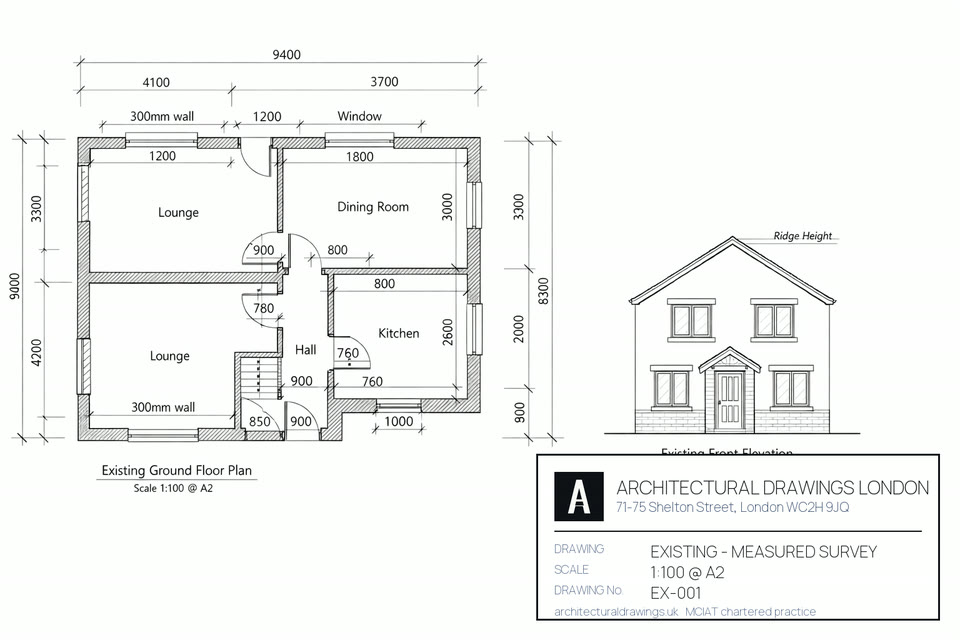
Edwardian semi-detached houses account for roughly 20% of our completed projects. Most are hip-to-gable plus rear dormer loft conversions, followed by double-storey rear extensions. The design questions we get asked most often: how to retain the original front bay while extending at the side; how to match replacement roof tiles to the existing clay or slate; how to design a rear extension that respects the Edwardian asymmetry rather than looking like a box glued on.
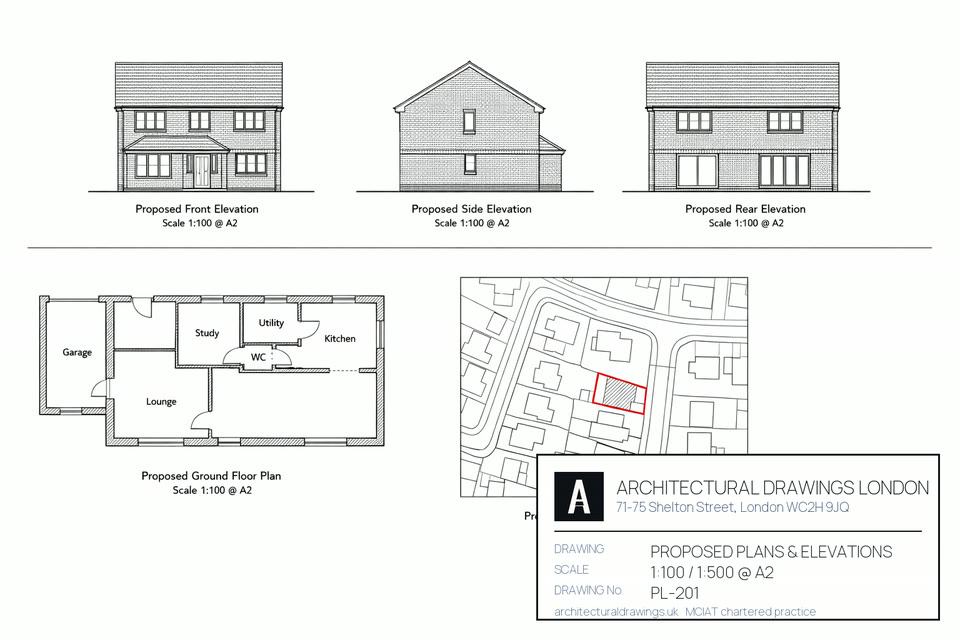
Because semis have a visible side elevation, we always draw the street view at planning stage — councils refuse a surprising number of applications on visual-impact grounds that a five-minute render would have fixed.
Edwardian semi services by London borough
Edwardian semi stock is most dense in these outer-London boroughs:
Frequently asked questions
Can I convert my Edwardian semi loft under Permitted Development?
Almost always yes — semis have PD rights for hip-to-gable plus rear dormer up to 50 cubic metres (provided you’re not in a conservation area or under Article 4). We recommend securing a Lawful Development Certificate (£274) rather than relying on PD without paperwork.
Is a double-storey rear extension worth the extra cost over single-storey?
Usually yes. A double-storey extension costs roughly 55–70% more than single-storey (not double, because foundations and roof are shared), but adds two rooms instead of one. For a 3-bed Edwardian semi becoming a 5-bed, the valuation uplift typically exceeds the build cost.
What happens to my stained glass during a side extension?
Carefully removed, catalogued, restored by a specialist (£300–800 per panel), and reinstated in a new frame. Do not skip this step — original Edwardian stained glass is often the single most valuable heritage feature and removing it permanently drops the property’s character.
Do I need to match the red brick exactly on my extension?
Ideally yes, and conservation areas will insist. Reclaimed London stocks or matched new bricks from specialist suppliers cost £1.50–3.50 per brick. Avoid generic machine-pressed modern bricks — they’ll look wrong even under paint.
Can I convert the front garden to a driveway?
Permitted Development allows hard surfacing up to 5sqm without application; anything larger needs planning unless you use a permeable material. In most Edwardian conservation areas, removing a tiled pathway and front wall for parking is refused.