020 7864 7245 [email protected] WhatsApp
Your neighbour's legal position

The Party Wall Act 1996, step by step

The Party Wall etc. Act 1996 gives you the right to carry out certain work affecting a shared wall or close to a neighbour's building, provided you serve the correct notice first. It is separate from planning permission and applies whether or not your project needs planning.

Last checked against current guidance on 2026-08-09. Rules differ by borough — the local pages below say how.

London terraced street — typical residential housing for party wall matters

When does the Act apply?

In three situations: building on the line of junction, working on an existing party structure, and excavating near a neighbour's building.

SectionSituationNotice period
Section 1Building a new wall at or astride the boundary line1 month
Section 2 / 3Work to an existing party wall or structure — cutting in, raising, underpinning, removing a chimney breast2 months
Section 6Excavating within 3m and deeper than the neighbour's foundations, or within 6m under a 45-degree line from them1 month

The 3m and 6m tests catch far more extensions than people expect: a standard strip foundation beside a boundary usually engages section 6.

What has to be in the notice?

Your name and address, the adjoining owner's, a description of the work, the proposed start date, and — for excavation — drawings showing depth and position.

Notices are served on the owner, which includes a leaseholder with more than a year to run, so a flat above may mean two notices. Serve on every adjoining owner: in a mid-terrace that is usually both sides.

A notice is valid for twelve months, so serving too early wastes it and serving too late holds up the build.

What happens after you serve?

The adjoining owner has 14 days to consent in writing, dissent, or do nothing — and doing nothing counts as dissent.

  • Consent — the work can proceed. A schedule of condition is still worth having.
  • Dissent, agreed surveyor — one surveyor acts impartially for both owners and produces the award.
  • Dissent, two surveyors — each owner appoints their own, and the two select a third to resolve disagreements.

The surveyors are not advocates. Their job under the Act is to produce an award: what work may be done, how, when, and a record of the neighbour's property beforehand.

The drawings a party wall notice needs

A notice without drawings is a notice a neighbour cannot assess, and it is the commonest reason a reasonable neighbour dissents. Sections showing excavation depth relative to their foundations turn an alarming letter into a manageable one. The estimator below scopes that package.

Estimate your drawing costs

Move the controls for an indicative figure. It anchors your budget — it is not a quote. Every project is priced after a free survey.

1 · Project type
2 · Approximate size
30
3 · Add compliance packages
Indicative design fee £1,585
Book your free feasibility call

Build costs are separate and quoted by your contractor. See our published fees.

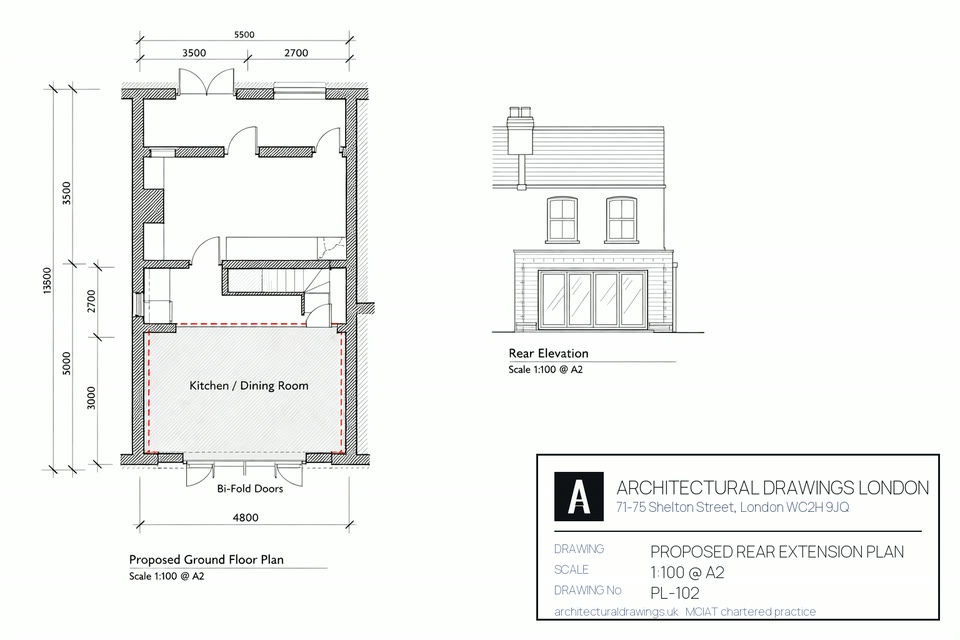
The Party Wall Act 1996, step by step in London — a flat-roof rear extension with rooflights
A flat-roof rear extension with rooflights — the party wall act 1996, step by step in London.

What does the award cover?

The award records the agreed working method, access arrangements, working hours, and a schedule of condition photographing the adjoining property before work starts. That schedule is what settles arguments about cracks afterwards — without it, the argument has no baseline.

The building owner normally pays the reasonable surveyors' costs, because the work is for their benefit.

What if you skip it?

You lose the Act's protections, and the neighbour can seek an injunction to stop the work.

Without a notice there is no award, no agreed method and no schedule of condition — so any damage claim becomes an ordinary dispute about negligence, with no record of what the property looked like before.

It is also the most reliable way to turn a neutral neighbour into an objector on your next application.

Written by Benyamen Shaukat, Technical Architect & Platform Founder. Fact-checked against the Party Wall etc. Act 1996 and the government's explanatory booklet.

Common questions

Is a party wall agreement the same as planning permission?

No. They are entirely separate. A scheme can be permitted development and still require party wall notices, and vice versa.

Can my neighbour refuse?

They cannot veto work you are entitled to do, but they can dissent, which triggers the surveyor procedure and an award setting out how the work proceeds.

Do I need a surveyor if they consent?

Not legally. A schedule of condition is still strongly advisable so any later damage claim has a baseline.

Does the Act apply to a garden wall?

Yes, where it is a party fence wall astride the boundary and you are working on it or building against it.

How long does the process take?

Allow two months from serving a party structure notice, plus time for surveyors to agree an award if the neighbour dissents. Start it while planning is being determined.

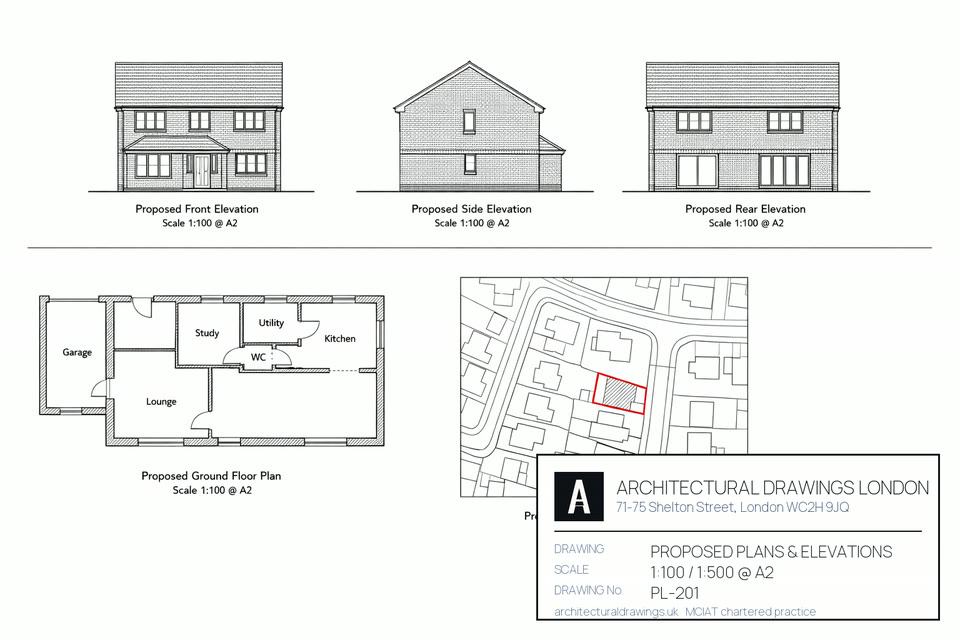
The Party Wall Act 1996, step by step in London — a two-storey extension with a balcony
A two-storey extension with a balcony — the party wall act 1996, step by step in London.

Where to go next

The Act, and the government's own guidance

Party wall procedure is statutory and entirely separate from planning. The Act sets the notice periods; the explanatory booklet is written for homeowners rather than surveyors. Where the work carries structure, the design also has to satisfy Part A of the Building Regulations:

Found this useful? Share it

Copies the headline and the link, ready to paste anywhere — helpful if you are planning an extension with a neighbour, builder or architect.