
Glossary
Planning refusal: what London councils turn down and why
A decision against an application. Grounds for refusal are stated in the decision notice. Right of appeal exists.
A decision against an application. Grounds for refusal are stated in the decision notice. Right of appeal exists.
A planning refusal is a decision not to grant permission, given with reasons. Around one in ten householder applications in England is refused. The refusal is not the end of the matter: the options are a revised resubmission — free within twelve months — or an appeal within twelve weeks.
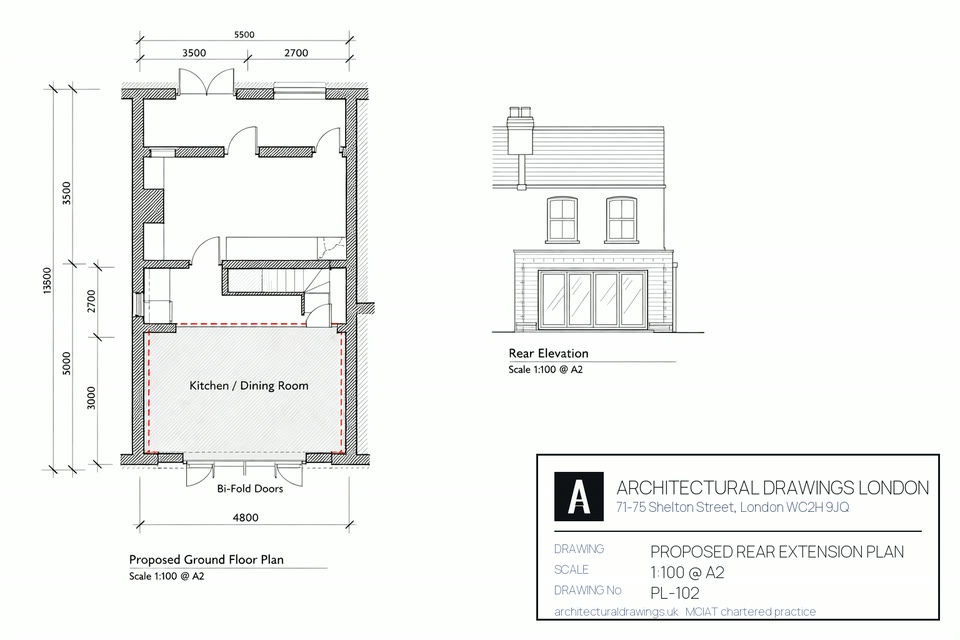
For householder work the recurring four are: excessive depth, bulk or scale resulting in an overbearing effect on a neighbour; loss of light, usually assessed against the 45-degree or 25-degree rules; overlooking and loss of privacy from new flank windows or terraces; and harm to the character of a conservation area or a listed building.
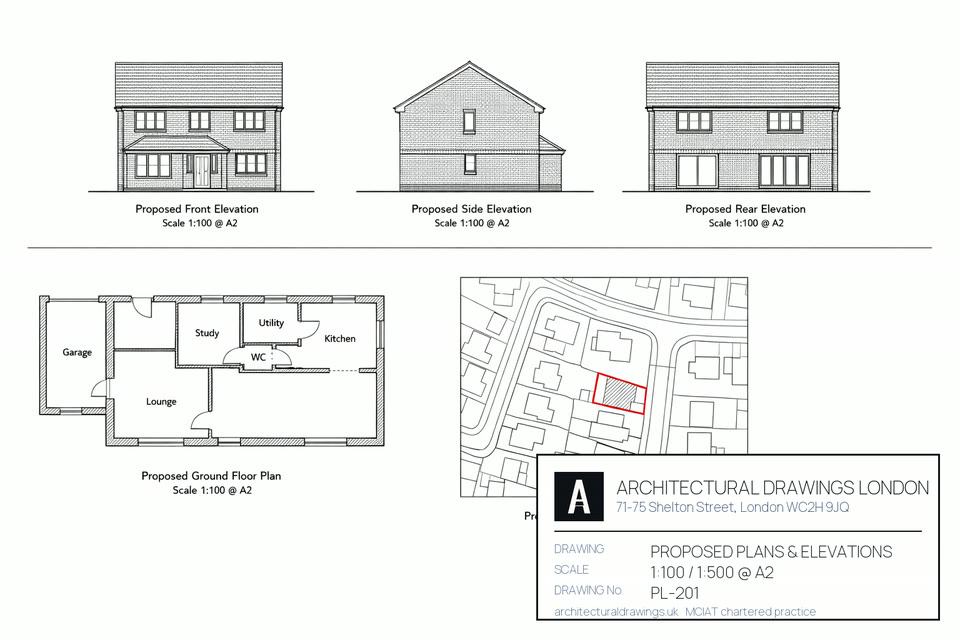
A fifth, less obvious, reason is an inaccurate or incomplete submission — a site plan that misplaces a boundary, or elevations that do not match the plans. Officers refuse rather than assess a scheme they cannot understand.
Resubmit where the reasons can be designed out — reduce the depth, obscure the window, change the roof form. It is faster, it is free within twelve months, and the officer already knows the case. Appeal where the reasons are a matter of judgement you think is wrong, or where the change demanded would make the scheme pointless.
About a third of householder appeals succeed, so an appeal against a marginal refusal is a reasonable bet — but it takes eight to sixteen weeks and the scheme cannot be changed en route.
Read the borough's householder design guide before designing, check the 45-degree line from the neighbour's nearest habitable window, obscure-glaze flank windows below 1.7 m as a matter of course, and talk to the neighbours before they receive the consultation letter.
Planning refusal in a Camden context: London Borough of Camden (Camden Council) runs 40 conservation areas including the Hampstead Conservation Area and the Primrose Hill Conservation Area, and an Article 4 direction is in force there, so permitted development cannot be assumed. That decides how planning refusal is handled: £548 and 8 weeks for a Camden householder application, or £274 for the Lawful Development Certificate that records planning refusal as lawful. The law behind planning refusal sits in the Town and Country Planning Act 1990, the GPDO 2015 and the Building Regulations 2010.
| Householder refusal rate | Roughly 1 in 10 |
|---|---|
| Free resubmission | Once, within 12 months |
| Appeal deadline | 12 weeks |
| Appeal success rate | Around one third |
| Common reason | Overbearing scale or loss of light |
| Assessment tools | 45-degree and 25-degree rules |
Yes, and on a marginal case it is sometimes the right strategy.
A refusal is a public record, but a subsequent approval supersedes it in practice.
Twelve weeks from the decision date for householder development.

Pick a slot that suits you. No obligation and no sales pressure, just straight answers on your planning route.

