Key facts at a glance
- Traditional architects charge 8.
- For a £80,000 extension: traditional architect = £6,400.
- Planning success rates are comparable — the drawings quality is what matters, not the fee model
- Traditional architects offer design flair for complex or listed building projects
- MCIAT chartered qualifications are equivalent to RIBA for residential work
What you actually pay
Traditional architects in London typically charge 8–15% of the estimated build cost for a full service (concept through to construction monitoring). For a £80,000 rear extension, that is £6,400–£12,000 in professional fees. For a £60,000 loft conversion, £4,800–£9,000. These fees are for a full service that includes concept design, planning, building regulations, and periodic site visits during construction.
For the same rear extension, £1,095. Building regulations drawings cost an additional £1,095. Total professional fees: £1,935–£2,190 vs £6,400–£12,000 for the traditional route.
What the difference pays for
The traditional fee pays for: an architect's creative input into the design concept, more frequent site visits during construction, a named individual who manages the contractor relationship, and the reassurance of the RIBA brand. For complex projects — listed buildings, unusual sites, architect-designed bespoke homes — this creative input and site presence is genuinely valuable.
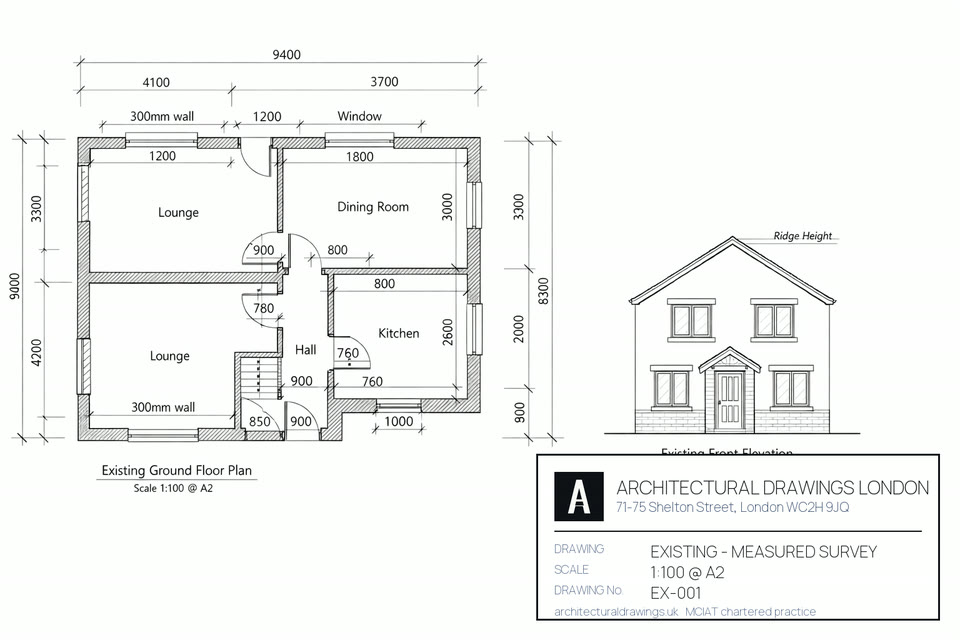
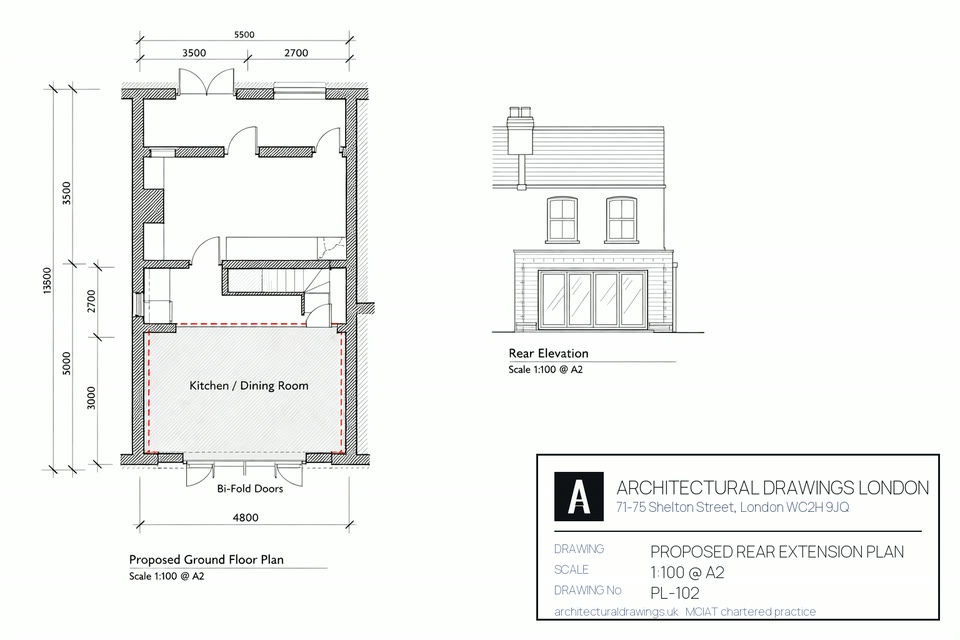
For defined-scope residential works — a rear dormer, a rear extension, building regulations drawings for an approved scheme — the planning and building control drawings need to be technically correct and presented in the format the council requires. The creative design is typically constrained by planning policy and PD limits. In this context, the quality of the technical drawings matters more than the conceptual design process.
Planning success rates
Planning applications are decided on their policy compliance, not on the fee model of the professional who prepared them. Planning officers assess: does the proposal comply with the NPPF, the London Plan, the borough's local plan, and any relevant SPDs?
Our council-ready drawing review across all 33 London boroughs demonstrates this. The drawings and supporting documents matter; the billing model of the professional does not.
When to choose a traditional architect
Commission a traditional architect when: the project involves significant creative design decisions (new build, listed building, unique site), you want ongoing site visits and contractor management, or the project is sufficiently complex that you need a single professional managing the whole process. The additional fee is justified by the value of that design and management input.
Verdict
For loft conversions, rear extensions, mansards, and building regulations drawings, 30% of the cost. Hire a traditional architect for complex design projects where creative input and full-service management are the product.
Frequently asked questions
Is an architectural technologist as qualified as an architect?
MCIAT-chartered architectural technologists hold professional qualifications equivalent to RIBA-chartered architects for residential and technical design work. Both require degree-level study, professional experience, and ongoing CPD. ARB registration (required to call yourself an 'architect') is the only functional distinction for residential design.
Can a service do listed building work?
Listed building consent and listed building design require specialist historic building knowledge. If your property is listed, ask specifically whether the practice has listed building experience before instructing.
What is the difference between MCIAT and RIBA?
MCIAT is membership of the Chartered Institute of Architectural Technologists. RIBA is membership of the Royal Institute of British Architects. Both are professional bodies with rigorous qualification and CPD requirements. For residential design and planning drawings, both qualifications indicate equivalent professional competence.
Do online drawing services visit the property?
It varies by service. At Architectural Drawings London, we conduct a measured survey of the property before preparing drawings — the survey is the foundation of accurate existing drawings from which all proposed work is drawn.
What happens if my planning application is refused?
At Architectural Drawings London, we handle planning queries and pre-decision negotiations as part of the service.