Key facts at a glance
- Mansards suit terraces and can be visible from the street — always need planning permission
- Hip-to-gable suits semis and detached houses only — often permitted development
- Mansards create more volume but cost 40–60% more than a hip-to-gable plus dormer
- Both create a full floor at loft level with vertical walls
- Mansard SPDs exist in Hammersmith, Richmond, and several conservation-area-heavy boroughs
- Hip-to-gable plus rear dormer (L-shape) is cheaper than full mansard on a semi
Mansard or hip-to-gable — which does London approve?
It depends entirely on the borough’s roofscape. Wandsworth’s Datahub set records 2,310 mansard applications at 87% approved; Bexley records 53 at 66%. A mansard suits a flat-fronted terrace; a hip-to-gable only exists where the roof has a hip, which is inter-war suburbia.
| Borough | Mansard applications in the Datahub | Approved |
|---|---|---|
| Islington | 3,192 | 52% |
| Wandsworth | 2,310 | 87% |
| Westminster | 2,242 | 81% |
| Lambeth | 1,404 | 70% |
| Hackney | 892 | 72% |
| Camden | 695 | 77% |
| Bexley | 53 | 66% |
Source: Planning London Datahub (Greater London Authority), retrieved 15 August 2026. Counts phrase-match published application descriptions and ingestion depth differs by borough, so compare the approval percentages rather than the volumes across rows. A hip-to-gable is normally permitted development under Class B where the roof volume added stays within 40 cubic metres on a terrace or 50 on a semi or detached house; a mansard on a front roof slope almost never is.
What is a mansard conversion?
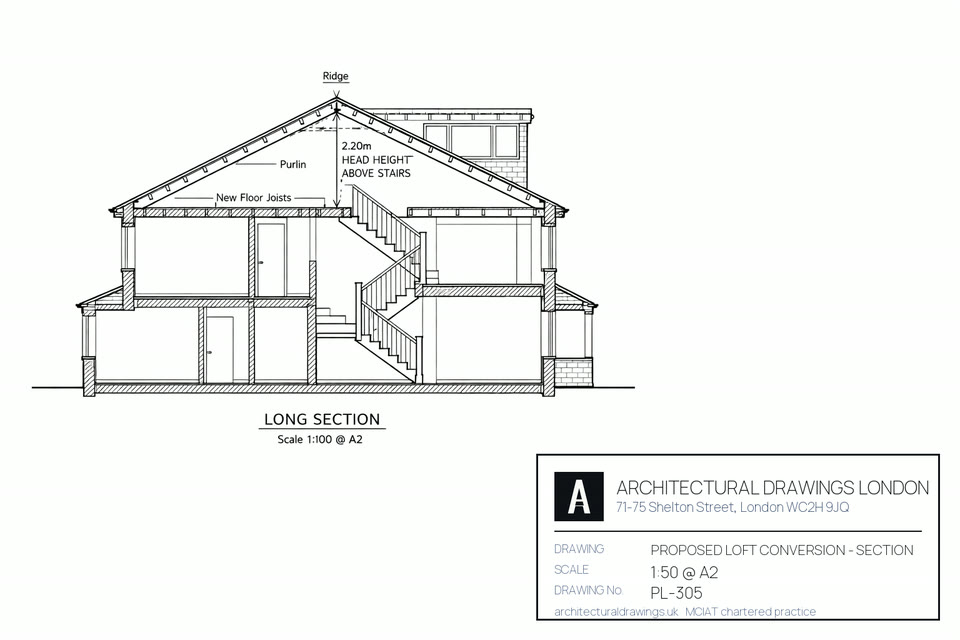
A mansard is a roof form with steep front and rear slopes (typically 70–72 degrees) and a nearly flat top. A mansard loft conversion rebuilds the entire roof structure in this form, creating a full additional storey at roof level with near-vertical walls on all four sides. On a London terrace, the mansard wraps around the front, rear, and both party walls — creating the maximum possible volume from a roof conversion. The front mansard slope is typically clad in zinc or lead and is visible from the street.
Mansards always require full planning permission — they alter the primary roof structure significantly and are visible from the street. Several London boroughs (Hammersmith & Fulham, Richmond, Westminster) have Supplementary Planning Documents specifically governing mansard design.
What is a hip-to-gable conversion?
A hip-to-gable conversion applies to semi-detached and detached houses with hipped roofs. It infills the sloping hip at the end of the roof, creating a vertical gable, and is almost always combined with a full-width rear dormer to create the maximum loft space. The combined form (L-shape) creates two bedrooms and a bathroom at loft level on a typical 1930s semi.
Hip-to-gable conversions on semis and detached houses can usually proceed via permitted development — a Lawful Development Certificate rather than planning permission. The hipped end of the roof is not visible from the street in most cases, so the impact on the street scene is minimal.
Cost comparison
A hip-to-gable plus rear dormer on a semi costs £45,000–£75,000 to build. A full mansard conversion on a terrace costs £70,000–£120,000 — the additional cost reflects the full roof rebuild, the front mansard slope structure and cladding, and the more complex planning and party wall process. The space created is comparable, but the mansard creates a slightly squarer floor plan on all four sides.
Which is right for your property?
The choice is largely determined by property type. If you have a semi-detached or detached house with a hipped roof, hip-to-gable is the natural and cost-effective approach. If you have a terraced house, hip-to-gable is structurally impossible (terraces have gable ends, not hips) — your options are a rear dormer or a full mansard. A rear dormer is cheaper; a mansard creates more volume and a better-proportioned floor plan.
Verdict
On a semi or detached: hip-to-gable plus rear dormer (L-shape) — cheaper, often PD, comparable result. On a terrace where maximum space is the priority: mansard — more expensive and always needs planning, but creates a complete additional storey.
Frequently asked questions
Can a terraced house have a hip-to-gable conversion?
No. Terraced houses have gable ends (vertical end walls), not hipped roofs. The hip-to-gable technique requires a hipped end to infill. Terraces use rear dormers or full mansard conversions instead.
Does a mansard always need planning permission?
Yes. Mansard conversions alter the primary roof structure and are visible from the street — they always require a householder or full planning application. There is no PD route for a mansard.
Which adds more property value — mansard or hip-to-gable?
In absolute terms, a mansard on a terrace typically adds more value because it creates a larger floor area. But the hip-to-gable on a semi delivers a better return on investment because it costs significantly less to build for a comparable result.
What is a mansard SPD?
A Supplementary Planning Document (SPD) is additional planning guidance produced by a council to explain how they interpret planning policy for a specific type of development. Mansard SPDs specify slope angles, parapet heights, setbacks, and materials requirements that go beyond the standard residential design guide.
How long does a mansard conversion take?
A full mansard conversion typically takes 14–20 weeks on site. This is longer than a rear dormer (8–12 weeks) because the entire roof structure is being rebuilt. The planning process also typically adds 12–16 weeks before work can start.