The 30-second version
What planning rules apply to a Birmingham extension?
The same national ones as anywhere in England. Birmingham City Council determines the application, the fee is £548 for a householder application, and the permitted development limits are 3m on a semi or terrace and 4m detached, doubling under prior approval.
| Rule or fee | Value | Source |
|---|---|---|
| Householder planning application | £548 | Statutory, England 2026 |
| Lawful development certificate | £274 | Statutory |
| Larger home extension prior approval | £249 | Statutory |
| Rear extension, terrace or semi | 3m, or 6m under prior approval | GPDO 2015, Class A |
| Rear extension, detached | 4m, or 8m under prior approval | GPDO 2015, Class A |
| Additional roof volume for a loft | 40 cubic metres terrace, 50 semi or detached | GPDO 2015, Class B |
Sources: the Town and Country Planning (Fees for Applications) (England) Regulations 2012 as amended, 2026 rates, and the Town and Country Planning (General Permitted Development) (England) Order 2015, Schedule 2, Part 1, Classes A and B. Read at 1 September 2026. Fees and permitted development limits are national; what varies between Birmingham and a London borough is local plan policy, conservation area coverage and any Article 4 direction.
How our remote architectural service works in Birmingham
Most Birmingham homeowners don’t need a local architect — they need accurate drawings, correct planning policy interpretation, and a responsive team that turns revisions around quickly. That’s a workflow that runs better digitally than on-site. Birmingham’s housing stock is built around the inter-war semi, with strong heritage clusters in the Jewellery Quarter and Edgbaston — a mix of stock our team has drawn hundreds of times.
Virtual or site survey
You capture photos and measurements using our one-page checklist, or we travel to Birmingham for a full measured survey (chargeable at travel cost).
Existing drawings
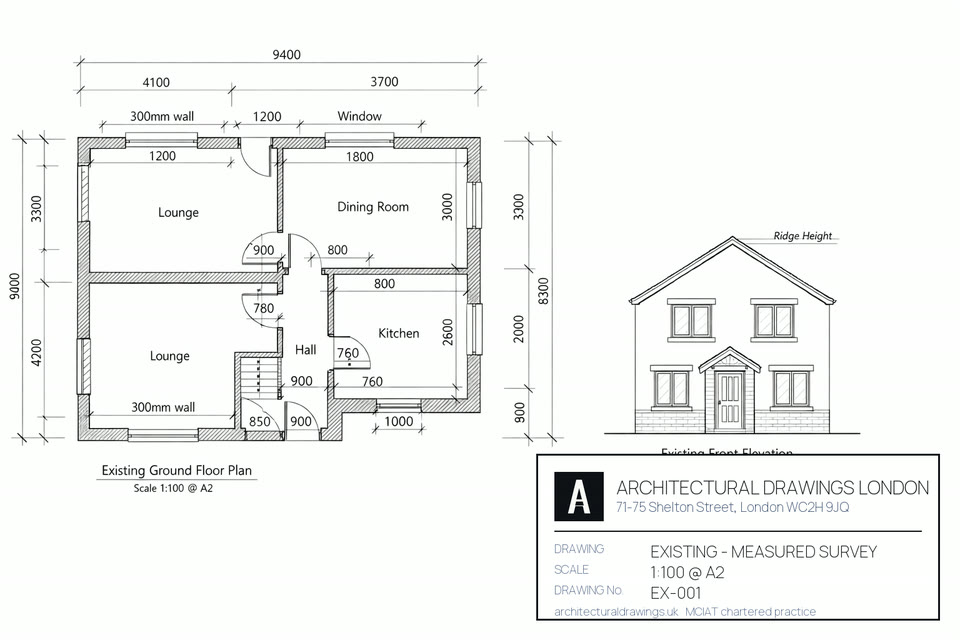
We produce CAD floor plans, elevations and sections from your survey, then verify everything on a 15-minute video call before design work starts.
Design & policy check
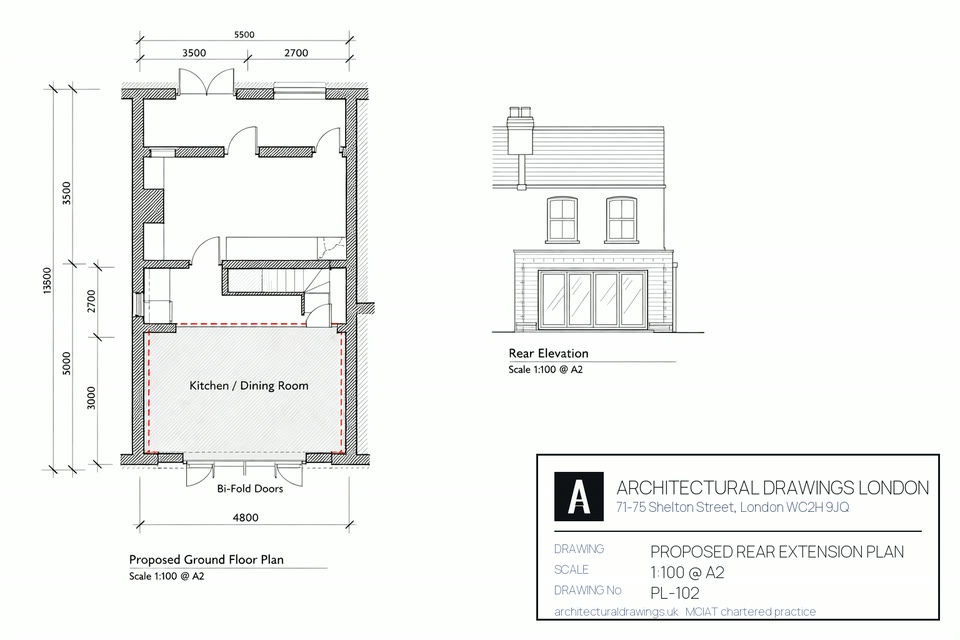
We design against Birmingham City Council local plan, relevant Article 4 Directions, and any conservation area appraisal — before anything is committed to a drawing.
Submission
We prepare the full application pack, submit to the council on the Planning Portal, and manage validation, revisions and officer queries through to decision.
Every package below is delivered end-to-end by an architectural technologist. Revisions and officer queries are included; no hourly billing.
What is Birmingham’s planning context?
Housing stock. Housing stock is dominated by 1930s semi-detached suburban houses across Edgbaston, Moseley, Kings Heath, Harborne and Bournville, alongside Victorian villas in Edgbaston and Moseley and Georgian terraces around the Jewellery Quarter. Outer suburbs like Sutton Coldfield and Solihull add post-war detached stock.
Conservation & heritage. Birmingham has 30 conservation areas including the Jewellery Quarter, Edgbaston, Moseley, Harborne, Bournville, and Sutton Coldfield Town. Article 4 Directions apply in several (most notably the Jewellery Quarter and Bournville) to protect shopfronts and terrace rhythms. Bournville in particular has extremely prescriptive design controls dating from the original Cadbury trust.
Council approach. Birmingham City Council runs a pragmatic validation process but heritage areas are tightly managed. Rear extensions under 4 metres on semis are a routine success provided materials and fenestration match. We work from the Birmingham Development Plan and the High Places & Places for Living SPDs on every Birmingham application.
Why choose us for your Birmingham project
Frequently asked questions
Can you really work outside London on a Birmingham project?
Yes. Around one in five of our active projects is outside London and we routinely deliver full planning and building regulations drawings into Birmingham City Council remotely. Our drawings-first model doesn’t depend on being on-site daily — it depends on an accurate survey, solid policy knowledge, and responsive revisions, all of which we handle digitally.
Do you visit the site in Birmingham?
We offer two options. Most clients use our virtual survey — you provide photos and measurements using our illustrated checklist, we convert that into the CAD survey. For complex heritage or listed projects we can travel to site (chargeable at travel cost, typically £160–£240 from London) and complete a full measured survey in person.
How does the virtual survey work?
We send you a PDF survey pack with a one-page photo plan, room-by-room measurement checklist, and guidance on capturing floor-to-ceiling heights and window positions. You return it by email within a few days. We then produce existing drawings and schedule a verification call before proposed design work begins. Most clients complete the survey in 2–3 hours.
Do you know Birmingham City Council’s planning policies?
Yes. We research every authority’s local plan. For Birmingham specifically we maintain a working file on Birmingham City Council’s current validation requirements, the Jewellery Quarter and Edgbaston conservation area appraisals, and the Bournville design guide. Our council-ready drawing review is sustained across every English authority we’ve drawn into.
What’s the cost difference versus a local Birmingham architect?
Local architects in Birmingham typically quote at hourly rates of £70–£100 and total project fees from £2,800 upwards for a house extension. The saving is roughly 30–50% — we make it work by removing the London-studio overhead and working entirely in digital delivery.
Architectural drawings in other UK cities
We offer the same remote service across the UK’s major cities. Pick a nearby location for region-specific guidance: