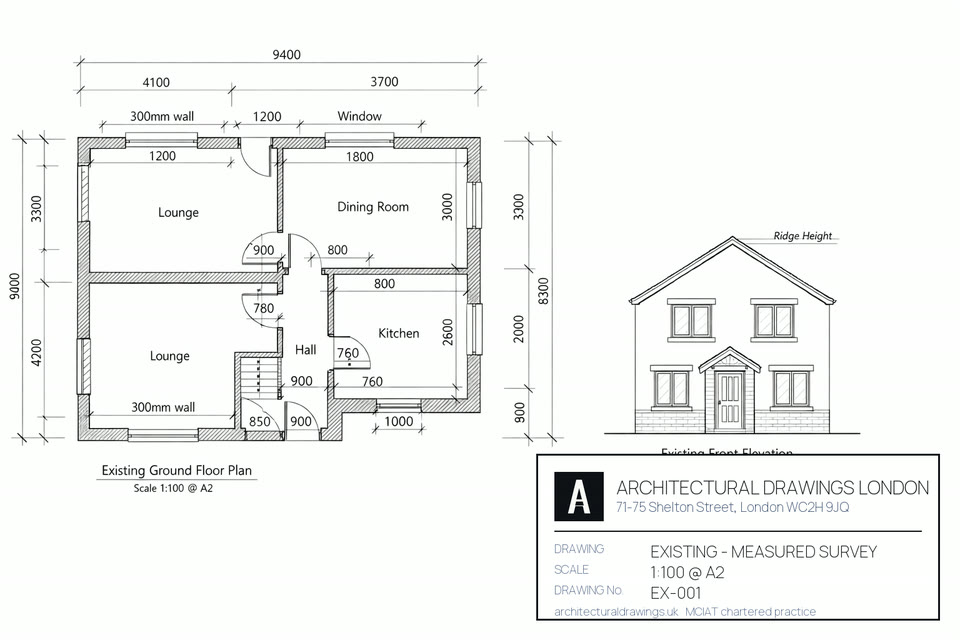
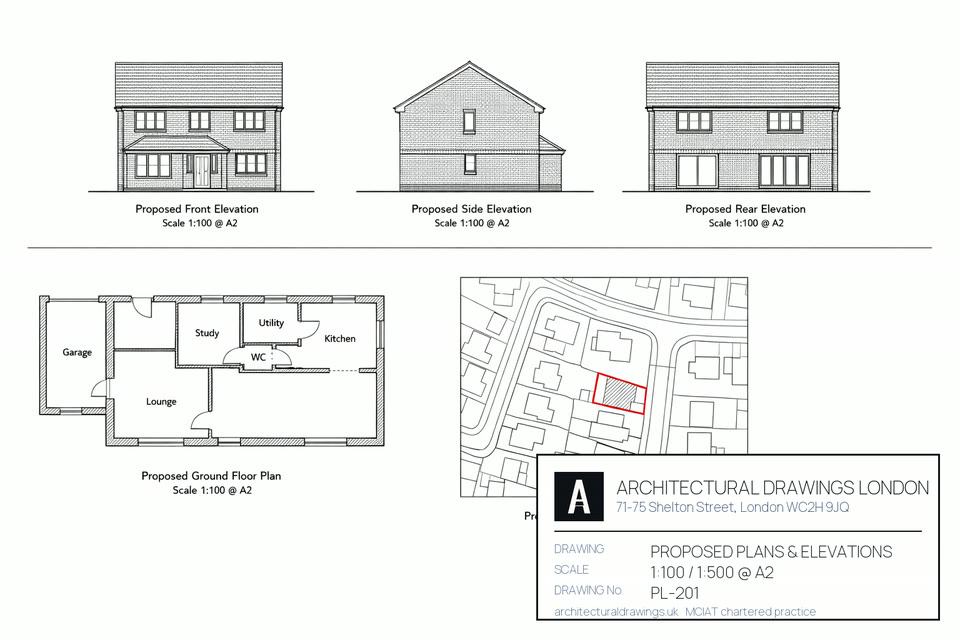
Dulwich occupies a unique position in London's planning landscape. Spanning the SE21 and SE22 postcodes in the London Borough of Southwark, it combines outstanding period architecture with a private planning overlay that makes it unlike any other neighbourhood in the capital. Our MCIAT-chartered team has deep experience navigating both systems.
The Dulwich Estate: The Dulwich Estate is a private landowner that controls approximately 1,500 acres across Dulwich. Established through the bequest of Edward Alleyn in 1619, the Estate operates a Scheme of Management — sanctioned by Act of Parliament — that imposes its own architectural controls on properties within its boundaries. These controls cover external materials (specific brick types, slate, timber windows), boundary treatments (hedging only, no close-boarded fencing on most plots), tree protection (felling or major pruning requires Estate consent), and overall design quality. The Estate employs its own architectural advisor who reviews every application. We prepare drawings that satisfy both the Estate advisor and Southwark's planning officers simultaneously, avoiding the costly revisions that occur when designs are prepared without understanding both sets of requirements.
Conservation areas: Dulwich contains several conservation areas, including Dulwich Village, Dulwich Wood, and parts of East Dulwich. Within these zones, permitted development rights are restricted, and full planning permission from Southwark Council is required for most external works. The combination of conservation area restrictions and Dulwich Estate controls means that even relatively modest projects — a rear extension, replacement windows, a garden structure — require careful design and documentation from the outset.
Period properties: Dulwich's housing stock ranges from grand Georgian and Victorian detached houses in Dulwich Village to Edwardian and inter-war semi-detached homes in East Dulwich and Herne Hill's Dulwich fringes. Many properties feature substantial gardens, mature trees, and generous plot sizes that provide scope for well-designed extensions. The architectural character varies by street: some have consistent frontage lines and shared design features; others are more eclectic. Our drawings reflect the specific character of each street context, which both Southwark's officers and the Estate's advisor expect to see demonstrated in supporting design statements.
Rear extensions and loft conversions: These are the two most popular residential projects in Dulwich. Rear extensions — typically single-storey, with glazed roof elements to maximise natural light — are routinely approved when designed sympathetically. The Dulwich Estate generally requires rear extensions to use matching brickwork and natural slate or lead roofing rather than modern composite materials. Loft conversions are highly popular on the area's Edwardian semi-detached houses, which offer excellent roof spaces. The Estate typically approves rear dormers in natural slate that match the existing roof pitch and material. Hip-to-gable conversions may be acceptable on some streets but are assessed on a case-by-case basis.
East Dulwich: The SE22 postcode covers East Dulwich, which has seen significant gentrification and renovation activity over the past two decades. Victorian terraces along Lordship Lane, Barry Road, and the surrounding streets are popular targets for side-return extensions, loft conversions, and internal reconfigurations. Not all East Dulwich properties fall within the Dulwich Estate boundary — we verify Estate status for every instruction and advise on the applicable planning route.
Leafy suburban character: One of Dulwich's defining features is its mature tree canopy and garden-centric suburban character. The Estate's tree-protection rules are stricter than standard local authority Tree Preservation Orders: any tree over a certain girth requires Estate consent before felling or major pruning. Extensions that affect root zones of protected trees require arboricultural impact assessments. We coordinate with arboricultural consultants and factor tree constraints into our designs from the earliest sketch stage, ensuring that neither the Estate nor Southwark's tree officers raise objections that could delay your project.
Planning authority
Southwark Council
Private overlay
Dulwich Estate
Conservation areas
3+ in Dulwich